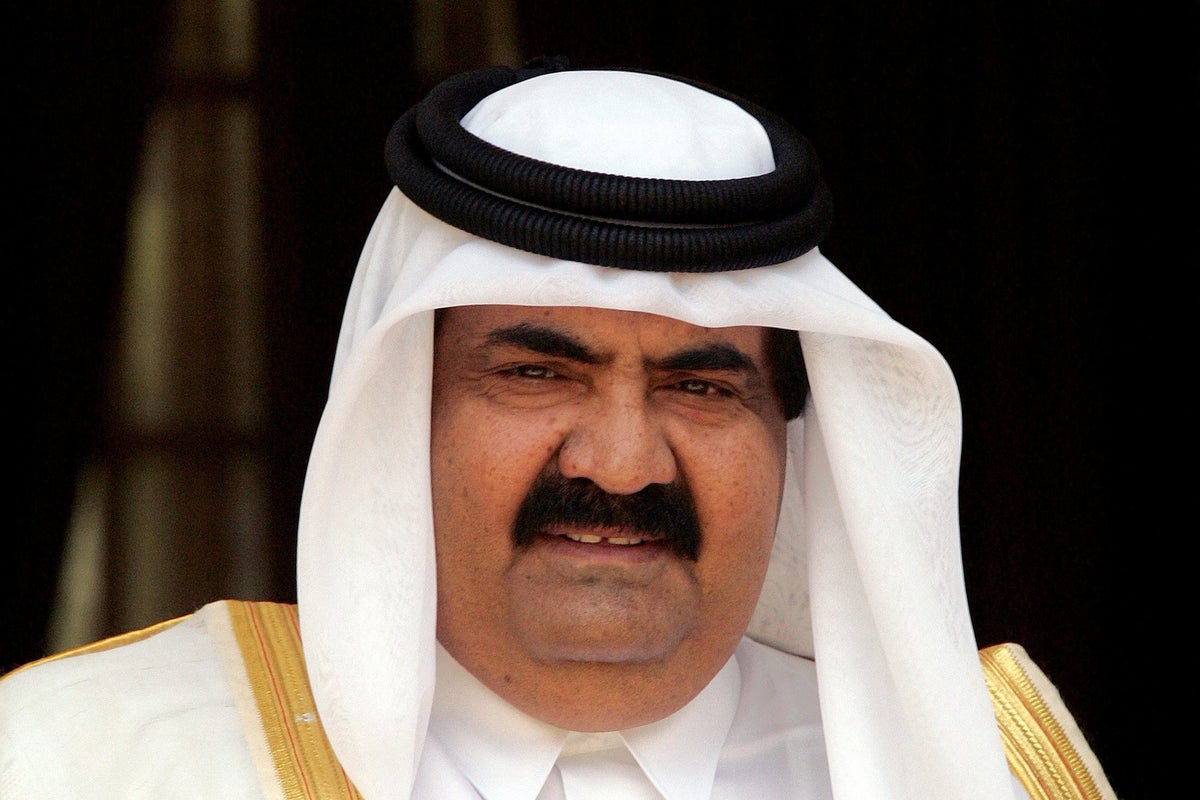
Qatar is in mourning. The passing of Father Emir Sheikh Hamad bin Khalifa Al Thani at the age of 74 marks the end of an era for a man who didn't just govern a nation but fundamentally re-engineered how small states wield global influence. When news broke from the Amiri Diwan on July 12, 2026, announcing his death, it triggered four days of national mourning. This wasn't just a standard royal transition. It was a moment of reflection for a figure who took a quiet, sleepy peninsula and transformed it into an economic powerhouse.
Most historical profiles focus on the sheer wealth of modern Qatar. They miss the real story. The story isn't about money. It's about a cold, calculated strategy of becoming completely indispensable to the rest of the world.
The Quiet Rise of Father Emir Sheikh Hamad bin Khalifa Al Thani
Born in Doha in 1952, Sheikh Hamad graduated from the British Royal Military Academy at Sandhurst in 1971. He quickly moved through the ranks of the Qatar Armed Forces. By 1977, he became the Heir Apparent and Minister of Defence. The major turning point came in June 1995 when he assumed power in a bloodless palace coup.
At that exact moment, Qatar was a minor regional player. It was heavily overshadowed by its larger neighbors. The young leader saw that relying solely on traditional regional alliances was a fast track to irrelevance. He needed a radically different approach.
He didn't waste any time. He looked beneath the surface of the Persian Gulf and saw Qatar's ticket to the global stage: the North Field.
Turning Gas Into Global Leverage
Before his reign, Qatar focused primarily on oil, like everyone else in the region. Sheikh Hamad bet everything on liquefied natural gas (LNG). It was a massive gamble that required staggering capital investment.
The gamble paid off spectacularly. By 1996, LNG exports commenced. Within a decade, by 2006, Qatar became the top exporter of LNG worldwide. Production capacity eventually surged to 77 million tonnes per annum.
Look at what this did to the country's economy. The Gross Domestic Product expanded over twenty-four times during his eighteen years in office. Qatar rapidly achieved one of the highest GDP per capita rates on Earth. This wasn't wealth for the sake of luxury. This was a financial shield.
Launching Al Jazeera and Breaking the Media Monopoly
In 1996, the world witnessed another massive shift from Doha. Sheikh Hamad abolished the Ministry of Information, ended local press censorship, and financed the launch of Al Jazeera.
Think about the context of the Middle East in the mid-1990s. State television networks were purely propaganda arms. Suddenly, a new network appeared that actively challenged regional governments, broadcasted fierce debates, and offered a platform to voices that were completely silenced everywhere else. It infuriated neighboring capitals. It brought immense diplomatic pressure on Doha.
That was exactly the point. Sheikh Hamad understood that a global voice provides safety. You can't quietly erase a nation from the map when that nation hosts the most influential media network in the region.
Education and Global Investments
The financial windfall from natural gas didn't sit in bank accounts. Sheikh Hamad, alongside his second wife Sheikh Moza bint Nassir, established the Qatar Foundation in 1995. They created Education City on the outskirts of Doha.
Instead of sending everyone abroad, they brought elite global universities to Qatar. Institutions like Georgetown, Carnegie Mellon, and Cornell opened fully functioning campuses in Doha. To date, thousands of students have graduated from these programs, building a local knowledge economy.
Simultaneously, the Qatar Investment Authority began buying up iconic assets across the globe. The strategy was highly calculated. They bought into Volkswagen, acquired London's Harrods department store, and purchased the French football club Paris Saint-Germain.
Every single investment made Qatar more visible. It stitched the tiny nation into the financial fabric of the Western world.
A Diplomatic Strategy of Open Doors
The foreign policy of Father Emir Sheikh Hamad bin Khalifa Al Thani baffled traditional diplomats. He maintained a massive American military presence at the Al Udeid Air Base while simultaneously hosting offices for political movements that Washington despised.
He didn't see this as a contradiction. He saw it as survival.
Qatar became the ultimate neutral ground. If you needed to negotiate a complex regional dispute, you went to Doha. Sheikh Hamad mediated conflicts from Lebanon to Yemen. He brokered the Doha Agreement in 2008 to end a Lebanese political crisis and facilitated reconciliation talks between competing Palestinian factions.
This approach peaked in December 2010 when Qatar won the rights to host the 2022 FIFA World Cup. It was the first time an Arab or Islamic nation secured the world's biggest sporting event. It was the ultimate validation of his high-profile branding strategy.
Breaking Tradition With a Smooth Transition
In June 2013, Sheikh Hamad did something completely unheard of in the Gulf. He voluntarily stepped down. He handed the reins of power directly to his 33-year-old son, the current Emir Sheikh Tamim bin Hamad Al Thani.
Hereditary rulers in the region almost always rule for life. Stepping aside willingly was a calculated move to ensure stability and continuity while he was still around to guide the transition. It solidified his status as the "Father Emir" and allowed the next generation to lead during a time of immense regional tension.
The passing of Father Emir Sheikh Hamad bin Khalifa Al Thani on July 12, 2026, marks the physical end of his journey, but the structural reality he built remains entirely intact. Flags fly at half-mast across Doha, and the public sector has paused to honor his memory. He left behind a blueprint for how a small nation can protect itself by making sure the rest of the world absolutely needs it.