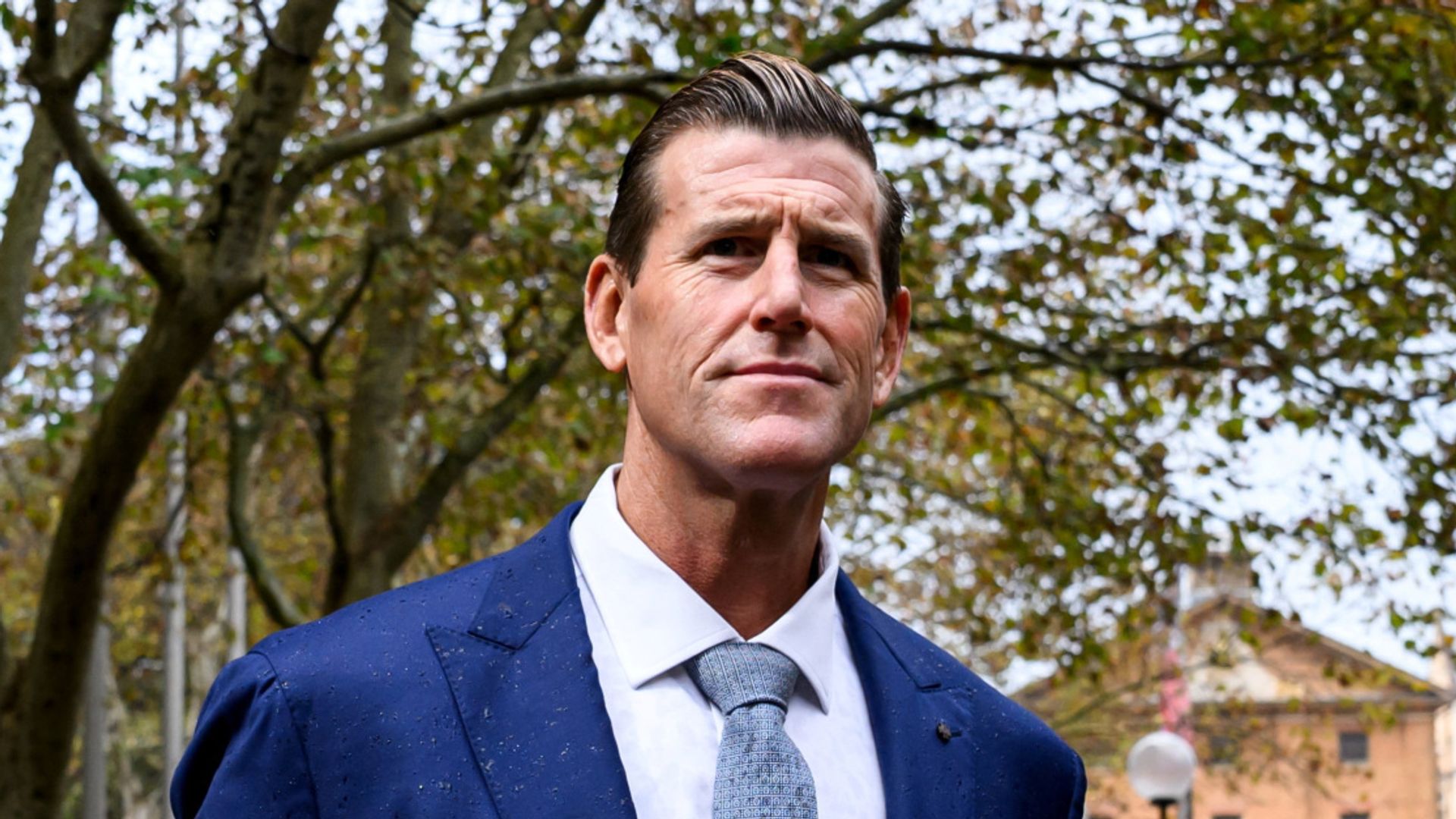
Oliver Jordan Brown is a decorated former commando who's now at the center of a landmark Australian legal battle. He's the first person in this country to be charged with a war crime under domestic law for an incident during his service in Afghanistan. It's a heavy situation. Recently, a Sydney court granted him bail, but the conditions are strict and the implications for military law are massive. People want to know how someone facing such serious allegations walks out of a cell. It isn't about leniency. It's about the fundamental mechanics of the Australian justice system and the specific complexities of war crime prosecutions.
The case against Brown involves the death of an Afghan man in 2012. He was part of the Special Air Service Regiment (SAS) and earned high honors for his bravery. Now, the Australian Federal Police (AFP) allege he murdered a non-combatant during a village clearance. This prosecution stems from the findings of the Brereton Report, which looked into allegations of misconduct by Australian special forces.
Why the Court Granted Bail to Oliver Brown
Granting bail for a murder charge is never a simple "yes." In New South Wales, there’s a "show cause" requirement for serious offenses. This means the defense has to prove why keeping the person in jail isn't justified. Magistrate Michael Allen decided that Brown met this burden. Why? Because the trial is years away. We're looking at 2027 or even 2028 before a jury hears the full story. Keeping someone in a high-security prison for three or four years before they’ve been convicted of anything is a tough sell for a judge.
Brown's defense team pointed out the unique nature of this case. It’s not a standard criminal matter. It involves classified intelligence, overseas witnesses, and events that happened over a decade ago. The delay isn't just a possibility; it's a certainty. The magistrate noted that the prosecution's case has "apparent weaknesses," particularly regarding the cause of death and the reliability of some witness statements from the scene.
The bail conditions aren't a slap on the wrist. Brown has to provide a $200,000 surety. He surrendered his passport. He has to report to police daily. He’s essentially under a form of house arrest. The court isn't saying he's innocent; they're saying he isn't a flight risk or a danger to the community while the lawyers spend the next several years arguing over documents.
The Complications of Proving War Crimes in Domestic Courts
Trying a soldier for actions taken in a war zone is a logistical nightmare. In a normal murder trial, you have a body, a crime scene, and local witnesses. In the Brown case, the "crime scene" was a village in Uruzgan province twelve years ago. Much of the evidence is digital or testimonial from people who are still in Afghanistan or have been displaced.
You also have the "fog of war" defense. Combat is chaotic. Decisions are made in split seconds under immense pressure. The prosecution has to prove beyond a reasonable doubt that the killing wasn't just a mistake or a tragic consequence of a fire-fight, but a deliberate act of murder against a person who wasn't a threat. That’s a high bar.
Military culture plays a huge role here too. The SAS is a tight-knit community. Getting soldiers to testify against one of their own is notoriously difficult. Some witnesses have changed their stories over time. Others might have immunity deals. This makes the prosecution's job incredibly difficult and is likely why the magistrate felt the case against Brown wasn't a "slam dunk."
What This Means for the Australian Defence Force
This case isn't just about one man. It’s a test for the Australian Defence Force (ADF) and how it handles accountability. For years, rumors of "warrior culture" and extrajudicial killings circulated within the special forces. The Brereton Report brought those rumors into the light, recommending that 19 soldiers be investigated for possible war crimes.
Brown is the first to face a court. If the prosecution fails, it might be the last. There’s a lot of tension within the veteran community. Some feel Brown is a scapegoat for systemic failures higher up the chain of command. Others believe that if Australia wants to claim the moral high ground on the international stage, it must hold its own soldiers to the highest standards, no matter how much they've sacrificed.
The legal costs are already astronomical. The government is funding part of the defense, which is standard for current or former members of the ADF facing charges related to their service. This creates a weird dynamic where the state is paying both the people trying to put him in jail and the people trying to keep him out.
The Role of the Office of the Special Investigator
The Office of the Special Investigator (OSI) is the body behind these charges. They aren't the military police. They’re a civilian agency set up specifically to investigate the allegations from the Brereton Report. Their existence shows that the government doesn't trust the military to investigate itself on this level.
The OSI has been working for years, sifting through millions of documents and conducting hundreds of interviews. They’re looking for patterns, not just isolated incidents. They want to show that these weren't just "bad apples" but the result of a culture that lost its way.
Brown's release on bail is a win for his legal team, but the war is far from over. The prosecution will use this time to strengthen their evidence. They’ll try to secure more witnesses and perhaps find more forensic data. The defense will spend the time picking apart the credibility of those witnesses.
Understanding the Delay in Military Justice
People often ask why it takes so long. In this case, the delay is built into the system. You have to deal with National Security Information (NSI) certificates. This means certain evidence can't be shown to the public or even the defendant’s full legal team without special clearances.
The defense needs time to review every single piece of classified material the prosecution plans to use. They have to fly experts in from around the world. They might even need to conduct their own investigations in Afghanistan, which is currently ruled by the Taliban. Think about the logistics of that for a second. It's almost impossible.
Magistrate Allen was right to acknowledge these hurdles. If you keep a man in jail for five years and then he's found not guilty, you've essentially stolen five years of his life based on a charge that couldn't be proven. That’s the "extraordinary circumstances" that allowed for bail.
The Public Perception of War Hero vs. War Criminal
This case forces us to hold two conflicting ideas at once. Oliver Brown is a man who was awarded the Medal for Gallantry. He put his life on the line for Australia. He’s a hero in the eyes of many who served with him. At the same time, he’s accused of a cold-blooded murder.
The public is divided. Some see a decorated veteran being persecuted for doing a difficult job in a hellish place. Others see a man who violated the Geneva Convention and brought shame to the uniform. There isn't much middle ground.
The media coverage has been intense. Every time Brown walks into a court, it's a front-page story. This pressure can influence the legal process, even if judges and magistrates try to stay impartial. The fact that he's on bail means he can live a relatively normal life for now, but he'll be doing it under the shadow of a trial that could send him to prison for the rest of his life.
Practical Realities for Veterans Following the Case
If you're a veteran or someone interested in military law, this case is the one to watch. It sets the precedent for every other investigation coming out of the Brereton Report. If Brown's case collapses due to "weaknesses" in witness testimony, the OSI might struggle to bring other charges to court.
For those currently serving, it’s a stark reminder that the rules of engagement aren't just suggestions. They're legal requirements that can be enforced years after you leave the service. The accountability doesn't end when you hang up the uniform.
Pay attention to the pre-trial hearings over the next year. These will focus on what evidence is admissible. This is where the real legal heavy lifting happens. The actual trial will be the climax, but the foundation is being built right now in small, technical courtrooms in Sydney.
The next step for Brown is a series of mentions in court to check the progress of the brief of evidence. The prosecution has a deadline to hand over their "gigabyte-sized" mountain of files to the defense. Once that happens, the real arguing begins. If you want to stay informed, don't just look at the headlines about bail. Look at the rulings on evidence disclosure. That’s where the case will be won or lost.



