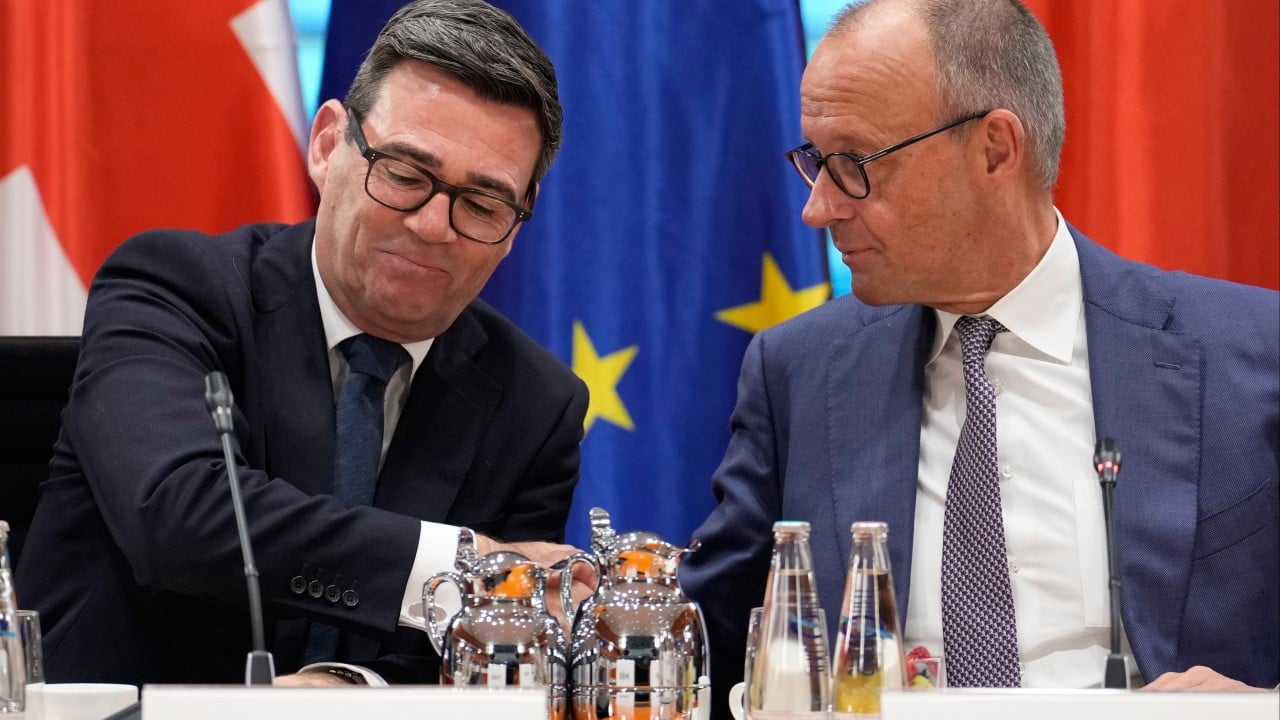
Every time a politician opens their mouth about European defense cooperation, defense contractors quietly check their insurance policies. The latest diplomatic theater features the UK floating the idea of letting Germany into the Global Combat Air Programme, known as GCAP. Westminster wants Berlin on board to spread the staggering development costs of a sixth-generation stealth fighter.
It sounds like pragmatic fiscal responsibility. It is actually a slow-motion suicide pact for the entire enterprise.
GCAP is already an unwieldy three-way marriage between the UK, Japan, and Italy. Adding Germany—with its notoriously sluggish procurement cycles, strict export vetoes, and ideological allergy to offensive hardware—would turn a supersonic military project into a bureaucratic stationary object. If you want to kill a fighter jet before it ever leaves the hangar, hand the blueprint to a committee in Berlin.
The Consensus Fallacy of Shared Costs
The lazy defense establishment argument runs on a simple, comforting equation: more partners mean more budget, and more budget means lower unit costs. Look at the F-35 program. It spans nations, shares risk, and spreads out the financial blow. Therefore, the logic goes, GCAP must haul in Berlin to split the bill for a stealth airframe, adaptive cycle engines, and quantum radar systems.
That logic belongs in a freshman macroeconomics textbook, not a defense procurement strategy meeting.
Sharing development costs sounds great until you realize that every additional sovereign partner multiplies the number of political vetoes, workshare demands, and design compromises. Tokyo joined GCAP precisely because it needed a high-performance air superiority platform without the bureaucratic paralysis of the European Union's fractured defense apparatus. Japan wanted speed, technological sovereignty, and a strict delivery timeline.
Germany brings none of those things. Berlin’s defense policy is governed by export restrictions so severe that they routinely torpedo joint ventures with other European nations. Just ask Paris how well the Future Combat Air System, or FCAS, is going. France and Germany have spent years locked in an endless turf war over intellectual property and prime contractor status, turning a next-generation fighter concept into a masterclass in diplomatic trench warfare.
Injecting that exact same cultural and political friction into GCAP is madness. You do not save money by adding partners who demand design vetoes over every software line and composite skin panel. You just burn cash on endless committee meetings while the threat environment outpaces your slide decks.
The Export Veto Trap
Let us talk about what happens the moment a sovereign nation buys into a fighter program. They buy a vote on who gets to buy the finished product.
Germany has a constitutional and political aversion to arms exports that borders on pacifist theater. Whenever a country with a German-supplied component in its military hardware wants to make a sovereign security decision, Berlin reserves the right to freeze spare parts, block sales, or moralize about end-use monitoring.
Imagine trying to export a cutting-edge sixth-generation combat aircraft to a strategic partner in the Indo-Pacific—say, a nation facing acute regional pressure—only for a coalition government in Berlin to block the deal because of a domestic political dispute over human rights or arms control. Japan would walk away from the table within twenty-four hours. Tokyo did not partner with London and Rome to have its foreign policy dictated by a junior coalition partner in the Bundestag.
The defense industry loves to talk about scale, but scale is useless if you cannot deliver a product to a customer because a coalition partner got cold feet. If GCAP bends the knee to German participation, it surrenders its operational agility at the altar of European consensus politics.
The Technical Reality Check of Sixth-Generation Combat
Forget the politics for a second. Look at the engineering.
We are not building a slightly better Eurofighter. A sixth-generation fighter is not a traditional airframe with upgraded avionics; it is a distributed, networked combat system. It relies on cognitive electronic warfare, directed energy weapons, swarming loyal wingman drones, and quantum-resistant sensor fusion operating at speeds human pilots can barely comprehend.
This requires brutal, uncompromising engineering focus. It demands that prime contractors like BAE Systems, Mitsubishi Heavy Industries, and Leonardo operate with tight feedback loops and ruthless execution speed.
What happens when you introduce a fourth industrial base accustomed to decades of underfunding, delayed maintenance schedules, and paralyzing bureaucratic compliance? You dilute the core engineering talent pool. You force compromises on weight, thermal management, and sensor integration to satisfy local industrial participation quotas. Every nation involved in a joint fighter program demands a cut of the workshare, regardless of whether their domestic firms possess the cutting-edge capability required for that specific subsystem.
I have watched companies burn hundreds of millions of dollars trying to satisfy political stakeholders rather than physics. Physics does not care about parliamentary constituencies in Bavaria. If your radar absorbent material is substandard because a secondary supplier demanded a piece of the contract for domestic employment reasons, your jet gets painted by enemy radar. Game over.
The Unspoken Alternative
The defenders of the expansion strategy will look at you with wide, earnest eyes and ask: "How else do you fund a multi-billion-dollar airframe?"
The answer is simple: stop trying to build everything everywhere all at once, and start prioritizing operational velocity over bureaucratic inclusion.
If the UK, Italy, and Japan want GCAP to enter service by the mid-2030s, they need to shrink the tent, not expand it. They need a ruthless division of labor, ironclad IP protection, and the willingness to tell potential partners that the door is closed. Funding shortfalls can be managed through smarter risk-sharing, private-public capital structures, and export-driven procurement models—not by trading operational speed for Berlin's checkbook.
Germany chose its path when it backed FCAS and chronically underfunded its own Bundeswehr for decades. Trying to drag them into GCAP now is not a masterstroke of diplomacy. It is a desperate rescue mission for a project that needs ruthless efficiency, not more cooks in the kitchen.
If Westminster caves to the pressure and lets Berlin into the program, do not look for a breakthrough in stealth technology or combat range. Look for the press release announcing the first five-year delay.
Stop treating defense procurement as a social club for European integration. Defense is about building machines that win wars before they start. Everything else is just expensive noise.