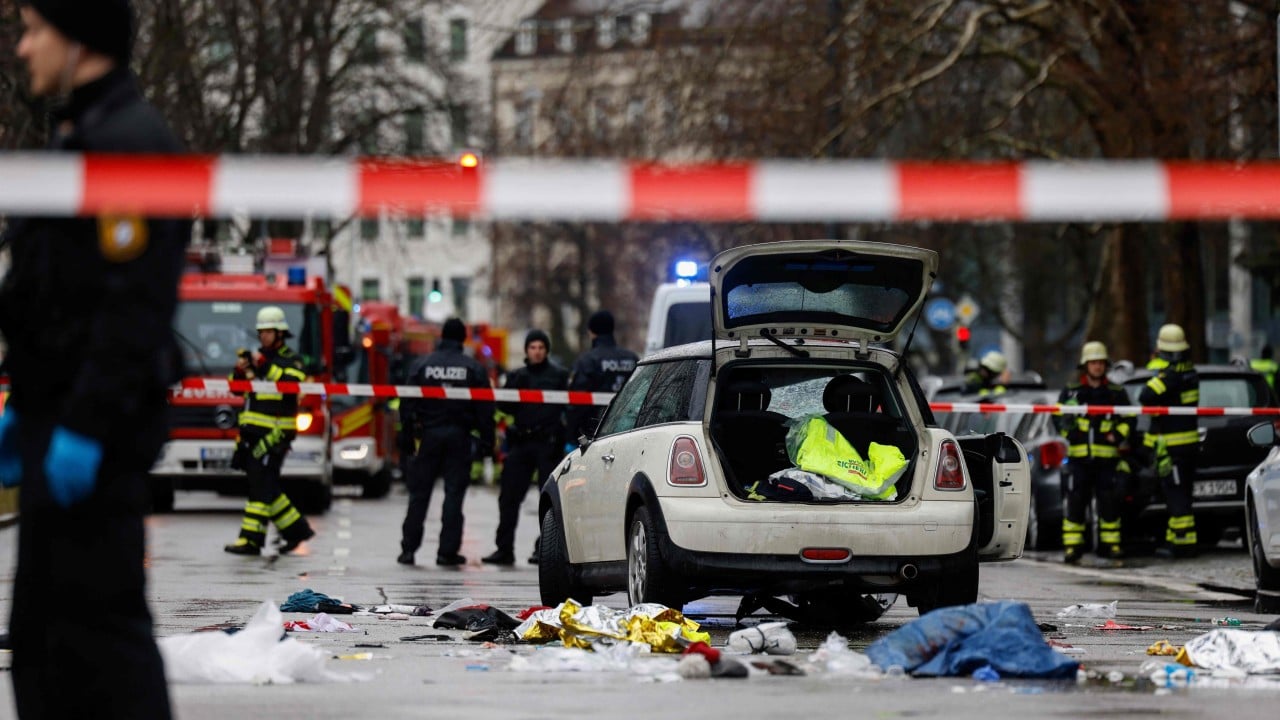
A German court has handed down a life sentence to a man convicted of a deadly car-ramming attack in Munich, closing a grim chapter on an act of violence that shattered a quiet urban afternoon and left investigators grappling with the terrifying ease of vehicle-based assaults. The Munich state court established that the perpetrator deliberately weaponized an automobile against pedestrians, transforming ordinary machinery into an instrument of mass slaughter. This definitive judicial outcome addresses the immediate demand for accountability, yet it forces a much larger, uncomfortable reckoning across Europe. How do open societies protect themselves when a car parked on any street can instantly become a lethal weapon?
For decades, urban planners designed European cities to be porous, welcoming, and accessible. Cobbled pedestrian zones, open squares, and café cultures defined the post-war European urban experience. Modern security realities have steadily chipped away at that architectural philosophy. When an individual decides to plow a vehicle into a crowd, the traditional defenses of a free society—trust, open space, and minimal police surveillance—evaporate instantly.
The trial laid bare the mechanics of the tragedy. Prosecutors did not merely present a narrative of a random traffic accident; they systematically dismantled any defense of diminished capacity or sudden mechanical failure. Telemetry data, digital footprints, and eyewitness accounts converged on a single chilling conclusion. The acceleration was intentional. The target selection was deliberate. The path through the crowded public square was mapped out well in advance of the engine turning over.
The Anatomy of Modern Vehicular Violence
Vehicular attacks occupy a uniquely terrifying niche in contemporary criminal jurisprudence. Unlike firearms, which are heavily regulated across Germany and the wider European Union, automobiles are ubiquitous. They sit on every residential street, park outside every office building, and require nothing more than a standard driver's license and a momentary lapse in moral restraint to operate.
Counter-terrorism experts and law enforcement agencies have tracked a distinct evolution in tactics over the past ten years. When sophisticated networks faced tightening intelligence monitoring, the operational advice shifted toward decentralized, low-tech methods. The instruction manual changed from complex bomb-making instructions to a simple directive: use whatever is in your hands. Or, more accurately, whatever is beneath your feet.
This shift creates an acute nightmare for municipal authorities. You cannot ban cars from cities without strangling the economic and logistical lifeblood of the municipality. Deliveries must happen. Emergency services must navigate narrow historic streets. Public transit relies on shared surface infrastructure. Therefore, cities exist in a state of perpetual vulnerability, balancing the desire for open civic life against the shadow of unpredictable violence.
The Munich verdict highlights the judiciary's response to this specific vulnerability. By slapping down the maximum possible penalty under German law, the court attempted to draw a heavy red line. Life imprisonment in Germany is not a symbolic gesture. While prisoners can theoretically apply for parole after serving fifteen years, high-risk offenders convicted of mass murder rarely walk free. The state wanted to signal that weaponizing an everyday object to kill civilians carries the absolute highest cost.
The Limits of the Criminal Justice System
Punishment, however, is a retrospective tool. A life sentence does not resurrect the dead, nor does it heal the psychological trauma inflicted on a city's populace. Investigative journalism must look past the courtroom drama and ask what systemic failures preceded the carnage.
In many cases involving vehicular violence, investigators unearth a trail of warning signs. Neighbors reported erratic behavior. Previous brushes with the law hinted at mounting instability. Mental health interventions proved inadequate or failed to catch the descent into radicalization or personal nihilism.
We see a recurring pattern where fragmented bureaucratic agencies fail to connect the dots. Police databases do not always speak fluently with municipal health services. Intelligence units focused on organized extremist threats often miss lone actors driven by a toxic mix of personal grievance and psychological collapse. When the system finally catches up, it is usually because sirens are wailing over a crime scene strewn with debris.
Germany’s legal framework handled this specific prosecution with clinical efficiency. The trial was transparent, the evidence was scrutinized under rigorous evidentiary standards, and the verdict aligns with public expectations of justice. Yet, relying on the criminal code to solve a security crisis is akin to installing a better lock after the door has already been kicked off its hinges.
Redesigning the Urban Landscape
The physical environment of Munich, like Berlin, Nice, and London before it, is undergoing a quiet, defensive transformation. Steel bollards now guard Christmas markets. Reinforced concrete barriers line pedestrianized shopping districts. Retractable hydraulic road blockers are integrated into the blueprints of new urban developments.
Architects often resist these changes, mourning the fortress mentality they impose on public spaces. They argue that turning city centers into militarized zones hands a psychological victory to those who wish to disrupt democratic life. Fear dictates the design, and citizens walk beneath the shadow of industrial-grade security barriers while trying to enjoy a cup of coffee.
Yet, municipal leaders have little choice. The economic cost of an attack—measured in lost tourism, fractured community trust, and emergency response expenditures—far outweighs the aesthetic compromise of a steel bollard. Urban planning has merged with national security. Every bench, every tree planter, and every street curb is now evaluated not just for its utility and beauty, but for its stopping power against a multi-ton vehicle traveling at high speed.
The Psychological Aftermath
Beyond concrete and courtrooms lies the human cost, which lingers long after the headlines fade. Communities subjected to sudden, arbitrary violence experience a distinct form of collective trauma. The street where the attack occurred returns to commerce, trams resume their schedules, and pedestrians walk past the spot where lives were extinguished. Underneath that normalcy runs a persistent undercurrent of hyper-vigilance.
Every engine revving too loudly at a traffic light triggers a defensive flinch. Every delivery van parking too close to a crowded sidewalk draws suspicious glances from passersby. This psychological friction is the true, insidious legacy of vehicular attacks. They weaponize the ordinary environment against the people who inhabit it, turning a daily commute into an exercise in latent anxiety.
The Munich ruling provides closure for the judicial process, marking the end of a thorough investigation and a definitive trial. The perpetrator faces the remainder of his days confined to a cell, separated permanently from the society he sought to terrorize. But as the courtroom doors shut for the final time in this case, the broader question remains entirely unresolved. As long as cities remain open to the world, the heavy machinery of modern life will remain vulnerable to those who choose to drive it off the edge.
```