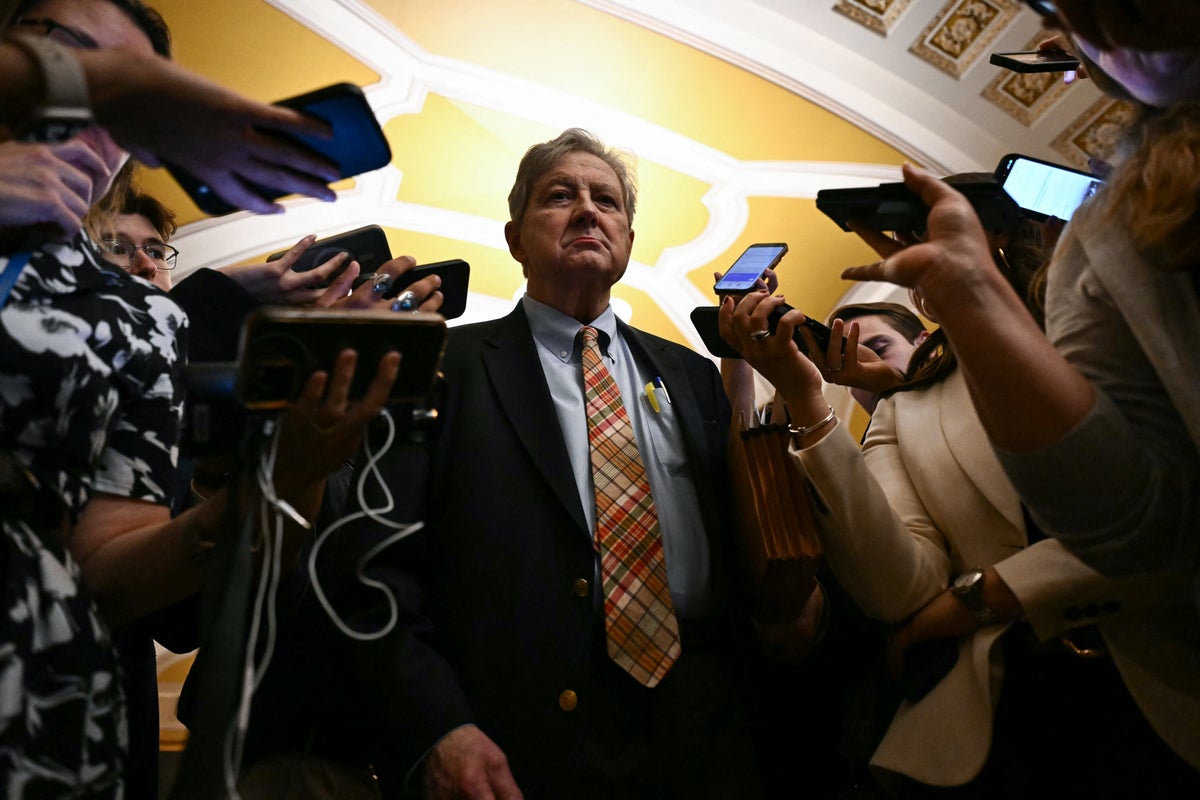
The air inside the Senate cloakroom rarely smells like history. It usually smells like dry paper, bad coffee, and the faint, permanent anxiety of men and women waiting for a bell to ring. But on a Tuesday afternoon when the desert winds halfway across the globe might as well have been blowing through the marble corridors, the silence felt heavier than usual.
A single vote was coming. Not a party-line budget vote. Not a routine confirmation. Something older. Something that smelled of uranium, secret communiques, and the eternal American bargain with kingdoms built on sand and oil. You might also find this related coverage insightful: The Weight of a Single Room When Empires Collide.
Consider the map. Draw a line from Washington to Riyadh. It passes over oceans, economic crashes, decades of security guarantees, and a graveyard of broken foreign policy doctrines. For generations, the routine was simple. You keep the oil flowing, we keep the skies safe. But the world tilted on its axis while nobody was looking. The atomic clock started ticking louder.
When word leaked that the administration was quietly grease-sliding a civil nuclear pact toward the Saudi monarchy—a deal designed to bypass the usual months of congressional bruising—something snapped in the machinery of absolute loyalty. As reported in latest articles by Al Jazeera, the results are significant.
A Republican senator broke ranks.
In Washington, breaking ranks is rarely a grand, cinematic speech delivered under spotlights. It looks like a phone call at 6:00 AM. It looks like a quiet conversation by a water cooler where two colleagues suddenly stop talking the moment an aide walks past. To understand why this particular fracture matters, you have to strip away the acronyms of non-proliferation treaties and look at the raw human fear underneath.
Imagine standing on a ridge in the middle of a desert, watching a civilian reactor rise from the dust. On paper, it is about energy independence, desalination plants, and modernizing a kingdom that knows its oil wells will eventually run dry. That is the official story. That is the glossy brochure handed to committees on Capitol Hill.
Now, imagine the other side of that same coin.
In a neighborhood as volatile as the Middle East, the distance between a civilian nuclear program and a weapons-grade enrichment program is measured not in miles, but in political will. Once the infrastructure is poured, once the technicians are trained, once the centrifuge spins for peaceful power, the muscle memory for something darker is already in place. That is the ghost haunting the cloakroom. That is what kept a conservative lawmaker—someone whose career was built on voting for defense budgets and supporting traditional alliances—staring down his own party leadership and saying no.
Power does not announce itself with a trumpet. It arrives in the quiet clauses of secret memorandums.
For months, the White House argued that if the United States did not supply the reactors, someone else would. Beijing was waiting in the wings. Moscow was holding a pen. The geopolitical logic went like this: better our safeguards, better our influence, even if we have to bend the rules to keep the deal alive.
It is a pragmatic argument. It is the kind of argument that keeps empires running.
Yet, pragmatism has a habit of eating its own children. The senator, whose name would soon flash across cable news tickers beneath barkingchy anchors, understood a different kind of math. The math of precedent. Once you hand the keys to the nuclear gate to a state that operates outside the ironclad transparency of Western democracies, you cannot un-ring that bell. You cannot recall the enriched material when a regional war flares up or a new crown prince decides the old rules no longer apply.
History is littered with the bones of short-term fixes.
Think back to the Cold War proxies. Think of every time a superpower armed an ally for convenience, only to watch those weapons turn inward a decade later. The human mind craves simple narratives. We want our allies to be heroes and our adversaries to wear black hats. Reality is messier. Riyadh is a crucial partner in counterterrorism, an economic anchor, and a sovereign nation charting its own future. But it is also an absolute monarchy with a ledger of human rights abuses that journalists write about until the ink runs dry, operating in a region where rivalries burn like oil fires.
When the vote approached, the pressure was absolute.
Party whips do not yell anymore; they look at you with eyes that remember every favor you ever asked for and every committee assignment you ever wanted. They remind you of the donors. They remind you of the midterms. They tell you that unity is the only currency that matters in a divided capital.
To stand up in that climate requires a specific kind of stubbornness. It is the stubbornness of someone who has read too many old intelligence briefings and realized that the men who write the history books are usually dead by the time the consequences hit the fan.
The debate on the Senate floor was strangely subdued. No grand oratory echoes through the dome when the outcome is already a foregone conclusion. Instead, it was an exchange of technical jargon. Senators spoke of Article 123 agreements, International Atomic Energy Agency inspections, and enrichment thresholds as if they were discussing tax code.
Language is a brilliant anesthetic. It turns the splitting of the atom into a bureaucratic footnote.
But beneath the parliamentary procedure, the stakes were existential. The senator took the floor, adjusted the microphone, and spoke not to the empty leather chairs of his colleagues, but to the future. He talked about deterrence. He talked about the fragile architecture of global security that took eighty years to build and could be dismantled in a single legislative afternoon.
He didn't mention Trump by name at first. He didn't need to. The shadow of the former president—and the persistent, transactional view of foreign policy that defines modern populism—hung over the chamber like humidity. For years, the conservative movement had been told that deals are everything, that alliances are just business transactions, and that moral posturing is a luxury for the weak.
Breaking with that philosophy is an act of political exile.
Yet, the defection exposed a deeper fault line that goes far beyond one man or one administration. It revealed a quiet civil war within the American right over what it means to be a global superpower. Is the United States the guardian of a rules-based international order, or is it just another nation-state hustling for the next commercial contract?
When the tally finally registered on the electronic board, the rebellion was small in number, but monumental in meaning. It wasn't enough to kill the overarching ambitions of the diplomatic corps overnight. The gears of government grind slow, and the inertia of international diplomacy is nearly impossible to stop with a single vote.
But something had shifted.
The emperor's clothes were draped a little less convincingly. The illusion of bipartisan consensus on matters of nuclear proliferation had cracked down the middle, leaving jagged edges that will cut the next administration, and the one after that.
Outside the Capitol, the Washington evening fell cold and indifferent. Traffic jammed Pennsylvania Avenue. Tourists took selfies with their backs to the lit-up dome, unaware that half an hour earlier, a line had been drawn in the sand of American foreign policy.
That line will be tested. The reactors will likely be discussed again in backrooms, modified, repackaged, and pushed through under a different title or a quieter rider. The pressures of global energy markets do not care about senatorial conscience. The strategic necessity of keeping regional heavyweights out of rival spheres of influence remains a cold, unyielding reality.
And yet, the memory of that vote lingers.
It remains a reminder that systems do not fail all at once. They fail when one person, sitting in a room smelling of bad coffee, looks at a piece of paper that promises safety through dangerous means, and decides they would rather lose their standing than their sanity.
The desert wind keeps blowing east. The centrifuges keep spinning in labs half a world away. But somewhere in the quiet dark of the capital, the ledger of history is waiting for the next page to turn.


