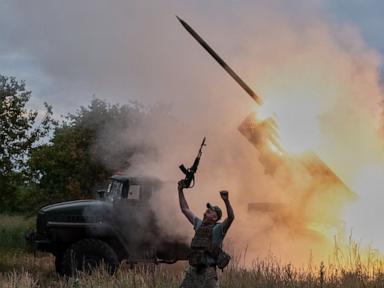
The map table in a congressional hearing room is always deceptively clean. It is smoothed out, laminated, and brightly lit, devoid of the mud, the freezing rain, and the smell of cordite that defines the actual geography of a war zone. For politicians in Washington, foreign policy can easily harden into an exercise of moving abstract chess pieces across a board. But every now and then, the human weight of those decisions breaks through the sterile committee air.
When Representative Michael McCaul, the veteran Chairman of the House Foreign Relations Committee, stood before his peers to declare his absolute commitment to a harsher stance against Russian aggression, he was not just speaking to the cameras. He was stepping into a long, bloody lineage of American foreign policy. "I'm in on that fight," he asserted, a phrase that sounds casual until you consider the sheer scale of the machinery it sets in motion.
To understand what drove a seasoned lawmaker to use such definitive language, you have to look past the political theater of Capitol Hill. You have to look at the invisible lines being drawn across the globe, and the very real human lives hanging in the balance.
The Weight of the Gavel
Step inside the halls of power where these decisions are hammered out. The room is quiet, save for the hum of the air conditioning and the occasional rustle of briefing papers. On one side sits the apparatus of state—intelligence briefings, economic data, satellite imagery showing troop movements in eastern Europe. On the other side sits a profound moral question: how much is the free world willing to endure to stop an authoritarian power from rewriting global borders by force?
For years, the debate surrounding the conflict in Ukraine has been bogged down by numbers. Billions of dollars in aid. Hundreds of main battle tanks. Thousands of artillery rounds. It is easy for the public to tune out when the conversation becomes a ledger sheet. McCaul’s recent declarations serve as a sharp reminder that this ledger is paid for in human currency.
Think of a hypothetical family in a small village outside Kharkiv. Let us call them the Petrovs. They do not think about congressional appropriations subcommittees or the nuances of the National Defense Authorization Act. They think about the structural integrity of their cellar. They listen to the distinct whistle of incoming artillery, knowing that the shell was manufactured in a Russian factory that operates around the clock, unhindered by the current web of international sanctions. For the Petrovs, American political hesitation is not a debate. It is a ticking clock.
When an American lawmaker says they are "in on the fight," it sends a ripple effect through that cellar in Kharkiv, through the Kremlin, and through every European capital. It is an assertion that the current strategy—a cautious, incremental approach designed to avoid provoking a wider war—is failing the fundamental test of efficacy.
The Illusion of the Middle Ground
We often convince ourselves that caution is the safest route in international relations. We believe that by giving just enough aid to help a democracy survive, but not enough to let it decisively win, we can manage the chaos. It is a comfortable fiction.
Consider the reality of economic sanctions. On paper, Russia is one of the most sanctioned nations on earth. Yet, walk through the markets of Moscow or the tech hubs of St. Petersburg, and you will find microchips, luxury goods, and industrial equipment flowing steadily through third-party intermediaries. The restrictions are porous. They lack the teeth required to grind a war machine to a halt.
The problem with a moderate response to immoderate aggression is that it signals weakness disguised as prudence. McCaul’s argument for toughness is rooted in a simple, historical truth: dictators do not stop because they are asked politely. They stop because they run out of resources, or because they hit a wall of absolute defiance.
But the real problem lies elsewhere. It rests in the political fatigue that creeps into the American psyche after months of headlines about a stalemated conflict. When a war drags on, it becomes background noise. It competes with domestic inflation, local elections, and everyday anxieties. The danger is that the public begins to view foreign aid as a charitable donation rather than a critical investment in global stability.
The True Cost of Turning Away
Let us dismantle the idea that what happens on the steppes of Eastern Europe stays there. The global economy is a web of nervous systems. A shock in one area registers instantly across the world.
When a superpower hesitates to enforce international norms, it acts as a green light for every other revisionist power with territorial ambitions. The stakes are not confined to the borders of Ukraine. They extend to the Taiwan Strait, the South China Sea, and the cyber networks that protect our own electrical grids and banking systems.
Imagine the ripples of an American retreat. It is a scenario where international law becomes a suggestion, where might explicitly makes right, and where smaller democracies must either arm themselves with nuclear weapons or submit to the whims of their largest, most aggressive neighbors. The world becomes fragmented, hostile, and infinitely more expensive to live in. The cost of preventing a global conflict today is a fraction of the cost of fighting one tomorrow.
McCaul’s positioning is an attempt to shock the system out of its complacency. It is an acknowledgment that the piecemeal delivery of advanced weaponry—providing air defense systems only after cities have been leveled, or approving long-range missiles only after months of bureaucratic hand-wringing—prolongs the agony rather than ending it.
The Anatomy of Resolve
True resolve is rare in modern politics. It requires a willingness to alienate factions of one's own party and to speak hard truths to a public that is weary of international commitments. It means looking at the data and admitting that the current trajectory is unsustainable.
The argument for a tougher stance is often misunderstood as hawkishness, a desire for conflict for conflict's sake. But the most profound advocates for strength are usually those who understand the horror of the alternative. They know that a flawed peace, brokered under duress, is merely an intermission before the next invasion.
Consider what happens next if the line holds: Russia is forced to reckon with the limits of its power. The international order is reaffirmed. The Petrovs can leave their cellar and begin the decades-long process of rebuilding their lives, their schools, and their community. The message sent to autocrats worldwide becomes unmistakable: the cost of aggression outweighs any possible gain.
The debate in Washington will continue to rage over dollars, cents, and strategic doctrines. The microphones will capture the arguments, and the printers will churn out endless policy papers. But beneath the noise of the capital, the core issue remains unchanged. It is a test of endurance between those who wish to remake the world through violence and those who possess the stamina to stop them.
The chairman has made his choice clear. He has placed his weight behind the lever of maximum pressure, betting that American resolve can still bend the arc of history toward stability. The question that remains is whether the rest of the nation has the stomach to follow that lead into the long, uncertain twilight of the struggle.
The laminated maps on the committee tables will eventually be rolled up and stored away. But the lines drawn in the dust of the battlefield will remain, carved deep into the earth by the choices made in the comfort of the light.