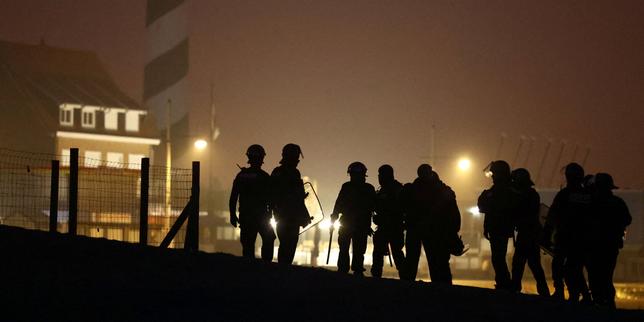
The civil action initiated by the family of Renée Good against federal officials and the United States government represents a fundamental stress test of executive enforcement immunity and the boundaries of federal police power. Originating from the fatal shooting of Good by an Immigration and Customs Enforcement officer during Operation Metro Surge in Minneapolis, the litigation moves beyond traditional tort claims to challenge the structural architecture of accountability under federal surges. Analyzing this legal strategy requires dismantling the mechanics of federal immunity, the constraints of statutory remedies, and the systemic cost functions embedded in modern interior enforcement operations.
The Structural Anatomy of Federal Immunity
To understand the trajectory of the Good family litigation, one must first dissect the legal shields protecting federal law enforcement officers from civil and criminal liability. State-level criminal prosecution of federal agents encounters a primary structural barrier in the Supremacy Clause of the United States Constitution. When a federal officer asserts that an action was taken while reasonably executing federal duties, the legal mechanism permits removal of the case from state jurisdiction to federal court, alongside the assertion of immunity.
The cost function of this framework heavily favors state-agent insulation. Under historical doctrines such as Bivens actions, plaintiffs historically sought damages for constitutional violations by federal agents. However, successive judicial curtailments have narrowed these avenues into near-insurability, leaving injured parties and surviving families with limited statutory alternatives.
By structuring the litigation to challenge not only the individual shooter but also high-level policy architects under specific statutory provisions like the Civil Rights Act of 1871, the legal team attempts to bypass standard qualified immunity barriers. This approach targets the operational directives that preceded the deployment, framing the fatal encounter as the predictable output of an unconstrained enforcement mandate rather than an isolated tactical error.
Operational Escalation and the Mechanics of Force
The sequence of events on Portland Avenue in Minneapolis highlights the friction points inherent in high-density urban immigration enforcement surges. Tactical operations conducted without local law enforcement integration characteristically elevate the probability of escalation. When federal agents operate independently within municipal spaces, the information asymmetry between local populations, municipal authorities, and federal units creates an environment prone to misinterpretation and rapid tactical escalation.
A rigorous examination of the operational parameters reveals three distinct failure points in such deployments:
- Command-Level Communication Deficits: The absence of operational coordination with local police departments eliminates localized de-escalation pathways.
- Tactical Positioning Errors: Approaching civilian vehicles in active traffic lanes inherently generates kinetic ambiguity, transforming routine encounters into high-risk physical confrontations.
- Post-Incident Control Protocols: Restricting immediate medical triage by bystanders or local professionals magnifies systemic liability and erodes institutional trust.
The evidentiary record assembled in the wake of the incident—ranging from video synchronization to independent autopsies—demonstrates the divergence between contemporaneous federal justifications and empirical findings. This evidentiary gap forms the core of the plaintiffs' strategy, converting disputed tactical necessity into a quantifiable question of administrative negligence and constitutional overreach.
The Federal Tort Claims Act as a Remedial Bottleneck
Parallel litigation surrounding Operation Metro Surge, including claims filed under the Federal Tort Claims Act (FTCA) for unlawful detention, excessive force, and procedural abuse, exposes the administrative bottlenecks governing citizen-state grievances. The FTCA requires exhaustive administrative exhaustion before a federal court can even hear a claim, a process often met with prolonged institutional silence or rejection by the Department of Homeland Security.
This dynamic creates a structural asymmetry. While federal agents operate under broad indemnification expectations, individual citizens subjected to arbitrary detention, chemical irritants, or physical battery face high transaction costs to secure baseline administrative remedies. The accumulation of these individual FTCA filings, alongside the primary wrongful death action, constructs a cumulative dossier of systemic operational failure.
Strategic Forecast and Judicial Trajectory
The outcome of the Good family lawsuits will establish a crucial precedent for the limits of presidential interior enforcement strategies. If the judiciary permits civil claims against high-level policy planners and operational commanders to proceed past the motion-to-dismiss phase, it introduces a friction cost to executive-led immigration surges. Conversely, a dismissal grounded in absolute official immunity will reinforce the structural insulation of federal agents, signaling that urban enforcement operations remain functionally immune from judicial review regardless of operational outcomes.
Litigators and institutional analysts must monitor how district courts handle the interplay between supervisory liability and the Supremacy Clause. The resolution of this tension will dictate whether civil litigation remains a viable mechanism for redress when federal enforcement meets urban civilian populations.