The world stopped spinning in the spring of 2020. We all remember the sudden, eerie silence of empty streets, the sterile smell of hand sanitizer, and the low hum of panic vibrating through our smartphones. Behind the closed doors of our homes, we watched the death tolls tick upward on glowing screens. We lost grandparents, jobs, and the simple comfort of a handshake. We wanted answers. More than that, we wanted someone to blame.
Human beings are wired for retribution. When a tragedy of apocalyptic proportions hits, the mind rejects the idea of chaotic, random misfortune. We look for a villain.
For millions, that villain became a diminutive, bespectacled eighty-something scientist named Dr. Anthony Fauci. For others, the villain was a shadowy biolab nestled near a wet market in Wuhan, China. But as the smoke of the pandemic slowly clears, a messy, uncomfortable truth emerges. The hunt for the origin of COVID-19 was never just about science. It became a geopolitical chess match where the truth was the first casualty, one man became a lightning rod for global fury, and the world's most powerful autocracy successfully pulled the curtain shut.
The Lightning Rod
Imagine standing under a turbulent sky while a thunderstorm rages. You are not the one who conjured the rain, nor did you forge the lightning. But you are holding a metallic rod, and every bolt from the heavens is tearing straight through you.
That was Anthony Fauci.
To understand the vitriol directed at him, we must look at how public accountability works during a crisis. As the face of the American pandemic response, Fauci was tasked with communicating shifting, real-time science to a terrified and deeply polarized public. When the science changed—as it naturally does when tracking a novel virus—it looked to many like deception.
The core of the accusation against him hinges on a highly technical, dryly named concept: gain-of-function research.
Think of gain-of-function research like a controlled burn in forestry. Scientists take a naturally occurring virus and intentionally modify it in a lab to make it more transmissible or lethal. Why? To stay one step ahead of nature. By forcing the virus to mutate in a controlled environment, researchers can develop vaccines and treatments before a deadly strain evolves in the wild. It is a high-stakes gamble.
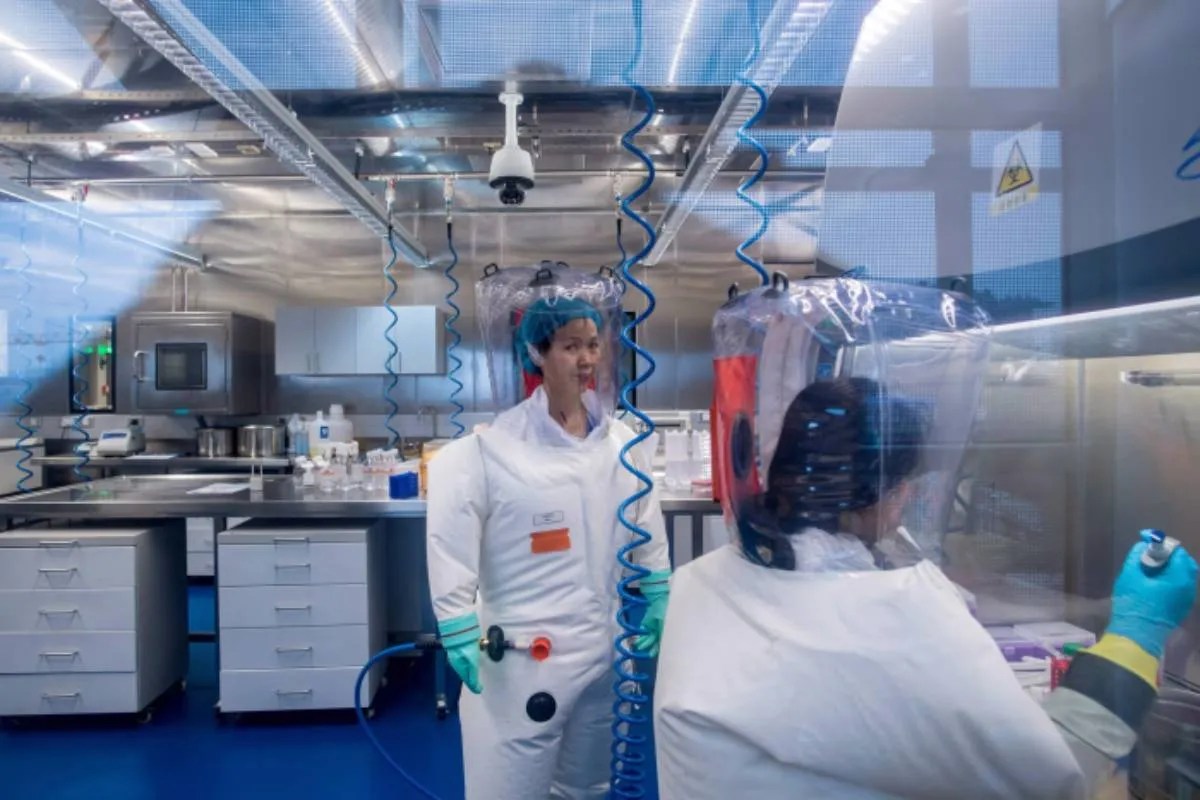
The National Institutes of Health (NIH), which Fauci directed, had funded a grant to an organization called EcoHealth Alliance. This group collaborated with the Wuhan Institute of Virology (WIV) to study bat coronaviruses. When the pandemic hit, critics pointed at this financial trail. The narrative wrote itself: Fauci funded the research, the virus leaked, and Fauci covered it up.
But reality refuses to be that simple.
The specific research funded by the NIH grant in Wuhan involved viral strains that were genetically vastly different from SARS-CoV-2. Biochemically, it was impossible for the viruses studied under that specific grant to turn into the monster that shut down the globe. Yet, in the court of public opinion, nuance is a luxury no one has time for. Fauci became the convenient proxy for a collective trauma. By focusing all the rage, congressional hearings, and media scrutiny on one American scientist, the conversation shifted.
We started arguing about an old man's emails instead of looking across the ocean at the locked gates where the story actually began.
The Great Wall of Silence
While Washington was consumed by political theater, two hundred miles from Shanghai, the city of Wuhan became ground zero for a different kind of operation. A cleanup.
In the early days of December 2019, doctors in Wuhan were noticing a strange, cluster-like pneumonia that resisted standard treatments. A free, democratic society relies on whistleblowers to sound the alarm. In an authoritarian regime, whistleblowers are viewed as systemic glitches that need to be erased. Dr. Li Wenliang, who tried to warn his fellow medics about the virus on a private messaging app, was detained by police, accused of "making false comments," and forced to sign a confession. He later died of the very virus he tried to warn the world about.
His death was a tragedy, but the systemic scrubbing that followed was a strategy.
When international scientists raised the possibility that the virus might have leaked from the Wuhan Institute of Virology—a facility known for researching bat coronaviruses right in the epicenter of the outbreak—the response from the Chinese government was swift, absolute, and defensive.
Consider how a standard epidemiological investigation is supposed to work. When a foodborne illness breaks out at a restaurant, health inspectors rush in. They swab the cutting boards, test the water, track the supply chain, and interview the staff immediately. Time is the enemy. Evidence degrades.
In Wuhan, the opposite happened. The Huanan Seafood Market was scrubbed clean and sanitized before independent eyes could properly map the layout. The database of viral sequences at the Wuhan Institute of Virology, containing thousands of samples of bat coronaviruses, was taken offline in late 2019. It remains offline to this day.
When the World Health Organization (WHO) finally managed to send a team to Wuhan in early 2021—more than a year after the outbreak—the visit was tightly choreographed. Highly monitored. The international scientists were given highly curated presentations. They were denied access to raw, anonymized patient data from the earliest cases.
China avoided a real investigation not through sophisticated espionage, but through brute-force sovereignty. They simply said no. They used their economic leverage, their veto power on global stages, and an aggressive counter-narrative campaign suggesting the virus actually originated in a U.S. military base or via imported frozen food.
By turning the origin story into a diplomatic warzone, they ensured that any nation pushing too hard for transparency faced immediate economic retaliation, as Australia learned when it called for an independent inquiry and was promptly hit with massive Chinese trade tariffs.
The Cost of the Unproven
We are left in a frustrating, agonizing limbo. Did the virus jump from a bat to an intermediate animal, and then to a human in a crowded market? Or did a researcher at the WIV accidentally track a laboratory sample out into the streets of Wuhan?
Both theories are plausible. Both have pieces of circumstantial evidence supporting them. The intelligence community remains divided, with some agencies leaning toward a natural spillover and others toward a lab leak.
The tragedy is that we may never know for certain. The trail is cold. The physical evidence has been washed away, the digital records are locked in secure servers in Beijing, and the political will to uncover the truth has been swallowed by partisan bickering.
This matters immensely. It is not just about assigning historical blame or satisfying our collective need for a clean ending to a dark chapter.
If COVID-19 was a natural spillover, we need to completely overhaul how humanity interacts with wildlife, how we manage animal markets, and how we police the deforestation that pushes wild pathogens into human centers. If it was a lab leak, we need an unprecedented, global regulatory framework for biosafety, ensuring that the experiments meant to save us do not become the tools of our destruction.
By allowing the investigation to be sabotaged by geopolitical stonewalling on one side and obsessive scapegoating on the other, we have chosen ignorance.
Somewhere right now, in a remote cave or in a high-security laboratory, the next threat is quiet. It is adapting. It does not care about congressional subcommittees, diplomatic immunity, or who wins the next election. It only cares about finding a host. And because we spent our time fighting over the villains of the last war instead of fortifying the defenses for the next, we remain dangerously, heartbreakingly vulnerable.