The air inside Terminal 2 of the Minneapolis-St. Paul International Airport often carries a specific kind of tension. It is the scent of budget vacations and the tight margins of the American middle class. Here, a family of four juggles overstuffed backpacks to avoid carry-on fees, their faces a mix of exhaustion and the desperate hope that the beach in Punta Cana is worth the three-hour delay. This is the natural habitat of Sun Country Airlines. It is a scrappy, hometown hero that survived multiple bankruptcies to become the lifeline for Minnesotans seeking a reprieve from the tundra.
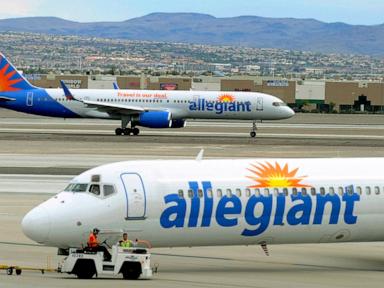
Now, imagine that same family landing in Las Vegas, the neon shimmering through the haze of a desert heatwave. They exit the gate only to see the bright, unapologetic orange and blue of Allegiant Air. For years, these two carriers existed in parallel universes. Allegiant owned the small-town runways of America, connecting places like Provo, Utah, or Appleton, Wisconsin, to the bright lights of Florida and Nevada. Sun Country owned the frozen North.
They were the underdogs. They were the "other" guys.
But the sky just got a lot smaller. With the finalized merger between Allegiant Air and Sun Country, the map of American travel has been redrawn, not by a pen, but by a balance sheet. This isn't just a corporate filing or a change in ticker symbols. It is a seismic shift for anyone who has ever scrolled through a flight aggregator at 2:00 AM, hunting for a fare that wouldn't require a second mortgage.
The Calculus of the Middle Seat
Airlines are often viewed as cold, mechanical entities. We talk about them in terms of "load factors," "available seat miles," and "yield management." But at its core, an airline is a promise. It is the promise that for $159, you can be at your grandmother’s funeral or your best friend’s wedding. When two of the biggest names in the "Ultra-Low-Cost Carrier" (ULCC) segment merge, that promise undergoes a radical transformation.
The math behind this union is simple. The execution is anything but.
Allegiant has built a kingdom on a unique, almost eccentric business model. They don't fly every day. They don't want to compete with Delta or United in the massive hubs. Instead, they find the "unserved" routes. They buy used aircraft, keep them paid for, and fly them only when the demand is highest. Sun Country, under its recent private equity ownership, pivoted to mimic some of this, while also branching out into cargo flights for Amazon.
By joining forces, they aren't just becoming bigger. They are becoming a wall.
Consider a hypothetical traveler named Sarah. She lives in a mid-sized city in the Midwest. In the old world, she might have had a choice. Perhaps Sun Country offered a seasonal flight to Orlando, or maybe Allegiant ran a twice-weekly shuttle to the same destination. Competition, however minimal, kept the prices in a race to the bottom. Sarah benefited from that friction.
In the new world, that friction is gone. The merger creates a powerhouse with over 150 aircraft and a dominant grip on secondary markets. The synergy—that word corporate executives love and travelers fear—means the combined entity can optimize schedules. They can ensure that they aren't cannibalizing each other's profits. For the boardroom, this is a triumph of efficiency. For Sarah, it might mean the $99 fare she relied on quietly ticks up to $149.
Why? Because where else is she going to go?
The Ghost of the "Big Four"
To understand why this merger matters, you have to look at the giants looming in the distance. American, Delta, United, and Southwest control the vast majority of the domestic market. They are the cathedrals of the industry. For a long time, the smaller players like Allegiant and Sun Country were merely the roadside chapels—useful, but limited.
But the industry has been cannibalizing itself for decades. We saw it with United and Continental. We saw it with American and US Airways. Most recently, we watched the protracted, messy drama of the attempted JetBlue and Spirit merger, which was eventually swatted down by regulators who feared it would strip the "low-cost" out of the market.
Allegiant and Sun Country managed to slip through the gate because their overlap was different. They didn't represent a monopoly on a single route; they represented a monopoly on a lifestyle.
They cater to the traveler who is willing to be uncomfortable for four hours if it means they can afford the hotel once they land. They are the airlines of the "unbundled" experience. You want a seat? Pay. You want a bag? Pay. You want a glass of water? Pay. This "nickel and diming" is often mocked, but it is the only reason millions of people can afford to fly at all.
The danger of this merger isn't that the service will get worse—it’s already famously basic. The danger is that the consolidation of the budget tier leaves the consumer with a binary choice: the expensive, "full-service" airline, or the one remaining budget giant. When the "little guys" stop fighting each other, they start focusing on how much they can extract from you.
The Logistics of a New Empire
Operating an airline is essentially a high-stakes gambling operation disguised as a transportation business. You are betting that the price of jet fuel won't spike, that the weather will cooperate, and that 180 people will all want to go to Destin, Florida, on a Tuesday.
Allegiant’s leadership has always been famously disciplined. They are the masters of the "out-and-back" model. Pilots sleep in their own beds at night because the planes return to base. Sun Country brought a different flavor—a more traditional hub-and-spoke light model mixed with a heavy dose of charter work.
Merging these two cultures is like trying to weld a tractor to a sports car. Both have wheels, but they move at different speeds for different reasons.
The technical hurdles are immense. You have different maintenance protocols, different union contracts, and different software systems. We have seen this go wrong before. When airlines merge, the first few months are often a graveyard of lost luggage and canceled flights as the two "brains" of the companies struggle to communicate.
But if they pull it off, the combined Allegiant-Sun Country entity becomes a formidable fortress. They can move aircraft to where the sun is shining—literally. If a cold snap hits the Northeast, they can pivot their fleet to serve the sudden demand for Florida. If Amazon needs more packages moved during the holiday rush, Sun Country’s cargo expertise can be scaled across a larger infrastructure.
The Human Cost of Efficiency
Behind the stock prices and the fleet counts are the people who make the machines move. Pilots, flight attendants, and mechanics are the ones who feel the weight of a merger most acutely. Seniority lists—the sacred scrolls of the aviation world—must be merged. A pilot who spent ten years climbing the ladder at Sun Country might suddenly find themselves junior to someone at Allegiant, affecting their pay, their schedule, and their life.
There is a quiet anxiety in the breakrooms. When two companies become one, "redundancy" becomes the buzzword of the day. How many headquarters do you need? How many gate agents in a shared city?
For the passenger, this manifests as a loss of identity. Sun Country had a "Minnesota Nice" reputation. It felt like a local business that happened to own Boeing 737s. Allegiant has always felt like a tech company that happened to have wings—efficient, detached, and laser-focused on the bottom line. As these two identities merge, the "hometown" feel of the budget flight is likely to be the first casualty.
The Sky Ahead
We are entering an era of the "Mega-Budget" carrier. The gap between the luxury of a first-class pod on a transcontinental flight and the utilitarian plastic seat of a budget hop is becoming a canyon.
The Allegiant-Sun Country merger is a signal that the era of the independent, regional low-cost carrier is ending. To survive the volatility of the 2020s—the fuel shocks, the labor shortages, and the climate pressures—you have to be big. You have to be a titan.
But as these companies grow, the individual traveler feels smaller. We are no longer customers to be wooed; we are data points to be optimized. We are "load" to be balanced.
The next time you sit in a terminal, watching the sun set over the runway, look at the logos on the tails of the planes. They are becoming fewer. The colors are blending. The choices are narrowing. The merger is complete, the papers are signed, and the fleet is ready.
But for the family in Minneapolis, the goal remains the same. They just want to get to the sun. They just want to go home. And now, they only have one window to look through to find their way there.
The planes will still take off. The engines will still roar. But the silence in the market is the loudest sound of all.