The Memorial Centre in Kingston has a specific smell. It is a sharp, metallic cocktail of frozen condensation, worn leather, and the faint, lingering ghost of floor wax. For twenty years, that scent was the first thing Brett Gibson breathed every morning. It was the backdrop to his life, a constant companion as he moved from a young, ambitious hire in 2005 to the dean of Ontario University Athletics coaches.
He didn’t just coach a team. He curated a legacy in a town where the wind off Lake Ontario cuts through your coat like a knife.
The news that Gibson is stepping down as the head coach of the Queen’s Gaels men’s hockey program isn't just a personnel change. It is the end of an era for a program that, before his arrival, often felt like a footnote in the storied history of Canadian university sports. He leaves behind a vacuum that stats alone cannot fill. To understand why this matters, you have to look past the wins and the losses. You have to look at the invisible architecture of a locker room.
The Architect of the Underdog
When Gibson took the reins two decades ago, the Gaels weren't exactly a powerhouse. They were a team of smart kids who played hard but often found themselves looking up at the Goliaths of the OUA. Gibson changed the math. He didn't have the massive recruiting budgets of some professional-track programs, so he traded in a different currency: belief.
He looked for the players who had been told they were too small, too slow, or too academic to make it in the pro ranks. He brought them to Kingston. He gave them a jersey with the tricolour stripes and told them they belonged.
Consider a hypothetical freshman arriving at Kingston station in early September. He’s nervous. His parents are driving back to a suburb four hours away. He’s about to balance an engineering degree with a forty-game schedule. In that moment, the coach isn't just a tactician drawing circles on a whiteboard. He is a surrogate father. He is the person who ensures that when the skates are laced, the outside world disappears. Gibson mastered that transition. He turned a collection of students into a brotherhood.
The Weight of Twenty Winters
Twenty years is a lifetime in hockey. Think about the sheer volume of that tenure.
- Two decades of 6:00 AM practices in the dead of January.
- Thousands of hours spent on coach buses traversing the 401.
- The emotional tax of watching four-year players graduate and move on, only to start the process all over again with a new crop of teenagers.
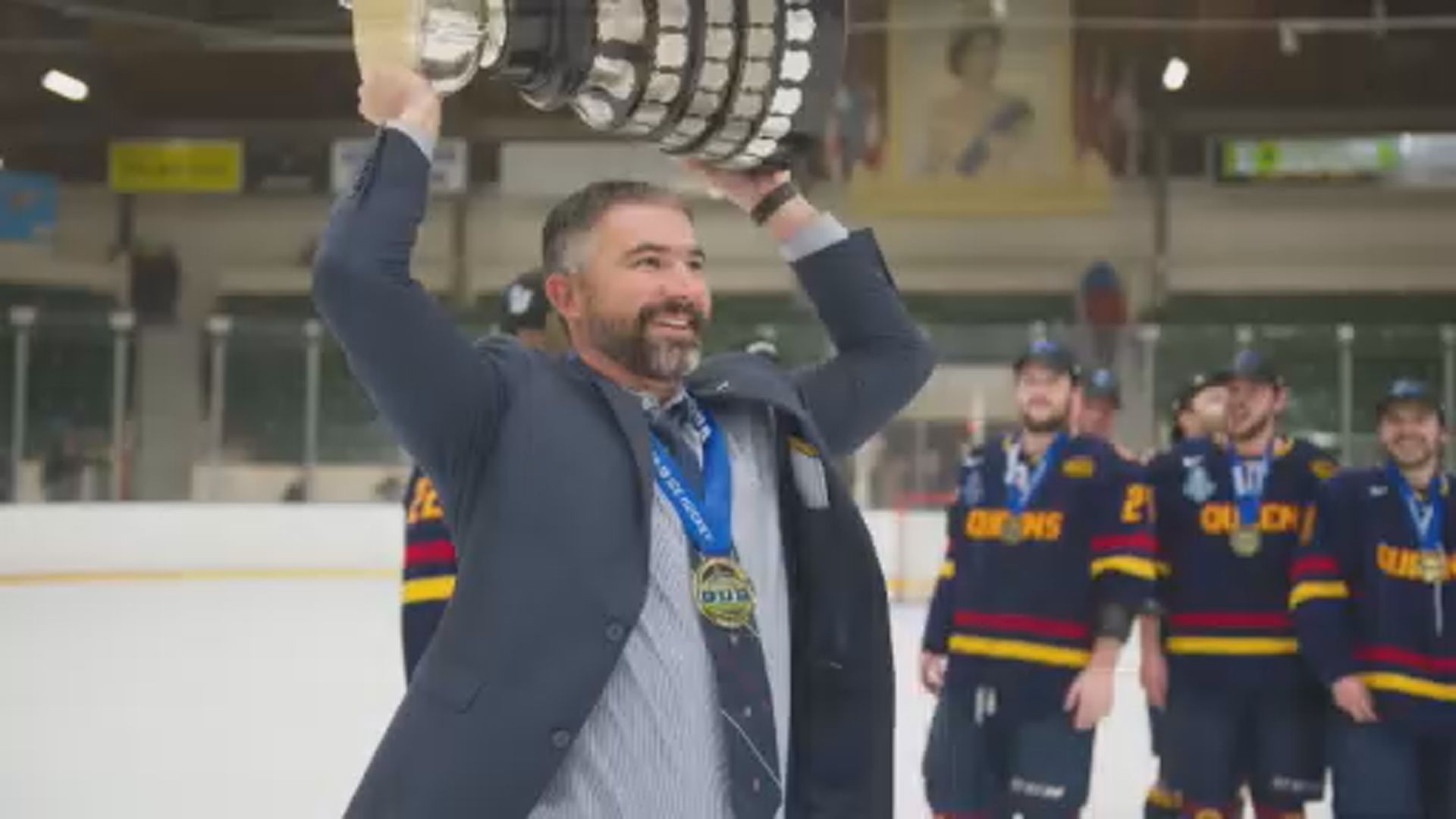
Gibson’s record speaks for itself. He is the winningest coach in the program’s history, boasting over 300 victories. He led the Gaels to an OUA Queen’s Cup championship in 2019, a moment that felt like a fever dream for a fan base that had waited decades for that kind of validation. He was named the U Sports Coach of the Year. He even took his talents to the international stage, coaching Canada’s U18 team and leading a group to gold at the Hlinka Gretzky Cup.
But the real work happened in the quiet moments. It happened in the one-on-one meetings in a cramped office where a player's confidence was rebuilt after a bad slump. It happened in the recruitment calls where he promised parents that their sons would leave Queen's not just as better hockey players, but as men ready for the world.
That is the invisible stake of college coaching. In the NHL, it’s about the points on the board. In the OUA, it’s about the trajectory of a life. Gibson understood that the game was a vehicle, not the destination.
A Departure Without a Script
There is a certain irony in a coach stepping away when they still have plenty of gas in the tank. Usually, these stories end with a firing or a forced retirement. But Gibson is walking away on his own terms.
Why now?
The answer rarely lies in a single event. It’s the cumulative weight of the whistle around the neck. Coaching at this level is a relentless grind that eats into family dinners, holidays, and weekends. It demands a level of obsession that is hard to sustain for a decade, let alone two. By choosing to step down now, Gibson is preserving the integrity of his work. He isn't waiting for the fire to go out; he’s stepping back while the glow is still bright enough to light the way for whoever follows.
The search for a successor will be exhaustive. Queen’s University is a prestigious post, but the shadow Gibson leaves behind is long. The next coach won't just be inherited a roster; they will be inheriting a culture. They will be walking into a room where the standards were set by a man who treated every practice like a Game 7.
The Echo in the Rafters
Change is uncomfortable. For the alumni who played under Gibson in the mid-2000s, he is the tether to their youth. For the current roster, he is the only leader they’ve known in a Gaels uniform. There is a specific kind of grief that comes with the end of a long coaching tenure—a feeling that the foundation has shifted.
But sports, like life, is defined by its cycles. The ice will be flooded again. A new batch of recruits will walk through the doors of the Memorial Centre, unaware of the decades of sweat that preceded them. They will see the 2019 championship banner and perhaps they won't immediately think of the man who paced the behind the bench that night, his voice hoarse from shouting over the crowd.
They don't need to. The work is already done.
Brett Gibson didn't just win hockey games. He built a fortress of identity in a cold town. He proved that you could demand excellence without sacrificing humanity. He showed that loyalty isn't just a word you stitch onto a jersey, but something you earn through twenty years of showing up when the sun hasn't even thought about rising.
As the lights dim on this chapter of Queen’s hockey, there is no need for a grand summary or a neat list of achievements. The evidence is scattered across the country in the lives of the men who played for him—doctors, lawyers, fathers, and coaches who still carry a piece of that Kingston ice in their hearts.
The whistle is silent. The office is packed. Somewhere, a Zamboni is making one last pass over a sheet of fresh ice, erasing the marks of the day’s practice, leaving behind a surface that is smooth, cold, and ready for whatever comes next.