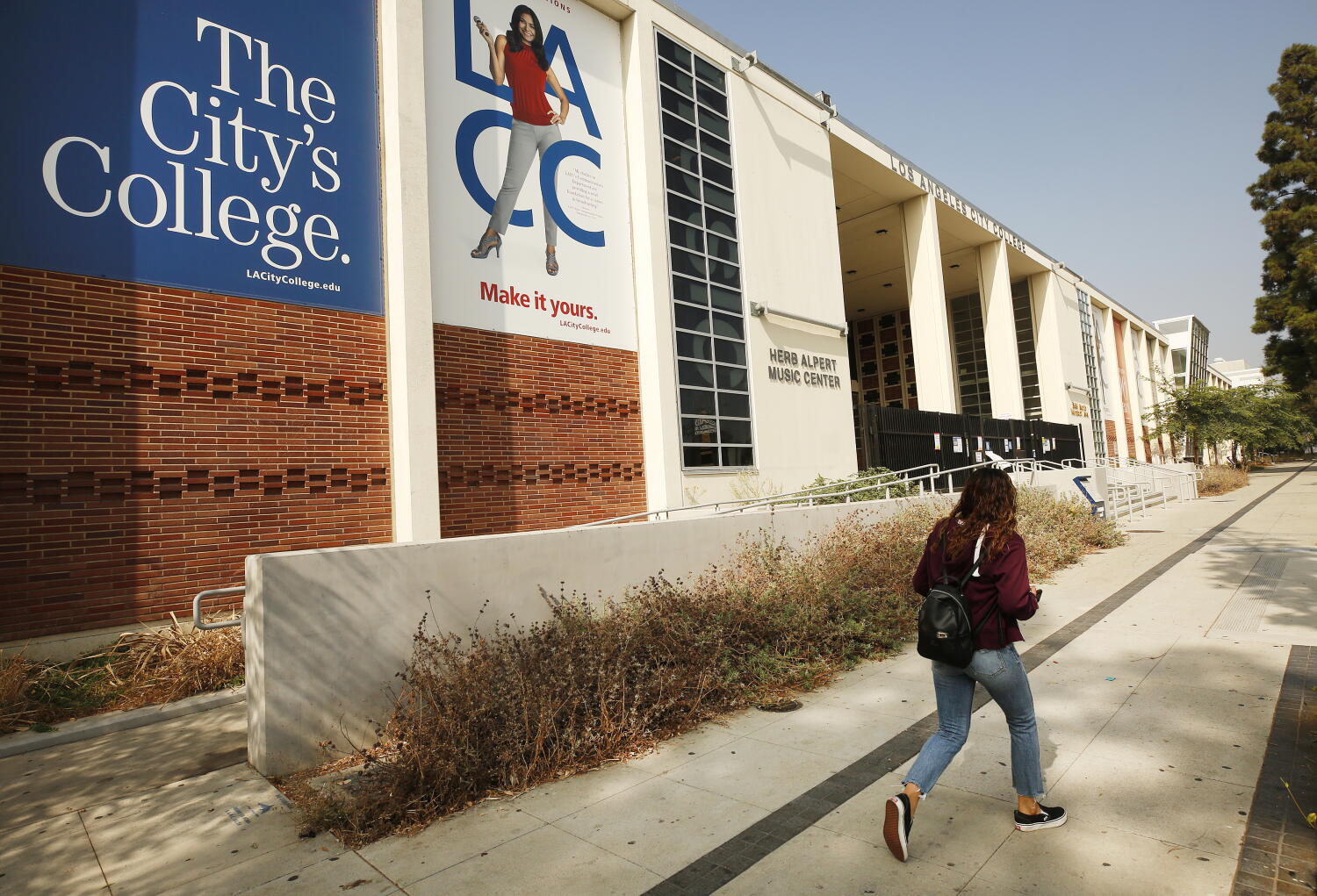
Voters in the Los Angeles Community College District (LACCD) routinely treat the Board of Trustees race as an afterthought at the bottom of the municipal ballot, yet this seven-member body controls a multi-billion-dollar annual operating and capital budget across nine campuses serving roughly 200,000 students. Evaluating LACCD candidates requires stripping away generic campaign rhetoric about student success and focusing instead on three operational variables: capital bond allocation, labor-management equilibrium, and enrollment recovery mechanics. Because LACCD elections operate on an at-large basis across a massive geographic footprint—spanning from the San Fernando Valley to the Harbor area—incumbents and union-backed slates hold structural advantages that distort standard accountability loops.
The Structural Paradox of At-Large Representation
Most municipal legislative bodies in Southern California have transitioned to district-based elections under the pressure of the California Voting Rights Act (CVRA) to ensure localized representation. LACCD remains an outlier. While trustees are required to reside within specific geographic boundaries corresponding to their numbered seats, every registered voter across the entire district votes on every open seat.
This hybrid mechanism creates an immediate capital barrier for challengers. Running a viable campaign across a jurisdiction covering nearly 900 square miles and over four million residents demands name recognition and direct-mail budgets that individual candidates rarely possess without institutional backing.
The cause-and-effect chain is predictable:
- High Information Costs: Voters face low-salience, down-ballot races with minimal local media coverage. Without clear partisan cues on the officially nonpartisan ballot, voters default to heuristic shortcuts: ballot designations, recognizable surnames, or slate mailers.
- Institutional Capture: Because independent fundraising at scale is prohibitive, candidates rely heavily on endorsements and independent expenditure committees funded by public-sector labor unions—primarily the Los Angeles College Faculty Guild (AFT Local 1521) and the Service Employees International Union (SEIU)—alongside construction trade councils interested in district bond projects.
- Asymmetric Accountability: Once elected, a trustee's primary political survival depends less on localized constituent satisfaction in a specific neighborhood and more on maintaining alignment with the district-wide coalition that funded their outreach.
Understanding this dynamic shifts how a voter must read a candidate's ballot statement. Phrases like "fiscal responsibility" or "student-first leadership" are noise. The signal lies in a candidate's relationship to the district's existing power centers and whether they represent continuity or an external audit of current administrative habits.
The Three Pillars of LACCD Operational Governance
A trustee does not manage day-to-day classroom instruction; the board's statutory authority is confined to hiring and evaluating the district chancellor, approving the annual budget, ratifying collective bargaining agreements, and overseeing capital construction bonds. Assessing candidates requires grading them against these specific levers.
1. Capital Bond Oversight and Construction Governance
Over the past two decades, Los Angeles voters have approved successive multi-billion-dollar general obligation bond measures (such as Measures A, AA, J, CC, and LA) to modernize aging campus infrastructure. Managing this capital pipeline is arguably the board's highest-risk responsibility. Past audit cycles and investigative reports within the district have documented recurring friction points: cost overruns, delayed project timelines, underutilized facilities, and disputes over project labor agreements (PLAs).
When evaluating candidates on infrastructure, look for specific operational literacy rather than broad support for campus upgrades. A competent trustee understands the difference between capital expenditures (bond funds, which legally cannot pay for teacher salaries or routine maintenance) and the unrestricted general fund (which covers daily operations).
Candidates who promise to use bond money to hire more counselors or lower textbook costs are demonstrating a fundamental ignorance of California municipal finance law. Conversely, candidates who address total cost of ownership—specifically how new, square-footage-heavy buildings will increase ongoing utility and custodial liabilities on the general fund—understand the long-term fiscal trap facing shrinking campuses.
2. Enrollment Economics and the Student Centered Funding Formula
Community college financing in California underwent a structural shift with the introduction of the Student Centered Funding Formula (SCFF). Historically, districts were paid almost exclusively based on Full-Time Equivalent Students (FTES)—essentially, headcount during census weeks. Under the SCFF, funding is split across three metrics:
- Base Allocation: Still tied to enrollment volume (FTES), accounting for the majority of funding.
- Supplemental Allocation: Tied to the count of low-income students receiving financial aid (Pell Grants, California College Promise Grants).
- Student Success Allocation: Tied to performance outcomes, including associate degrees granted, transfers to four-year universities, completion of transfer-level math and English within the first year, and attainment of regional living wages.
LACCD suffered severe enrollment contraction during the pandemic years, and recovery across its nine colleges—East Los Angeles, L.A. City, L.A. Harbor, L.A. Mission, L.A. Pierce, L.A. Southwest, L.A. Trade-Tech, L.A. Valley, and West L.A.—has been uneven. When enrollment drops below state-funded thresholds, districts rely on temporary "hold harmless" protections that prevent immediate budget cliffs. Once those statutory floors expire, revenue realigns with actual attendance and completion metrics.
Voters must examine how candidates propose to close this structural gap. Expanding online course offerings captures flexible adult learners, yet asynchronous classes often exhibit lower completion rates among underprepared students, which depresses the Student Success Allocation. Meanwhile, maintaining under-enrolled in-person sections preserves faculty teaching loads but drains the general fund. Trustees must constantly balance instructional access against unit economics.
3. Collective Bargaining and General Fund Rigidity
Roughly 80% to 85% of a typical community college district's unrestricted general fund is consumed by employee salaries and benefits, including rising pension obligations to CalSTRS and CalPERS. This leaves a narrow margin for discretionary spending, emergency reserves, or rapid program innovation.
Because faculty and staff unions are the most active participants in LACCD board elections, trustees face an inherent principal-agent problem. The board sits across the bargaining table from the very organizations that financed their campaigns. While collaborative labor relations prevent disruptive strikes and support faculty retention, uncritical approval of retroactive pay raises or rigid workload rules without corresponding enrollment growth creates structural deficits.
Evaluating a candidate on this axis requires looking at their background in public or private administration. Have they ever managed a budget where fixed labor costs collided with stagnant revenue? Do they define their role as an advocate for district employees or as a fiduciary for the taxpayers and students who rely on the institution's long-term solvency?
Campus Asymmetry: The Nine-College Problem
A frequent analytical error in covering LACCD elections is treating the district as a monolith. In reality, the nine colleges operate with vastly different demographic profiles, academic missions, and physical capacities.
- Transfer-Heavy Campuses: Colleges like Pierce, Valley, and East Los Angeles function heavily as transfer pipelines to the University of California and California State University systems. Their primary operational bottlenecks involve course articulation, transfer counseling ratios, and dual-enrollment partnerships with local K-12 unified school districts.
- Career Technical Education (CTE) Hubs: Institutions like L.A. Trade-Technical College focus heavily on vocational training, apprenticeships, and workforce development. CTE programs carry high equipment and facility overhead costs and require rapid curriculum adaptation to match regional labor market shifts in healthcare, green energy, and logistics.
- Historically Underserved Campuses: Colleges such as L.A. Southwest serve communities with higher concentrations of first-generation students and steeper socioeconomic barriers. Here, non-instructional wrap-around services—food pantries, transit subsidies, childcare, and emergency housing grants—directly dictate persistence rates.
An at-large trustee who applies a uniform policy template across all nine campuses inevitably creates inefficiencies. For example, standardized minimum class-size cancellation policies may protect budgets at high-volume campuses while accidentally gutting specialized, lower-enrollment vocational cohorts or essential remedial pathways at smaller colleges.
Diagnostic Framework for Evaluating the Ballot
Because campaign websites are curated marketing documents, voters must use an investigative filter to separate operational competence from political boilerplate. Apply this four-step audit to the candidates on your ballot:
Step 1: Audit the Ballot Designation
California election law strictly regulates the three-word professional title printed beneath a candidate's name. Incumbents use "Appointed/Elected Governing Board Member." Challengers often use titles like "Educator," "Small Business Owner," "Attorney," or "Community Advocate." Scrutinize vague designations. A candidate listing "Community Advocate" without a verifiable track record in public finance, higher education governance, or large-scale organizational management lacks baseline operational proof.
Step 2: Trace the Independent Expenditures
Do not stop at the candidate's direct campaign committee filings; those are capped by contribution limits. Look at the independent expenditure (IE) committees registered with the Los Angeles County Registrar-Recorder/County Clerk. Identify which entities are spending tens of thousands of dollars on mailers and digital ads on a candidate's behalf. If a candidate's viability is entirely subsidized by a single bargaining unit or construction trade group, assume their votes on contract ratifications and PLA renewals are pre-committed.
Step 3: Cross-Reference Attendance and Audit Votes for Incumbents
For sitting trustees seeking re-election, rhetoric is irrelevant; their voting record is public data. Review board meeting minutes from the preceding two years focusing on three items:
- Did they question sole-source contracts or change orders on bond construction projects?
- How did they vote on the district's annual budget adoption, and did they demand concrete metrics tied to the Student Centered Funding Formula?
- Did they demonstrate independence on divided board votes, or do they vote in a uniform bloc on every agenda item?
Step 4: Evaluate Specificity on Enrollment and Articulation
When reviewing candidate questionnaires from local civic leagues or student newspapers, discard answers that rely on aspirational verbs ("champion," "prioritize," "expand"). Reward candidates who cite concrete mechanisms: streamlining credit-for-prior-learning policies for working adults, auditing non-credit to credit transition pathways, or consolidating redundant administrative layers across the central district office (located on Wilshire Boulevard) to push dollars back to campus-level instruction.
The Strategic Reality of the LACCD Vote
The limitations of this analytical approach are clear: even the most diligent voter cannot force a candidate to campaign on granular fiscal metrics when low turnout rewards broad name recognition. Furthermore, a single reform-minded trustee elected to a seven-member board cannot unilaterally rewrite collective bargaining agreements or alter state funding formulas; they hold one vote and the power of public inquiry during televised board meetings.
However, the marginal value of an informed vote in an LACCD race is significantly higher than in top-of-the-ticket federal or statewide contests. Down-ballot elections are routinely decided by narrow margins, and the introduction of even one or two trustees willing to scrutinize bond change orders, question central office administrative bloat, and demand empirical return-on-investment data for student retention programs alters the internal dynamics of the boardroom. Treat your LACCD ballot selection not as an ideological endorsement, but as a corporate board appointment: hire the candidate with the sharpest financial literacy and the fewest conflicts of interest with the vendors and bargaining units they are sworn to regulate.