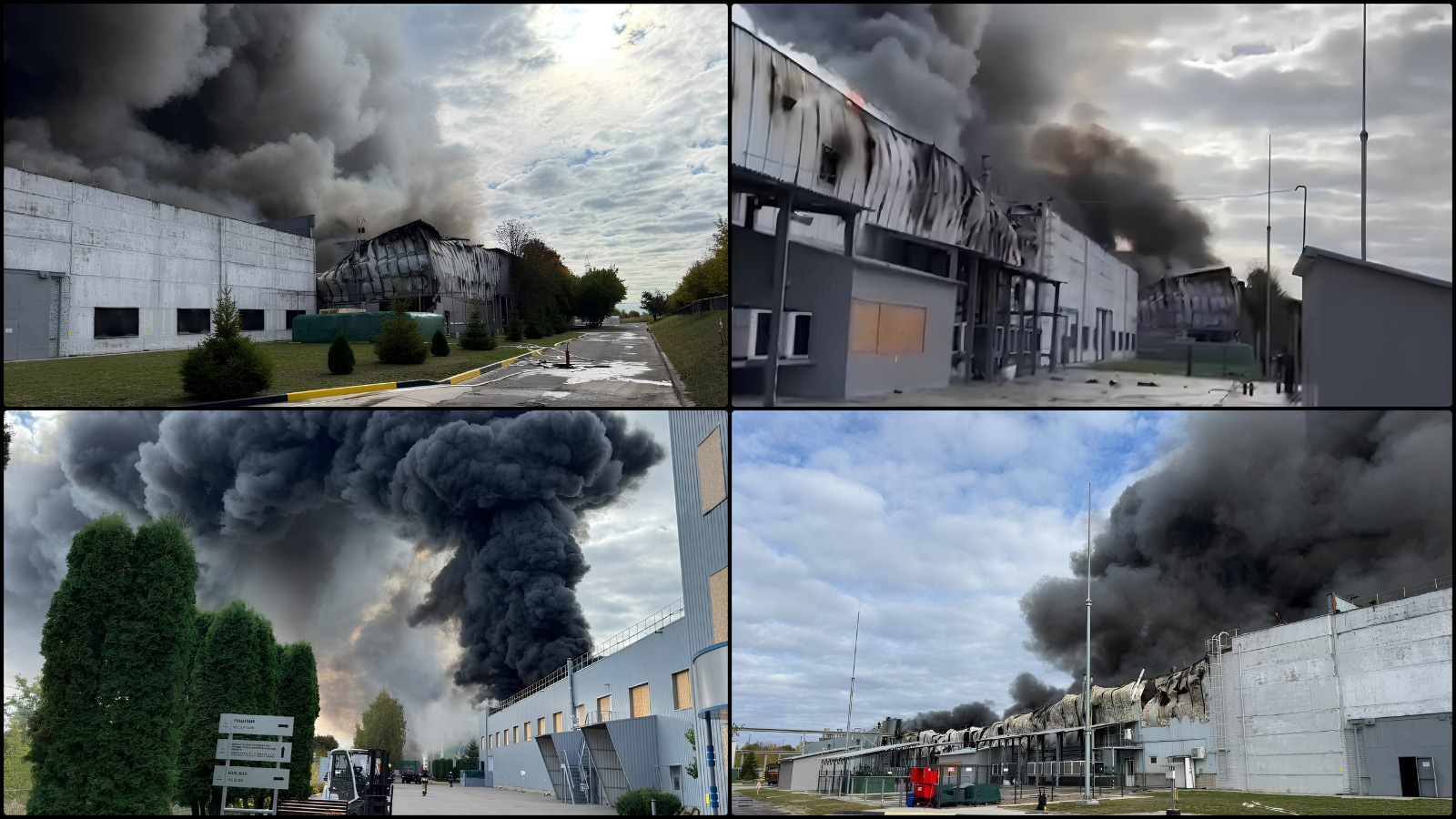
Every boardroom in Mumbai and Zurich just lost its mind over a burning factory in eastern Europe. The headlines scream about a destroyed Indian owned pharmaceutical asset, fifty million dollars gone in a single flash, and the tragic loss of human life. Analysts are treating this as an isolated catastrophe, a tragic casualty of modern artillery and geopolitical crossfire.
They are dead wrong. For a different perspective, see: this related article.
This disaster is not an anomaly. It is the predictable outcome of a broken global sourcing model built on the lazy assumption that active pharmaceutical ingredients and finished generics can be manufactured anywhere on Earth without paying the true cost of territorial risk. I have spent two decades auditing supply chains across volatile corridors, and watching executives clutch their pearls over this attack is exhausting. For years, companies chased low-cost labor and lax regulatory oversight straight into active conflict zones, wrapping themselves in the warm blanket of multinational diversification strategies.
Now the bill has arrived. Related insight regarding this has been published by Financial Times.
The Mirage of Borderless Manufacturing
Look past the emotional shockwaves of the strike. The real failure here is not the missile that hit the facility. The failure is the systemic delusion that capital can operate in a vacuum, entirely divorced from physical security
Why Blaming Geopolitics For Supply Chain Failure Is Pure Cowardice
business, news
Every time a conflict zone swallows a facility, the corporate commentariat scrambles for the same predictable script. Headlines screech about destruction, loss, and the sudden cruelty of war. Analysts nod gravely, point at maps, and mutter about geopolitical risk. It is a lazy consensus designed to protect boardroom egos.
Let us be brutally honest. A missile strike did not destroy that pharmaceutical plant in Ukraine. Poor risk architecture did.
When you anchor critical manufacturing nodes in active geopolitical fault lines without structural mitigation, you are not engaging in bold globalization. You are playing Russian roulette with a fully loaded cylinder and blaming the gun when it fires.
The Fallacy of Geographic Inevitability
The standard narrative treats physical location as an act of God. Companies pick a jurisdiction for labor arbitrage, tax incentives, or raw material proximity, and then cross their fingers that history takes a holiday. When the inevitable friction of international politics turns violent, they throw their hands up and claim nobody could have predicted the fallout.
This is nonsense.
I have watched executives spend months arguing over a two-percent variance in component costs while completely ignoring single-point-of-failure vulnerabilities that could wipe out forty percent of their capacity overnight. They treat supply chain resilience as an insurance spreadsheet item rather than a core engineering challenge.
Look closely at the facility in question. An Indian-owned pharmaceutical asset operating inside a nation facing active territorial invasion. The physical loss is tragic, but the structural surprise is entirely manufactured. If your business model relies on peace holding out in a documented powder keg, your operational strategy is defective.
Redefining Asset Concentration
The lazy question everybody asks is simple: How do we rebuild faster once the smoke clears?
That is the wrong question entirely. The right question is why you were concentrated enough in a single high-risk zone that a single kinetic event could inflict fifty million dollars in capital damage plus supply disruption.
Decentralization is not just a buzzword for tech startups; it is physical law for anyone handling critical manufacturing. If your inventory velocity depends on a single factory remaining standing in a combat zone, you do not have a supply chain. You have a single point of catastrophic failure wrapped in a corporate registration.
We need to stop treating manufacturing plants like permanent monuments. In a volatile century, physical assets must be treated with the same dynamic redundancy as server architecture. Hot standbys. Modular relocation plans. Multi-jurisdictional redundancy built into the baseline profit-and-loss statement from day one.
The Cost of Cheap Compliance
The dirty secret of international manufacturing is that companies save money on location because they refuse to pay the real price of true redundancy. They pocket the margin during the good years and write a tearful press release during the bad ones.
Insurance payouts will cover a fraction of the hardware, but they do not cover the lost months of regulatory re-approval, the disrupted distribution pipelines, or the erosion of client trust. Those costs do not show up on the initial ledger when the site selection committee signs off on the cheap land lease, which is precisely why short-term thinkers keep making the same mistake.
If you are running an enterprise with international exposure, audit your map today. Circle every asset located within three hundred miles of a recognized geopolitical flashpoint. If that facility goes dark tomorrow, can your distribution network absorb the blow without blinking? If the answer is no, stop blaming foreign actors for your own lack of imagination.
The world is not getting safer. Pretending it is just to save a few basis points on production overhead is a mug's game.
Stop insuring your losses and start engineering your survival.