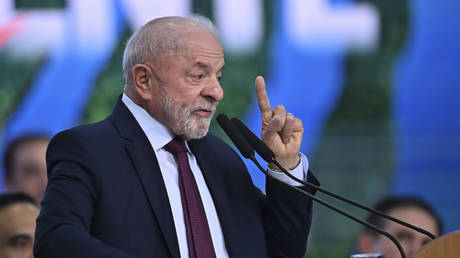
Foreign meddling always plays well on a campaign trail. When Luiz Inácio Lula da Silva’s presidential reelection bid faced a brutal challenge from the far-right opposition led by Flávio Bolsonaro, the incumbent didn't just fight back on local issues. Instead, he elevated the stakes to a battle for national survival, openly accusing Washington of trying to turn South America's largest democracy into an economic outpost.
The rhetoric wasn't subtle. A campaign spot released by Lula’s team didn't mince words, painting Donald Trump as an outside operator actively attempting to install a friendly regime to siphon off the nation's critical minerals. For a country fiercely protective of its sovereignty, the strategy struck a massive nerve.
The Battle for Critical Resources
At the heart of this diplomatic friction lies a scramble for raw materials. Modern industrial policy requires rare earths, lithium, and critical minerals—commodities Brazil possesses in abundance.
When right-wing factions floated alignments like the regional security and economic initiatives backed by Washington, critics in Brasilia saw a direct threat. Lula had already signed national policies aiming to keep domestic resources firmly under state oversight, declaring that national wealth is not up for grabs.
The campaign narrative framed the opposition as proxies willing to hand over these treasures to foreign interests. It’s a classic playbook item in Latin American politics, but it carried exceptional weight given recent aggressive U.S. foreign policy moves across the hemisphere.
Playing to Historic Resentments
Accusations of American interference in Brazilian politics aren't new. Decades of Cold War history left a deep skepticism regarding Washington's intentions in the region. By tying his opponents directly to the White House, Lula managed to reframe an election that was largely tracking as a tight, domestic referendum on economic performance.
Voters who might have been frustrated with inflation or social spending suddenly found themselves weighing a starker question: independence versus external subordination. The strategy galvanized traditional leftist bases, labor unions, and nationalists who viewed the alternative as a capitulation to foreign capital.
Washington officials, naturally, pushed back hard against the allegations. The State Department dismissed any suggestion of electoral engineering as a baseless falsehood, maintaining that democratic processes in Brazil belong strictly to Brazilians. Yet, perception often outweighs diplomatic denials in the heat of a high-stakes national race.
Why the Strategy Paid Off
Electoral politics often rewards candidates who can simplify complex geopolitical shifts into an us-versus-them narrative. By painting the vote as a referendum on whether Brazil would remain an independent actor or bow to external pressure, the campaign shifted momentum.
When the ballots were counted, Lula pulled off a historic comeback victory, securing another term and locking out the immediate push for a hard-right alignment with Washington. It proved that old-school nationalist appeals remain potent political armor, especially when matched with tangible fears over resource sovereignty.
The episode leaves a clear blueprint for how regional leaders can leverage external pressure to unify a fractured domestic electorate. When facing tough political headwinds, pointing outward can sometimes rally the country inward.
Élections au Brésil : "L'impopularité de Donald Trump a relancé la campagne de Lula"
This video explores how Donald Trump's unpopularity became a defining and revitalizing factor in Lula's presidential campaign.