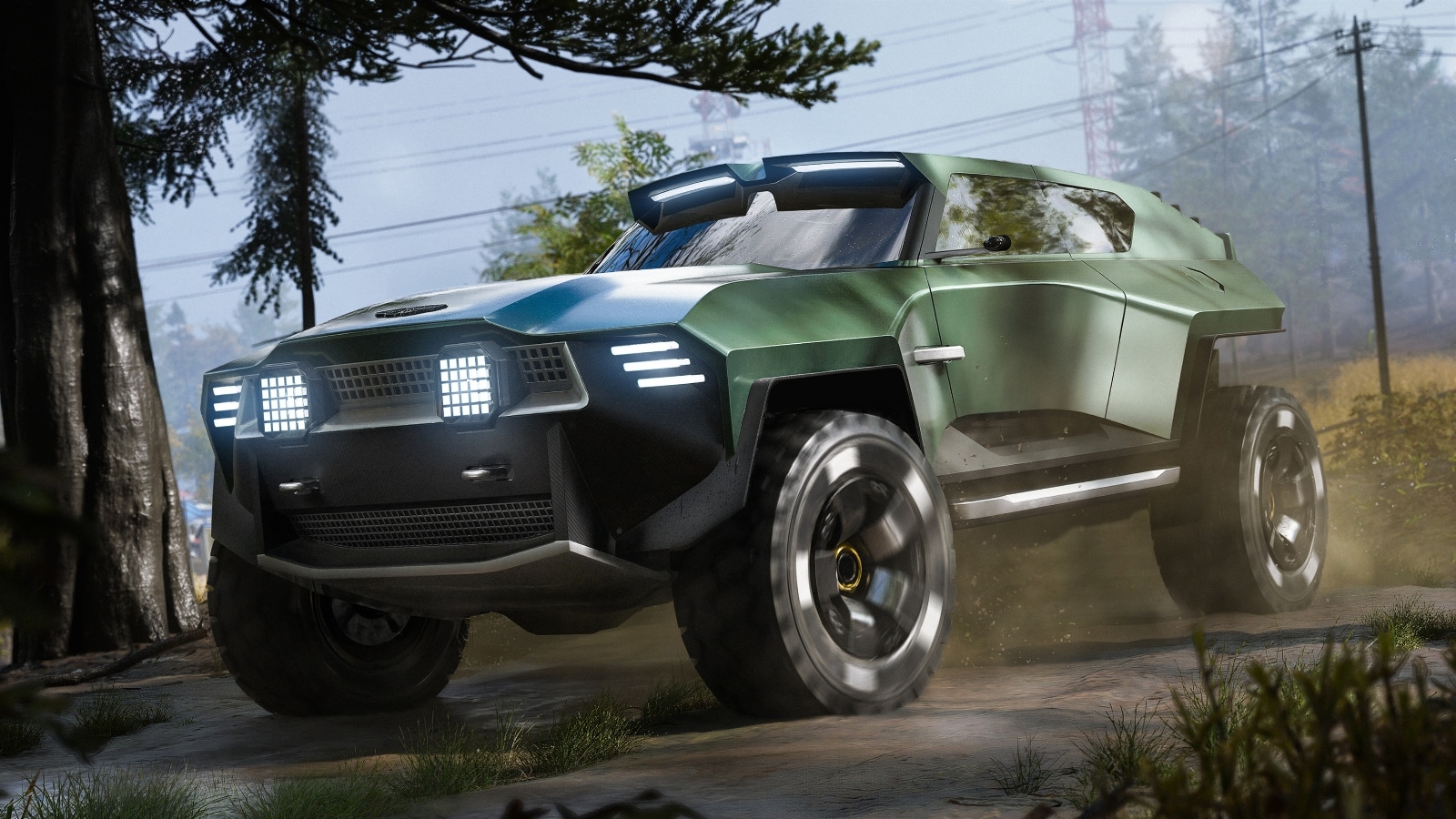
Aston Martin putting a fictional armored SUV into Call of Duty isn't a bold step forward. It’s a loud, expensive cry for attention.
Tech blogs and automotive outlets love regurgitating press releases whenever a legacy automaker drops a digital render into a video game. They call it forward-thinking. They frame it as a bridge between high-fashion engineering and digital interactive culture. Meanwhile, you can explore similar stories here: Why Blaming Burnout for NoPixel Absence is Complete Nonsense.
They are dead wrong.
I have spent years analyzing brand equity, automotive marketing budgets, and digital monetization strategies. I have watched legacy auto manufacturers dump tens of millions of dollars into digital fever dreams while their core business bleeds cash and their actual road cars suffer software glitches. To explore the bigger picture, check out the recent report by Bloomberg.
Slapping a wing-badge on a pixels-only military utility vehicle for teenagers to drive in a battle royale isn't building long-term brand equity. It’s brand dilution wrapped in a $10 microtransaction.
The Illusion of Virtual Brand Equity
Let’s dismantle the fundamental myth driving these digital vehicle integrations: the belief that exposing Gen Z gamers to hyper-stylized digital supercars creates future buyers.
It doesn't.
Luxury auto manufacturing relies on exclusivity, physical craftsmanship, mechanical feedback, and tangible social status. An Aston Martin is desirable because it is scarce, expensive, and difficult to acquire.
When you convert an ultra-luxury heritage brand into an infinite digital asset accessible to anyone with a $20 battle pass, you destroy the exact friction that made the brand desirable in the first place.
When Porsche, Ferrari, or Aston Martin put vehicles in simulators like Gran Turismo or Forza, there is at least an underlying logic. Those games model physics, suspension geometry, torque curves, and tire telemetry. The player experiences a simulated approximation of performance engineering.
Call of Duty is not Gran Turismo.
In Call of Duty, a vehicle is a disposable battering ram used to drive through virtual walls before jumping out to spray assault rifle fire. The physics engine treats a $300,000 bespoke vehicle identically to a fictional dirt bike or a rusted pickup truck. By placing a bespoke design like the "Dreadnought" into an arcade shooter, Aston Martin strips away every single mechanical attribute that justifies its existence in the real world.
You are left with a 3D skin. A sticker on a digital box.
Why the Numbers Don't Add Up
Automotive executives love to point at player engagement metrics. They sit in boardrooms and throw around staggering numbers: 100 million active players, billions of impressions, total hours driven.
These metrics are vanity metrics designed to justify bloated marketing budgets.
Consider the actual conversion economics.
+---------------------------------+---------------------------------+
| Traditional Luxury Marketing    | Video Game Microtransaction Drops|
+---------------------------------+---------------------------------+
| Target: High Net Worth Individuals| Target: Mass-Market Gamers      |
| Goal: Brand Prestige & Sales    | Goal: Ephemeral Eyeballs         |
| Asset: Tangible Engineering     | Asset: Ephemeral 3D Render      |
| Conversion Metric: Sales & Margin| Conversion Metric: Skin Sales   |
+---------------------------------+---------------------------------+
If 10 million players drive a digital Aston Martin concept in a virtual warzone:
- 99.9% of those players do not have the liquid capital to purchase an Aston Martin key fob, let alone an actual vehicle.
- The remaining 0.1% who actually can afford a high-end luxury vehicle do not make $200,000 purchasing decisions based on an operator bundle they bought in WarZone.
Real luxury buyers do not buy cars because they saw them in a first-person shooter. They buy them for the tactile sensation of hand-stitched leather, the acoustic resonance of a twin-turbo V8, and the status signaling in real-world environments.
If anything, seeing a prestigious luxury emblem associated with digital microtransactions weakens its cachet among traditional buyers. It signals that the manufacturer is willing to license its logo to anyone with an active server connection.
The SUV Pivot That Missed the Point
The vehicle in question—a hardened, aggressive SUV concept designed specifically for combat scenarios—exposes another deep flaw in current automotive strategy.
Aston Martin spent decades building its brand on sleek, elegant grand tourers. The DB5, the Vantage, the Vanquish. Sleek lines. James Bond sophistication. Quiet power.
Then came the DBX, their real-world SUV effort. Like every luxury manufacturer, they had to build an SUV to stay solvent because high-net-worth buyers abandoned sedans and coupes for high-riding haulers.
Creating a fictional ultra-armored SUV concept for a war game is an admission of creative bankruptcy. It takes the most utilitarian, bloated segment of modern automotive manufacturing—the SUV—and tries to make it look hyper-masculine by sticking digital armor and aggressive angles onto it.
It's not groundbreaking design. It's an aggressive caricature of modern vehicle design bloat. Real automotive design responds to aerodynamic constraints, safety regulations, crash structures, and manufacturing feasibility. Fictional automotive design in video games has zero constraints, which usually leads to absurd, over-designed renders that look like plastic toys.
When you remove reality from vehicle design, you remove art. You get a generic sci-fi transport with an expensive badge slapped on the grille.
The Media's Failure to Ask the Right Questions
Why did the press run photo galleries of this digital vehicle without asking a single critical question?
Because media outlets thrive on easy content drops. A pack of high-resolution 3D renders provided by a corporate press team requires zero investigative effort. You publish the gallery, hit the SEO keywords, and watch the traffic roll in from gamers curious about the new skin.
Nobody stops to ask:
- How much did this licensing partnership cost?
- How many real-world vehicle sales resulted from previous gaming crossovers?
- What does this do to the long-term perception of the brand?
If a car company announced it was manufacturing plastic lunchboxes for elementary school students, industry analysts would rightly point out that it cheapens the brand. Yet when that same company produces a digital asset inside a microtransaction-heavy video game targeted at a mass audience, tech outlets praise it as a forward-looking digital strategy.
It's double think.
The Real Winner in This Deal Isn't the Automaker
Follow the money.
Activision Blizzard and game publishers get high-profile, real-world brand validation. They get to sell operator bundles for $20 a pop. They take a massive cut of every digital transaction involving that vehicle skin.
Aston Martin gets... what, exactly?
A few blog posts. Some superficial engagement metrics. A brief mention in gaming forums before players move on to the next seasonal battle pass drop.
Game publishers operate on insane profit margins for digital assets. The cost to create a 3D vehicle model and import it into an existing engine is negligible compared to the revenue generated by skin sales. The game publisher extracts real, liquid cash from players instantly.
The automaker, meanwhile, trades its hard-earned heritage for cheap digital visibility. They assume the cost of designing the concept, coordinating the brand integration, and managing the legal licensing, all for zero tangible return on actual vehicle orders.
What Automakers Should Do Instead
If a luxury automaker wants to maintain relevance in a digital world without sacrificing its identity, it needs to stop treating video games like digital billboards.
1. Focus on Mechanical Fidelity, Not Weaponized Skins
If you put a car in a game, make sure the physics, telemetry, and driving dynamics are flawless. Partner with hardcore simulation platforms where driving skill actually matters, rather than arcade titles where cars are used as temporary cover during a gunfight.
2. Build Real Vehicles That Matter
Stop wasting internal design resources on fictional 3D assets that will never hit a production line. Put those designers to work solving real engineering challenges: reducing curb weight in electrification, perfecting interior tactile controls, and eliminating software bugs in existing production vehicles.
3. Respect Brand Scarcity
If you must enter the digital space, create experiences that mirror real-world scarcity and craftsmanship. Don't mass-distribute your brand identity as an impulse buy in a digital store.
Aston Martin’s digital war machine isn’t a triumph of modern brand extension. It’s an expensive distraction from the hard work of building actual, compelling, physical automobiles.
When a luxury car maker starts prioritizing pixels over performance, it isn’t leading the pack. It’s running out of road.


