The victory of the New York Knicks in the 2026 NBA Finals over the San Antonio Spurs provides a textbook case study in how geographic arbitrage, high inflation in premier sports ticket inventory, and localized emotional equity reshape modern sports consumption. When Jalen Brunson secured the Bill Russell NBA Finals MVP award following a 45-point performance in Game 5, the resultant fan celebrations spanned from Seventh Avenue to the heart of Texas. However, analyzing this phenomenon merely as an emotional narrative obscures the strict economic and structural mechanisms driving this cross-regional fan behavior.
The structural distribution of the modern sports fan base operates under clear commercial constraints. Rather than a singular, monolithic group of local spectators, a championship-starved legacy franchise like the New York Knicks possesses a bifurcated fan architecture: the concentrated local consumer core and the distributed domestic diaspora. Understanding how these distinct groups interacted during the 2026 postseason requires analyzing the financial friction points of live sports attendance and the geographic migration of cultural capital.
The Financial Arbitrage of Cross-Market Game Attendance
The core mechanism dictating why thousands of New York sports consumers celebrated inside San Antonio’s Frost Bank Center—effectively neutralizing the Spurs' home-court advantage—is a straightforward function of secondary market pricing arbitrage. The cost functions of matching consumer demand to ticket supply inside Madison Square Garden reached historic inefficiencies during the 2026 Finals.
The primary economic variable driving this behavior is the "get-in" price disparity between primary and secondary markets across different regions. To quantify this behavior, consider the total cost function of a consumer ($C_T$), where:
$$C_T = C_{ticket} + C_{travel} + C_{lodging}$$
During the 2026 Finals, the secondary market premium for a seat at Madison Square Garden escalated exponentially due to severe supply constraints—a fixed arena capacity of roughly 19,500 seats met with 53 years of pent-up demand. Consequently, the ticket price ($C_{ticket_NY}$) reached levels where it comfortably exceeded the combined costs of an interstate flight, lodging, and a secondary market ticket in Texas ($C_{ticket_TX} + C_{travel} + C_{lodging}$).
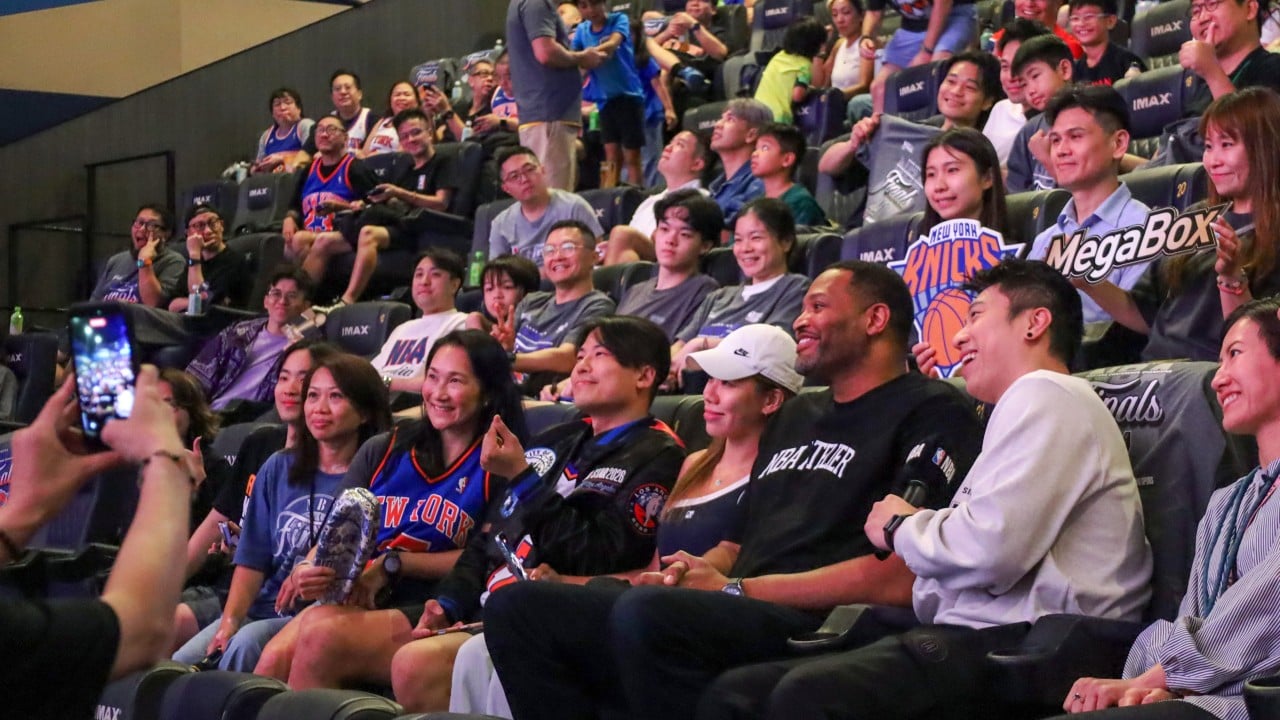
- The Inbound Diaspora: Out-of-state fans with high disposable income elected to execute a reverse migration, spending thousands of dollars on flights from domestic and international locations simply to be present in New York City bars, watch parties, or secondary screening locations like Radio City Music Hall and Wollman Rink.
- The Outbound Arbitrageurs: Local New York fans mathematically deduced that flying directly to San Antonio to witness Games 1, 2, or 5 was a more financially sound vehicle for live consumption than purchasing lower-bowl or even upper-deck inventory at Madison Square Garden.
This creates a structural bottleneck where local, lower-income legacy fans are systemically priced out of their home venue, transforming the home crowd into a highly corporate or hyper-affluent demographic, while transferring the raw emotional equity of the fan base to regional watch parties or opposing arenas.
Structural Triggers of the Distributed Fandom
The geographical dispersion of Knicks fans across markets like Houston, Austin, and San Antonio is not accidental; it is a direct consequence of macroeconomic migration patterns and long-term media distribution strategies. The presence of dense clusters of New York sports fans in Texas highlights two distinct socio-economic trends.
First, the domestic migration of the New York demographic over the past decade has structurally seeded competitive sports markets with native Northeasterners. Texas cities have absorbed significant numbers of corporate relocations and remote workers from the tri-state area. These individuals retain their original sports team alignments, treating them as fixed cultural identities rather than variable consumer preferences.
Second, the structural broadcast model of the NBA has decoupled team loyalty from local television territories. The modern consumer utilizes digital streaming platforms, national broadcast syndication, and social media ecosystems to maintain real-time, high-density engagement with a franchise thousands of miles away. The synchronization of text threads, digital forums, and immediate social video loops allows a fan in Phoenix or Houston to experience a game with the identical psychological pacing of a fan sitting in a Manhattan sports bar.
The Dynamics of Public Celebration and Localized Mayhem
When the final buzzer sounded in Game 5, sealing the 94-90 victory, the immediate conversion of psychological tension into kinetic celebration manifested in wildly divergent ways based on local urban infrastructure.
In San Antonio, the celebration operated within a confined commercial space. The thousands of traveling and resident New York fans occupying the arena stayed late to alter the home team's stadium acoustics, using physical presence to claim a temporary sovereign fan territory inside Texas. Because this group was largely composed of high-affinity consumers who had intentionally invested significant capital to travel, their celebration focused heavily on the formal iconography of the trophy presentation and structured post-game interactions.
In contrast, the celebration in New York City quickly exposed the friction points of high-density urban geography. When an entire metropolitan population experiences simultaneous emotional release after a half-century drought, public spaces inevitably transform into logistical bottlenecks. The immediate overflow of fans onto Broadway, Seventh Avenue, and Times Square overwhelmed municipal crowd-control frameworks.
- Vehicle-to-Pedestrian Conflict: Delirious fans blocked major transit arterial roads, scaling city buses, light poles, and emergency vehicles. The physical environment of Manhattan, characterized by vertical scaffolding and dense street furniture, offers immediate physical platforms for unauthorized crowd scaling.
- The Municipal Cost of Euphoria: The transition from peaceful celebration to civil disruption—marked by property damage, clashes with law enforcement, and localized vandalism—reveals a clear pattern: when institutional sporting victories occur, the celebrating public frequently reclaims public streets by ignoring standard regulatory boundaries. The city's infrastructure becomes a canvas for the fan base to externalize its collective relief, shifting the financial burden of the championship victory onto municipal cleanup, law enforcement overtime, and public transit repair.
Strategic Recommendations for Sports Franchises and Municipal Planning
The structural insights gained from the 2026 Knicks championship run dictate specific, actionable strategies for both legacy sports franchises and major metropolitan planners facing similar high-demand sporting events.
Franchises must actively manage the pricing elasticity of their home stadium to prevent the total alienation of their core vocal fan base. Relying exclusively on algorithmic dynamic pricing on the secondary market risks transforming home-court advantage into a passive, corporate environment. Teams should intentionally carve out a fixed percentage of high-affinity fan zones priced below market equilibrium to preserve the sonic and psychological pressure required to influence officiating and opposing team performance.
Concurrently, metropolitan agencies must discard obsolete crowd-control playbooks that rely solely on reactive policing at the arena perimeter. When a championship is clinched on the road, the stadium ceases to be the physical anchor of public assembly. Municipalities must proactively establish decentralized, high-capacity public viewing zones equipped with structural barriers, dedicated sanitation, and pre-planned traffic diversions. Treating the entire urban core as an active, predictable event space is the only viable mechanism to mitigate property damage and maintain public safety during a moments of historic collective euphoria.