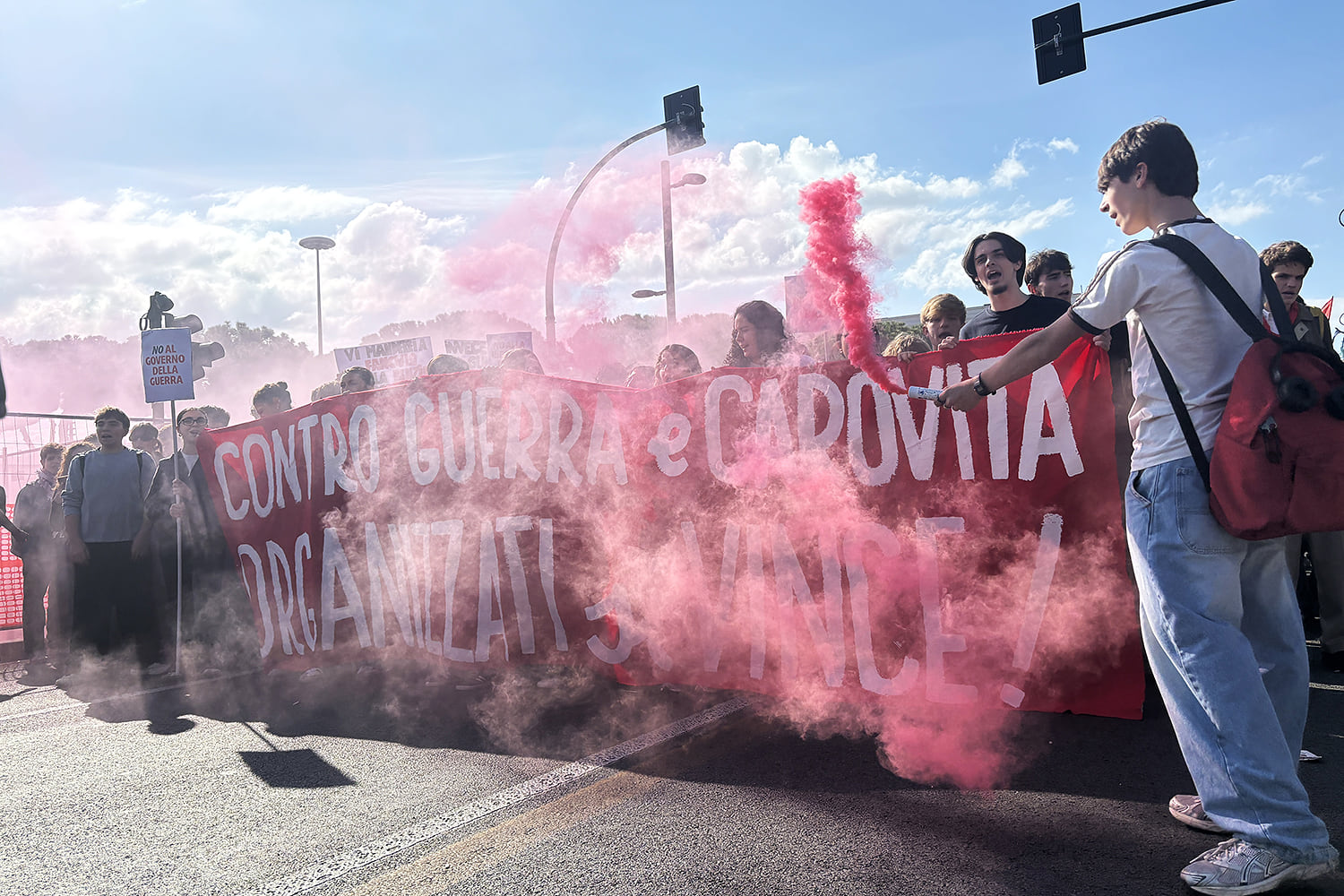
Italian Prime Minister Giorgia Meloni’s decision to deploy military units into civilian urban centers and key logistics hubs under Operation Strade Sicure marks a critical shift in the state's approach to structural economic pressure. The deployment, triggered by widespread labor strikes, port blockades in Genoa, Trieste, and Livorno, and urban disruption across major commercial nodes, aims to mitigate immediately visible economic friction. However, analyzing this response solely through the lens of law enforcement obscures the underlying macroeconomic transmission mechanism: short-term security interventions do not fix fiscal deficits, structural inflation, or labor market demographic contractions.
The current friction represents an intersection of three systemic pressure points: input-cost shocks to supply chains, structural labor realignments driven by real-wage erosion, and fiscal constraints that limit government intervention options. Evaluating this crisis requires a systematic analysis of supply chain bottlenecks, labor dynamics, state policing actions, and long-term sovereign risk. Don't forget to check out our recent post on this related article.
Supply Chain Bottlenecks: The Multiplier Effect of Maritime Disruptions
The disruption of Italian port operations in key northern and central maritime terminals directly impacts Western Europe’s industrial supply chains. Maritime freight handling functions on continuous throughput schedules; a 48-hour blockade causes operational backlogs that require weeks to resolve.
Port Inflow Friction and Demurrage Costs
When port access points are blocked by striking transport workers, container ships are forced to wait at anchor or reroute to secondary European hubs like Marseille or Rotterdam. This introduces immediate friction across three core cost vectors: To read more about the background of this, NPR offers an in-depth summary.
- Demurrage and Detention Escalation: Shippers incur daily penalties for container delays, which are immediately passed down to regional manufacturers and end consumers.
- Manufacturing Inventory Depletion: Northern Italy’s industrial belt relies on lean, just-in-time manufacturing models. Blockades at Genoa and Trieste cut off raw material inputs (metal alloys, petrochemicals, intermediate components), forcing production halts in auto parts, machinery, and textile manufacturing.
- Freight Rerouting Surcharges: Transporting freight from non-target ports increases inland transit distances by hundreds of kilometers, driving up land transport fuel consumption and trucking labor overhead.
The Logistics Vulnerability Index
The economic impact of transport blockades relies on three main variables: port throughput capacity ($C$), labor elasticity ($L_e$), and alternative transport network availability ($A_n$). The system elasticity ($E_s$) can be defined through the relationship:
$$E_s = \frac{C \cdot A_n}{1 - L_e}$$
Where labor elasticity is low ($L_e \to 1$) and infrastructure alternatives are saturated ($A_n \to 0$), small disruptions in physical access lead to non-linear increases in regional economic losses. The militarization of port entrances aims to force physical throughput, but it fails to resolve the driver of the stoppage: truck driver shortages, labor disputes, and fuel cost spikes.
Labor Dynamics and Real-Wage Erosion
The nationwide strikes reflect deeper structural issues in the labor market, driven by persistent inflation and demographic shifts. Real wages across Southern Europe have failed to keep pace with cumulative energy and food inflation over the past three years.
The Dual-Track Labor Dispute
The strike movement operates on two fronts:
- Public Sector and Transport Unions: Demanding automated cost-of-living adjustments, expanded pension protections, and increased public health spending.
- Informal Youth and Freight Movements: Unaligned youth movements and independent logistics operators targeting energy prices, housing costs, and rising military spending.
Because these movements operate independently, classic government-union collective bargaining fails to resolve the disruption. Negotiating with union leaders does not address decentralized, non-affiliated blockades.
Fiscal Constraints vs. Wage Demands
The Italian government operates under strict European Union fiscal frameworks, limiting its ability to issue unbacked fiscal subsidies to offset living costs. With sovereign debt-to-GDP remaining high, fiscal maneuvers are constrained:
- Funding public wage increases requires tax hikes or spending cuts elsewhere.
- Using fuel tax subsidies creates revenue shortfalls for transport infrastructure.
- Direct intervention through price caps triggers supply rationing and import reductions.
This leaves the executive branch with limited policy options, leading to reliance on security deployments rather than structural economic adjustments.
Operational Limits of Military Deployment
Deploying 500 or more military personnel into commercial areas and logistical hubs under Strade Sicure serves primarily as a signal of state stability. From a tactical perspective, military assets present distinct operational limitations when applied to civil labor disputes.
Operational Roles vs. Mission Requirements
- Deterrence vs. Enforcement: Armed forces are trained for area security and physical deterrence, not crowd control or labor dispute mediation. Using military personnel to safeguard critical infrastructure allows civilian police forces to redeploy, but it increases public tensions.
- Supply Chain Continuity: Soldiers cannot operate heavy gantry cranes, run port management software, or pilot commercial transport trucks. While troops can clear physical access roads, they cannot restore logistics operations without willing labor.
- Legal and Emergency Powers: Expanding executive authority via emergency decrees—including preventive detention measures or enhanced penalties for road blockades—creates long-term political friction and institutional resistance.
┌────────────────────────────────────────┐
│      Cost of Living & Energy Spikes     │
└───────────────────┬────────────────────┘
                    │
                    ▼
┌────────────────────────────────────────┐
│   Labor Strikes & Logistics Blockades  │
└───────────────────┬────────────────────┘
                    │
                    ▼
┌────────────────────────────────────────┐
│ Port Bottlenecks & Supply Disruption  │
└───────────────────┬────────────────────┘
                    │
                    ▼
┌────────────────────────────────────────┐
│ Military Deployment (Strade Sicure)    │
└───────────────────┬────────────────────┘
                    │
                    ▼
┌────────────────────────────────────────┐
│ Physical Access Cleared; Root Structural│
│ Driver Unresolved                     │
└────────────────────────────────────────┘
Economic Risk Profiles: Scenarios for Sovereign Stability
The strategic trajectory of this crisis depends on how state interventions interact with broader European economic conditions.
Scenario A: Managed Stabilization (40% Probability)
- Mechanism: The executive branch passes targeted fuel duty relief combined with minor public sector wage concessions.
- Outcome: Formal unions suspend strike actions. Port backlogs clear over a three-to-four-week period. Sovereign bond spreads remain stable.
Scenario B: Prolonged Friction and Logistics Drag (45% Probability)
- Mechanism: Decentralized blockades continue despite security deployments. Legislative efforts to increase penalties for road blockades lead to secondary protests.
- Outcome: Freight costs remain elevated by 15–25% for regional supply routes. Manufacturing output contracts across Northern Italy in the following quarter. Rating agencies increase risk premiums on sovereign debt.
Scenario C: Broader European Labor Spillovers (15% Probability)
- Mechanism: Similar inflation and wage dynamics trigger coordinated cross-border transport strikes in neighboring economies (France, Germany).
- Outcome: Regional trade networks experience systemic delays, triggering broader supply chain restructuring and intervention by EU-level regulatory bodies.
Strategic Recommendations for Enterprise Operations
Firms operating within or relying on Italian logistics infrastructure must adjust their risk management strategies rather than assuming rapid normalization:
- Implement Dual-Hub Logistics Routing: Shift reliance away from single-port entry points in Northern Italy. Build contingency access through Western Iberian or Northern European freight routes to mitigate single-region labor risk.
- Adjust Buffer Inventory Margins: Increase standard inventory safety buffers from 7-day to 21-day cycles for critical components passing through Southern European corridors.
- Incorporate Supply Chain Clause Protections: Audit logistics contracts to ensure force majeure and labor disruption clauses clearly assign demurrage liability during state-enforced port clearances.
- Monitor Real-Time Freight Velocity: Track port vessel turnaround times and inland highway throughput metrics directly, relying on operational data rather than official state stability announcements.
State interventions using military personnel can temporarily clear roads, but they do not resolve underlying fiscal and labor realities. Long-term stability relies on balancing fiscal constraints with real-wage adjustments.
For context on how labor strikes and political responses unfold, see this reporting on Italian strikes and protests. This coverage provides visual insight into the scale of public demonstrations across major Italian transport hubs.