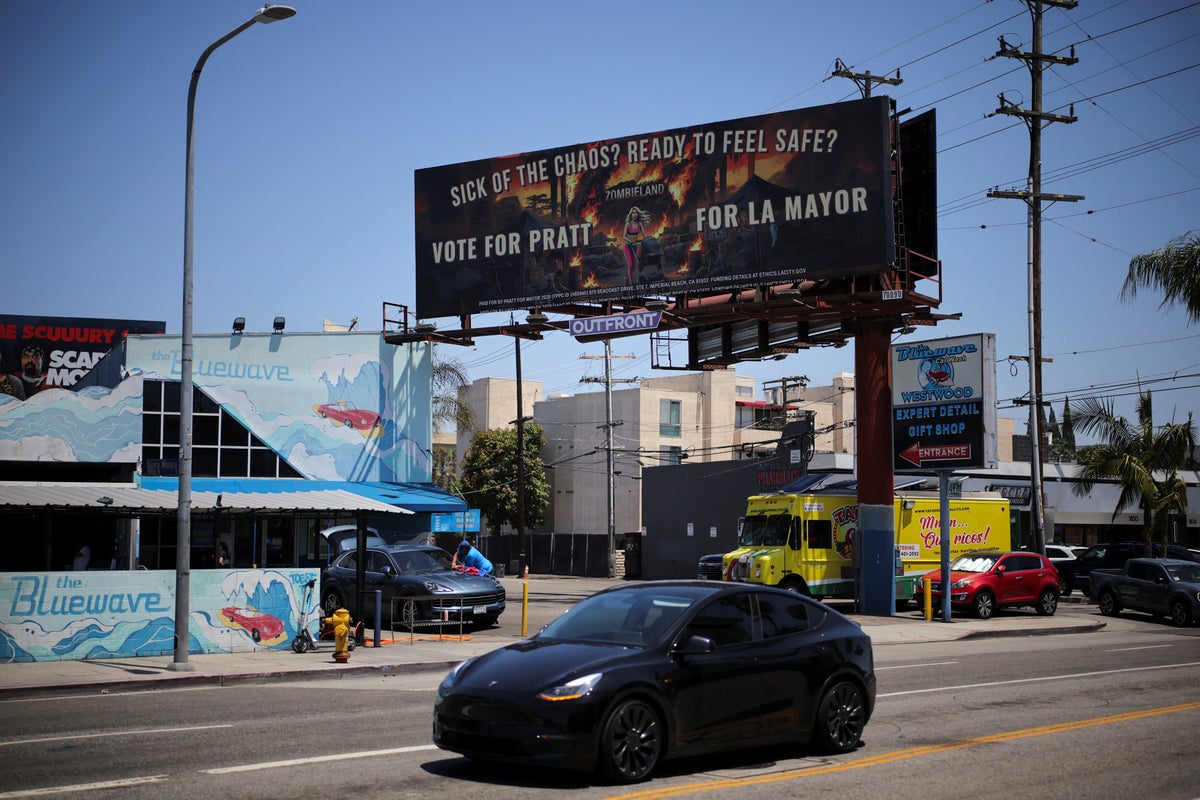
The interstate highway system functions as a high-velocity commerce funnel, routing consumer attention toward physical advertising nodes. Yet, driving across state lines into Vermont, Maine, Alaska, or Hawaii reveals an abrupt termination of this advertising pipeline. These four jurisdictions have completely severed the link between roadside transit corridors and third-party out-of-home (OOH) marketing assets.
This total elimination of off-premise outdoor advertising is not merely an aesthetic choice. It represents a deliberate, state-level economic strategy that reallocates the value of the physical environment. By treating the unobstructed landscape as a finite public resource, these states have enacted a regulatory framework that optimizes long-term tourism equity over short-term real estate monetization.
The Four-State Regulatory Taxonomy
The prohibition of off-premise signage across these jurisdictions relies on clear statutory boundaries. While federal legislation, such as the Highway Beautification Act of 1965, imposes baselines on spacing and illumination along federal-aid highways, these four states opted for total prohibition.
Hawaii (1927)
Enacted prior to statehood and driven by grassroots organizing from civic groups like the Outdoor Circle, Hawaii passed the nation’s earliest comprehensive ban. The law targets the preservation of maritime and volcanic vistas, isolating the island economy from traditional OOH networks.
Vermont (1968)
Passed via Act 333, Vermont established an absolute prohibition coupled with a strict five-year amortization period. By 1974, all pre-existing non-conforming billboards were removed. The state replaced traditional billboards with a standardized, state-administered "travel information sign" system—uniform directional placards grouped at specific highway turnoffs.
Maine (1977)
Following the Vermont model, Maine enacted its Sensible Signage Act, which systematically dismantled roughly 8,500 off-premise billboards along its coastal and forested transit corridors. The legislative intent specifically linked visual unmitigated views to the state’s primary economic driver: destination travel.
Alaska (1998)
The most recent structural shift occurred via a state referendum where 72.4% of voters approved a constitutional ban. The statute restricts any commercial advertising within 660 feet of any state-managed highway or public right-of-way, effectively closing the geographic loop on America’s last wild frontier.
The Economic Model: Landscape Neutrality vs. Impression Capture
To understand why these states permanently rejected a multi-billion dollar advertising industry, one must analyze the economic tension between two competing models of land use.
The Standard Extraction Model
In 46 states, a roadside corridor operates under an extraction model. The value generated by public infrastructure spending (the highway) is captured by private landowners and media firms who lease the adjacent airspace to aggregate driver impressions. The cost functions in this model are externalized; visual pollution, driver distraction, and depreciation of nearby residential property values are absorbed by the public.
The Landscape Equity Model
The four billboard-free states operate under a conservation equity model. This framework treats an unmarred view as a compounding capital asset. The financial mechanics operate on a basic macro-economic trade-off:
$$\text{Gross Tourism Premium} > \text{Lost OOH Tax Revenue} + \text{Commercial Airspace Leases}$$
By systematically preventing the monetization of driver attention via physical signs, these states protect the integrity of their destination branding. For example, Vermont's billboard-free environment supports a multi-billion dollar tourism economy where visitor surveys consistently cite the pristine rural environment as a primary retention metric. The lack of commercial signage serves as an invisible infrastructure asset that differentiates the market from competing regional destinations.
Market Distortions and Local Substitution Mechanisms
Eliminating an entire advertising medium does not extinguish the local market demand for consumer acquisition. Instead, it creates highly specific market distortions and forces capital into alternative substitution channels.
The Local vs. National Capital Asymmetry
Traditional billboard networks heavily favor national corporations with massive capital reserves capable of buying out multi-market networks. A primary structural consequence of a billboard ban is the immediate leveling of the localized visibility landscape. National fast-food, hospitality, and retail chains cannot buy geographic dominance along the highway corridor, shifting the competitive advantage back to localized on-premise business footprints.
On-Premise Regulatory Exploitation
Because billboard bans exclusively target off-premise advertising (signs promoting a business not located on the physical property), on-premise signage becomes the primary legal battleground. States must enforce hyper-specific zoning definitions to prevent businesses from building massive on-premise signs that mimic the utility of billboards.
- Vermont caps on-premise signs at strict square-footage limits (typically 150 square feet) and mandates that the signage relate directly to activities conducted on that immediate parcel.
- Municipalities retain secondary zoning controls, meaning local ordinances can further compress the size, height, and luminosity of on-premise displays to match community architecture.
Non-Traditional Marketing Substitutions
The restriction of physical infrastructure has forced unique cultural and tactical workarounds to capture traveler attention:
- Human Sign Waving: In Hawaii, political campaigns routinely deploy networks of coordinated human sign-wavers along major vehicular arteries during election cycles. Because the human body holding a temporary placard does not meet the statutory definition of a permanent off-premise structure, it bypasses traditional OOH restrictions.
- The Travel Information Signage System: Vermont commercialized the information deficit by deploying state-sanctioned, uniform logo plaques. Businesses pay a fee to be listed on these clustered, small-format signs at highway exits, converting chaotic corporate advertising into structured, utility-driven infrastructure.
Structural Friction for Modern Travelers and Advertisers
The complete absence of OOH infrastructure shifts the logistical burden directly onto the consumer and changes the corporate customer-acquisition model.
The first operational bottleneck impacts small, independent roadside operators who rely on impulse traffic. In a standard OOH market, a motorist realizes a need (e.g., fuel, lodging, food) and acts on a sequence of highway billboards. In a billboard-free state, this discovery mechanism is entirely digitized.
This environment creates a complete dependence on global mapping platforms, local search algorithms, and aggregate travel apps. A business that fails to optimize its local digital footprint is functionally invisible to a traveler moving through these corridors. Consequently, the capital that would traditionally flow into local physical signage leases is redirected into digital search engine optimization, geofenced mobile advertising, and algorithmic placement.
The strategic play for any enterprise operating within or expanding into these four jurisdictions requires a total pivot from passive impression capture to active digital destination marketing. Success in these markets depends on dominating the consumer's pre-trip planning phase and digital discovery layers, rather than relying on the casual capture of a driver's gaze along the open road.