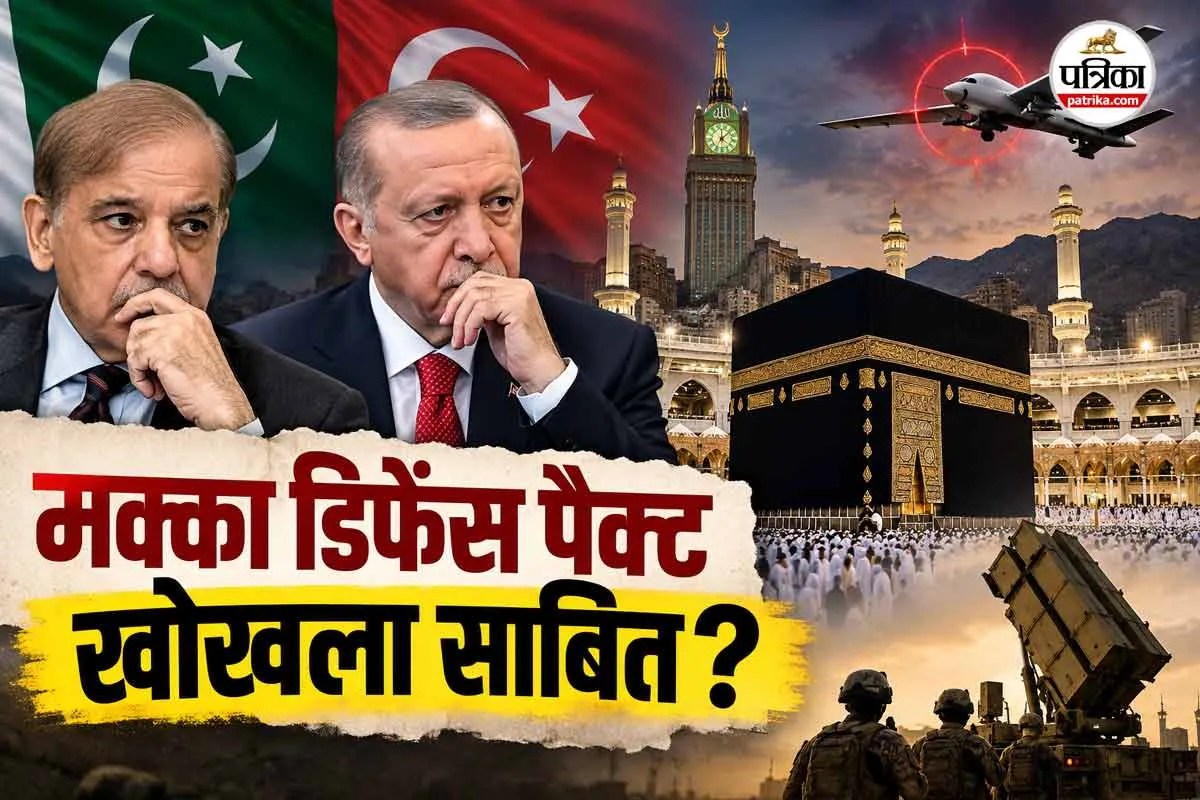
Every time Islamabad and Ankara sign a bilateral agreement involving security guarantees, the regional commentariat loses its collective mind. Headlines scream about new geopolitical axes, anti-Western alignments, and sweeping security umbrellas designed to rewrite the balance of power from the Gulf to Central Asia. The latest panic surrounds drone alerts, tactical cooperation frameworks, and sensationalized chatter about a so-called Makkah Defence Pact. Analysts love to treat every joint communiqué like a blueprint for a new Ottoman revival or a nuclear-backed Islamic NATO.
They are entirely wrong.
Strip away the diplomatic theater, the red carpets, and the breathless cable news panels, and you find a much simpler, far more cynical reality. This pact is not a strategic realignment. It is domestic political insurance packaged as military cooperation. I have watched foreign policy pundits chase phantom alliances for decades, treating every press conference as a historical turning point while ignoring the fiscal desperation and institutional realities driving both capitals. If you think this agreement alters the strategic calculus of the Middle East or South Asia, you are reading the marketing brochure instead of the balance sheet.
The Myth of the Pan-Islamic Security Umbrella
Let us dismantle the core fiction first. The lazy consensus among regional commentators is that Pakistan and Turkey are forging a formal defense pact capable of projecting power and offering mutual nuclear or conventional deterrence across distant borders. This assumes two states currently grappling with severe internal pressures possess the surplus bandwidth to project credible power abroad.
Look at the structural state of Pakistan's military apparatus. The institution remains hyper-focused on its immediate western border with Afghanistan and its perennial, high-stakes standoff with India. Its fiscal space is choked by International Monetary Fund bailout conditions, soaring inflation, and a defense budget that consumes a staggering share of national revenues just to maintain the status quo. To suggest that Islamabad is preparing to dispatch assets or extend credible security guarantees to distant allies in the Middle East is economically illiterate.
Turkey's position is equally constrained, albeit through a different mechanism. Ankara’s defense industry is genuinely impressive—its drone technology, particularly the Bayraktar series, has proven effective in regional asymmetric conflicts. Yet, Turkish foreign policy under Recep Tayyip Erdogan is defined by transactional pragmatism, not ideological military altruism. Ankara normalizes relations with former rivals the moment economic necessity dictates it, whether in Cairo, Riyadh, or Abu Dhabi. Turkey does not bind its fortunes to rigid mutual defense pacts that drag it into foreign quagmires without immediate economic or political payoff.
When politicians talk about mutual defense frameworks in this context, they are using military terminology to achieve domestic political wins. For Islamabad, aligning with a rising defense exporter like Turkey plays well to a domestic audience hungry for international prestige and diversified alliances. For Ankara, projecting influence across Muslim-majority nations shores up nationalist and Islamist credentials at home while opening export markets for its defense manufacturing sector. It is a commercial and public relations arrangement, not a mutual defense pact.
Follow the Hardware, Not the Headlines
To understand what is actually happening, you have to look at the procurement pipelines and industrial partnerships rather than the grandiose rhetoric of the joint statements. The recent buzz about drone alerts and tactical sharing does not point toward a joint command structure. It points toward arms sales and technology transfer.
Turkey wants to sell hardware. Pakistan wants to acquire defense tech and co-production capabilities without violating sovereign financial constraints. This is a buyer-seller relationship dressed up in diplomatic velvet. When defense analysts confuse commercial arms transactions with strategic military alliances, they misread every modern conflict. Modern military partnerships are built on integrated logistics, joint command systems, intelligence-sharing architecture, and interoperable doctrines. None of these exist between Pakistan and Turkey at a scale that matters. Their military doctrines were shaped by different histories—one rooted in Western Cold War CENTO architecture and US training, the other in NATO integration and indigenous modernization programs.
Imagine a scenario where a real crisis erupts requiring immediate mutual military intervention under this supposed pact. Does anyone seriously believe Turkish pilots would fly combat air patrols over South Asia, or that Pakistani mechanized divisions would deploy to the Levant or the Gulf based on a vague memorandum of understanding? The proposition collapses under the weight of basic geopolitical gravity. Sovereign states do not sub-contract their supreme national security to external partners unless an existential threat forces their hand. Neither Islamabad nor Turkey faces a threat that requires outsourcing its defense to the other.
The Domestic Audience Trap
Why do these hollow pacts keep capturing the imagination of the media? Because foreign policy is often domestic theater.
Governments facing economic turbulence, political polarization, or legitimacy crises frequently lean on grand international posturing to distract their citizens. When inflation is crushing the middle class and political opposition is vocal, nothing rallies domestic support quite like images of military might, high-level handshakes, and soaring rhetoric about sovereign independence and Muslim solidarity.
This is where the commentary fails. Analysts treat these agreements as objective inputs into a regional chessboard, failing to realize they are primarily domestic outputs designed to manage public opinion at home. The drone alerts and tactical warnings that supposedly triggered this panic are often routine operational events amplified by state media to justify ongoing defense spending and diplomatic posturing.
We need to stop evaluating these agreements by what politicians say they are and start evaluating them by what structural incentives dictate they can be. A true defense pact requires shared threat perceptions, aligned grand strategies, and massive financial investment. Neither Pakistan nor Turkey has the alignment or the surplus capital for that kind of long-term commitment.
Stop looking for the rebirth of empires in every bilateral MOU. Stop treating defense marketing as strategic reality. The next time you read about a groundbreaking security pact between developing regional powers, look past the headlines and ask who benefits domestically from the illusion of strength.