The dirt path between Tinkar and Changru looks like any other mountain trail in the high Himalayas. It is a ribbon of grey stone and stubborn weeds, trodden by goats and the heavy boots of traders. If you stand there in the early morning, the air is so cold it aches in the back of your throat. To your left, the peaks of Uttarakhand pierce the Indian sky. To your right, the sharp ridges of Nepal stand guard.
For generations, the people living along this jagged line did not care much about the ink dried on distant pieces of parchment. They shared weddings, languages, and salt.
Then the politicians started looking at the maps again.
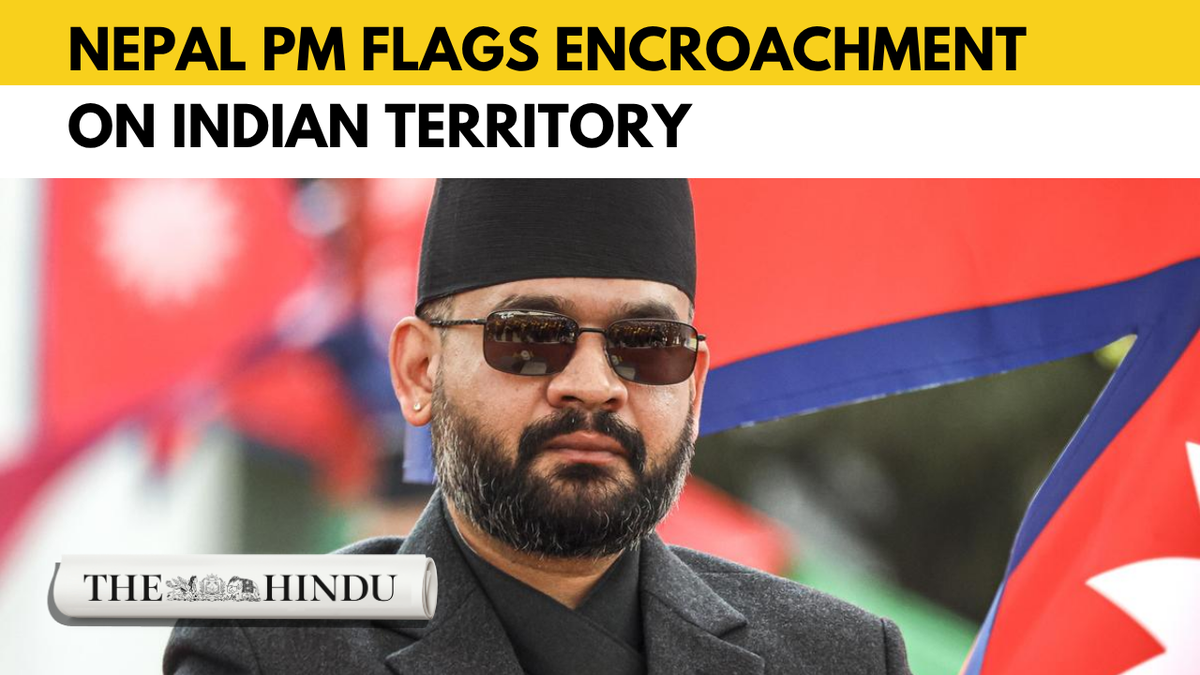
When Kathmandu Metropolitan City Mayor Balendra Shah—known simply to millions as Balen—ordered a map of "Greater Nepal" to be hung in his office, it was not just a piece of interior decoration. It was a calculated, heavy stone thrown into a very delicate pond. The map displays territories that Nepal lost to the British East India Company over two centuries ago under the 1816 Sugauli Treaty. It claims lands stretching far beyond modern borders, deep into what is now India.
This move did not happen in a vacuum. It was a direct, retaliatory echo. Weeks earlier, India inaugurated its new parliament building in New Delhi, unveiling a mural of "Akhand Bharat"—an ancient, unified India. That mural swept up parts of modern Nepal, including the sacred birthplace of Gautama Buddha at Lumbini.
To a diplomat in an air-conditioned room, these are games of symbolic chess. To the people who walk the dirt path between Tinkar and Changru, they are a tightening noose.
Consider a hypothetical shopkeeper named Dorje. He operates a small tea stalls near the Lipulekh Pass, where India, Nepal, and China meet. For thirty years, Dorje’s business thrived on ambiguity. He bought biscuit packets from Indian truckers and sold hot chai to Nepali pilgrims. His currency pouch held a messy mix of Indian and Nepali rupees. He did not need a passport to visit his cousins three miles away.
But when borders harden, lives fracture.
Suddenly, a line on a map becomes a checkpoint. A checkpoint becomes a line of soldiers. The soldiers ask for papers Dorje has never needed to possess. The Indian truckers face new customs delays; the Nepali pilgrims stay home out of fear. The tea grows cold. The income evaporates.
The core of the dispute rests on three specific pockets of high-altitude land: Lipulekh, Kalapani, and Limpiyadhura. India maintains administrative control over this territory, viewing it as a vital strategic shield against northern vulnerabilities. Nepal claims the historical rights to the land based on old river maps, arguing that the Kali River's true source dictates the border should lie much further west.
When Mayor Balen spoke out, declaring that Nepal had been encroached upon, he tapped into a profound, historical anxiety. Nepal is a landlocked nation wedged between two giants. To its south, east, and west lies India, an economic powerhouse of over 1.4 billion people. To its north lies China, a global superpower. For a smaller nation in that position, sovereignty is not an abstract concept discussed in universities. It is oxygen.
Yet, the tragedy of modern nationalism is that it rarely considers the geography of the human heart.
The borderland communities share a unique identity known as the Rung. They possess their own language, their own cultural rhythms, and a nomadic heritage that defies modern statehood. For centuries, they migrated seasonally, moving livestock down to warmer Indian valleys in the winter and up to high Nepali pastures in the summer.
They are the living tissue connecting two nations. When New Delhi and Kathmandu exchange sharp diplomatic notes, that tissue begins to tear.
Imagine trying to explain the Sugauli Treaty to a mother whose child needs urgent medical care. The nearest well-equipped hospital from her remote village is not in Kathmandu; it is across the river in Pithoragarh, India. If the border is friendly, it is a two-hour journey. If the border is hostile, closed by bureaucratic spite or political grandstanding, that journey becomes an impossibility.
National pride is a powerful fuel, but it makes for a terrible dinner.
The dispute flared significantly when India inaugurated an 80-kilometer road leading to the Lipulekh Pass, designed to ease the arduous trek for Hindu pilgrims traveling to Mount Kailash in Tibet. Nepal viewed the construction as a blatant violation of its territorial integrity. In response, Nepal’s parliament fast-tracked a constitutional amendment to update its own official map, legally incorporating the disputed 370 square kilometers into its national emblem.
It was a moment of immense domestic unity for Nepal. Flags waved. Citizens cheered in the streets of Kathmandu.
But out on the frontier, the atmosphere turned cold. The open border, a marvel of international relations that allowed millions of citizens from both countries to live and work without visas, began to feel heavy. Security forces on both sides increased their presence. Trust, built over decades of shared survival in a harsh climate, vanished in a matter of weeks.
We often treat international borders as permanent fixtures of the earth, as real as the mountains themselves. They are not. They are fragile human inventions, requiring constant maintenance and mutual consent. When that consent breaks down, the consequences ripple outward in ways no minister can predict.
The economic interdependence between the two countries is absolute. Nepal relies on India for the vast majority of its imports, from petroleum to medicine. Millions of Nepali citizens send remittances home from jobs in Delhi, Mumbai, and the Indian army. Conversely, India relies on Nepal’s rivers for hydropower and irrigation, and views a stable, friendly Nepal as essential to its national security.
To jeopardize this relationship over a patch of uninhabited rock seems illogical. But politics is rarely governed by logic; it is governed by optics.
Mayor Balen’s public stance was a masterful piece of political theater. It forced the federal government in Kathmandu to take a harder line, proving that local leaders can shift the trajectory of international diplomacy. By standing up to India, he solidified his reputation as a fearless patriot.
But patriotism looks very different depending on where you stand.
In the capital, it looks like a bold speech delivered into a microphone. In the border villages, it looks like a closed gate, an interrogation at a checkpoint, and a sudden, terrifying uncertainty about whether your home still belongs to you.
The sun sets early in the deep gorges of the Himalayas. The shadows of the peaks stretch across the valleys, swallowing the houses, the temples, and the thin dirt paths. In the darkness, you cannot see the border. You cannot see where India ends and Nepal begins. You only hear the roar of the Mahakali River, cutting through the stone, indifferent to the names humans give to its banks.
A border guard stands watch near the suspension bridge, his hands buried deep in his pockets against the rising wind. He looks across the narrow span of wood and wire toward the opposite bank, where another young man stands in a different uniform, doing exactly the same thing. They are close enough to wave, close enough to share a cigarette, close enough to hear each other cough in the quiet mountain night. They are separated only by an idea.