The weight of a dollar isn’t measured in grams. For someone like Amara, a small business owner in Lagos, that weight is felt in the sudden, sharp intake of breath when the local currency shrivels overnight because of a decision made in a boardroom five thousand miles away. She doesn't follow the intricacies of global bond markets. She doesn't have a seat at the United Nations. But she knows that when the "unilateral sanctions" the news anchors talk about are triggered, her ability to import the specialized sewing machine parts she needs vanishes.
Amara is a hypothetical window into a very real global frustration. She lives in the shadow of a financial architecture built in 1944, a system designed by the victors of a different century to manage a world that no longer exists.
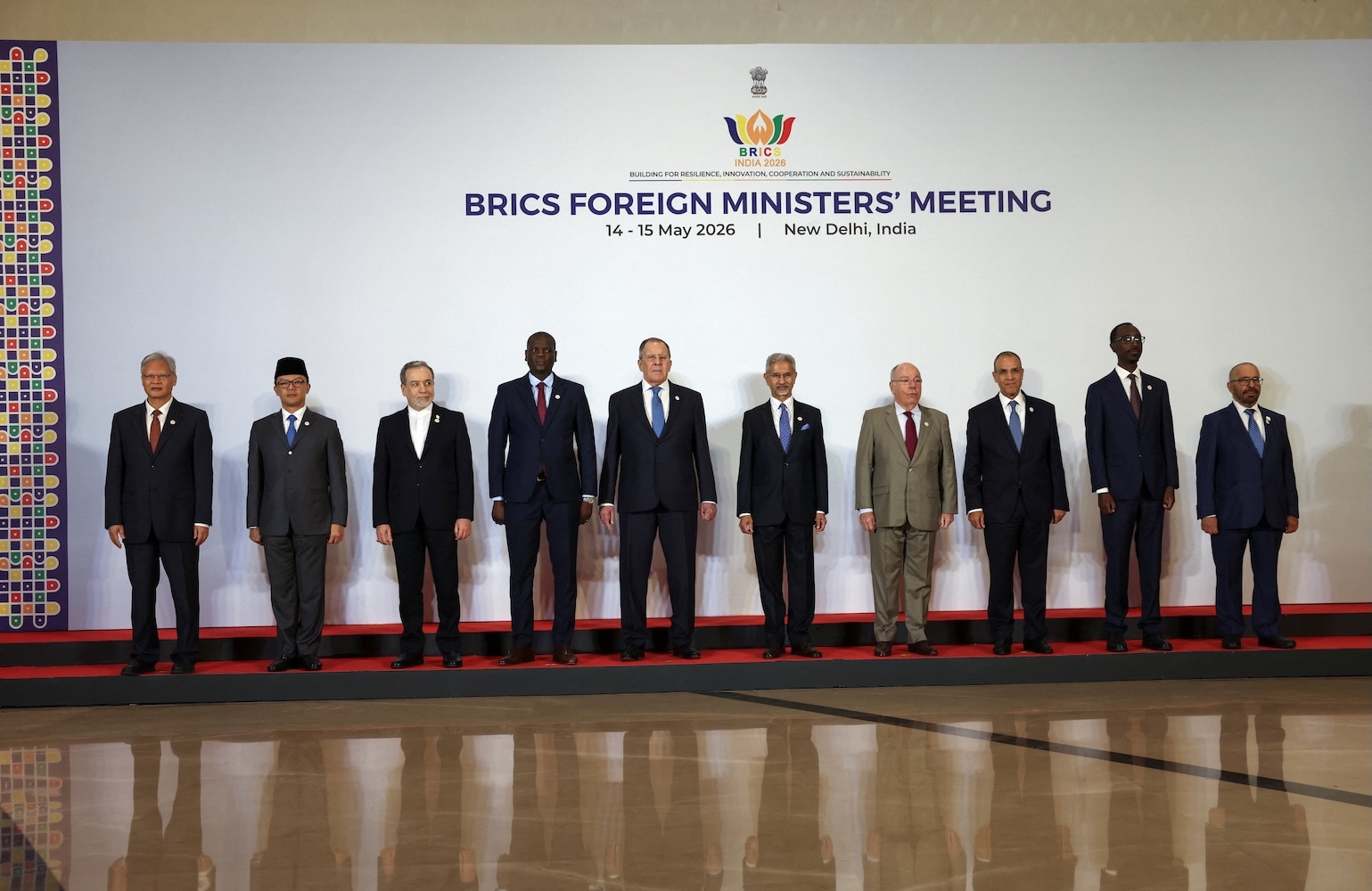
Recently, the leaders of the BRICS nations—Brazil, Russia, India, China, and South Africa—gathered not just to talk trade, but to challenge the very geography of power. They are tired of being the occupants of a house where they aren't allowed to touch the thermostat. Their recent declarations regarding the United Nations and the International Monetary Fund (IMF) aren't just dry policy shifts; they are a collective attempt to pick the lock on a room that has been closed to the Global South for decades.
The Monopoly on Consequence
Control is often invisible until it is used as a weapon. For most of the last eighty years, the US dollar and the Western-led financial system served as the world’s primary plumbing. It was efficient. It worked. But the BRICS nations are increasingly pointing out that this plumbing can be turned off at a whim.
When a single nation or a small bloc of nations decides to impose sanctions without the backing of the UN Security Council, it creates a ripple effect that hits the most vulnerable first. Imagine a global credit card system where the provider can suddenly freeze your account because they disagree with your neighbor. That is the "unilateral" nature of the problem. It bypasses the collective check-and-balance system the world agreed upon after World War II.
The statistics back the anxiety. Over a quarter of the global population now lives in countries affected by some form of Western-led sanctions. While these measures are often intended to target specific leaders or policies, the "human-centric" reality is that they often choke off the flow of medicine, food, and development capital. The BRICS bloc represents roughly 40% of the world's population. When they speak about the "illegitimacy" of these sanctions, they are speaking for billions of people who feel they are being punished for a game they never signed up to play.
The Architecture of the Status Quo
To understand why the BRICS nations are pushing for a total overhaul of the UN and the IMF, we have to look at the math. In the current IMF structure, voting power is largely determined by a country's economic size as it was perceived decades ago.
Consider this: even though China’s economy has surged to rival that of the United States, its voting share remains significantly lower. India, a country of 1.4 billion people and a massive engine of global growth, has less say in the IMF’s emergency lending policies than several much smaller European nations.
It is a lopsided table.
The BRICS leaders are arguing that the world cannot be governed by a 1945 snapshot. They are demanding a redistribution of "quotas"—the fancy term for who gets to vote on where the money goes during a crisis. If a fire breaks out in the global economy, the current system ensures that the people holding the buckets are mostly from the West, even if the fire is burning in the East or the South.
This isn't just about pride. It’s about survival. When the IMF or World Bank attaches "structural adjustment" conditions to loans, they are effectively writing the laws for developing nations. The BRICS push is an attempt to ensure that the people living under those laws actually have a hand in writing them.
The UN and the Ghost of 1945
The frustration extends to the halls of the United Nations. The Security Council, the body charged with maintaining global peace, is dominated by five permanent members with veto power: the US, UK, France, Russia, and China.
Notice who is missing.
There is no permanent seat for an African nation. None for Latin America. India, despite its massive population and nuclear status, remains on the outside looking in.
The BRICS communique specifically called for a more "representative" and "democratic" UN. They aren't just asking for a seat at the table; they are asking to rebuild the table entirely. They see a Security Council that is frequently paralyzed by the interests of the few while the many suffer the consequences of inaction or, worse, selective action.
Think of it as a neighborhood watch where only the five original families get to decide which houses get protected and which are ignored. The other fifty families on the block are starting to build their own security system.
The New Currency of Defiance
Perhaps the most visceral shift is the move toward "de-dollarization." It sounds like a technical term from a graduate-level economics textbook, but for a merchant in New Delhi or a farmer in Mato Grosso, it is about regaining a sense of agency.
For years, if India wanted to buy oil from Russia or Brazil wanted to sell soy to China, they had to use the US dollar as an intermediary. This meant paying conversion fees and, more importantly, being subject to the oversight and interest rate hikes of the US Federal Reserve.
But the wind is shifting.
The BRICS nations are increasingly settling trades in their local currencies. They are building a "contingent reserve arrangement"—essentially a rainy-day fund that doesn't rely on Western approval. This is the birth of a multipolar financial world.
It is messy. It is uncertain. Some argue it will lead to more volatility. But for the nations involved, the risk of a new system is preferable to the certainty of being trapped in the old one. They are moving from a world of one sun to a world of many stars.
The Invisible Stakes of a Changing Guard
Critics of the BRICS movement often point out that the members themselves have conflicting interests. China and India have border disputes; Russia is under intense international scrutiny; Brazil and South Africa face internal economic hurdles. It is not a monolith of perfect agreement.
However, their shared grievance acts as a powerful adhesive. They are united by what they are against as much as what they are for. They are against a world where the "rules-based order" feels like a set of rules written by someone else, for someone else’s benefit.
We are witnessing the slow-motion fracturing of a monopoly. It is a moment of profound vulnerability for the global order. If the UN and the IMF fail to reform, they risk becoming historical curiosities—relics of a time when the West could dictate the terms of global existence.
The BRICS nations are not just "slamming" sanctions; they are signaling that the era of the unilateral world is over. They are building their own bridges, their own banks, and their own narratives.
Back in Lagos, Amara doesn't care about the geopolitics of a "multipolar world." She just wants a world where her livelihood isn't collateral damage in a fight between giants. She wants a system that recognizes her existence not as a data point, but as a stakeholder.
The lock is being picked. The door is creaking open. What lies on the other side is a world where the map is drawn by everyone, or it isn't drawn at all.
The pen is changing hands.