Static crackles through the studio monitor. Somewhere in New York, a teleprompter glows with words that should be solid, anchoring, unassailable. Instead, they are slipping.
It starts with a number. One hundred and twenty-five million.
To the exhausted producer watching the feed, it sounds impressive. It sounds like weight. It sounds like the thrum of a billion heartbeats echoing across a subcontinent that has just finished marching its massive electorate to the booths. India. A democracy so vast its sheer logistics defy human imagination. Half a world away, digital ballots are ticking upward in Brazil, two political juggernauts locked in a fierce, breathless contest for the soul of South America.
Then, the anchor speaks.
Mistakes happen. Tongues trip over consonants. Synapses misfire in the blinding white glare of studio lights, where hours blur into days and caffeine replaces sleep. But when the voice at the desk attempts to stitch together two entirely separate continents—attributing that staggering Indian turnout to a presidential election in Brazil—something stranger happens than a mere slip of the tongue.
The geography of our attention fractures.
Think about how we consume the world. We flatten it. We take the complexities of two billion human lives, the distinct smells of dust and rain in New Delhi, the heavy humidity of a voting station in São Paulo, and we reduce them to pixels on a screen. We treat the globe like a desktop folder where countries are just icons we can drag and drop into the same sentence.
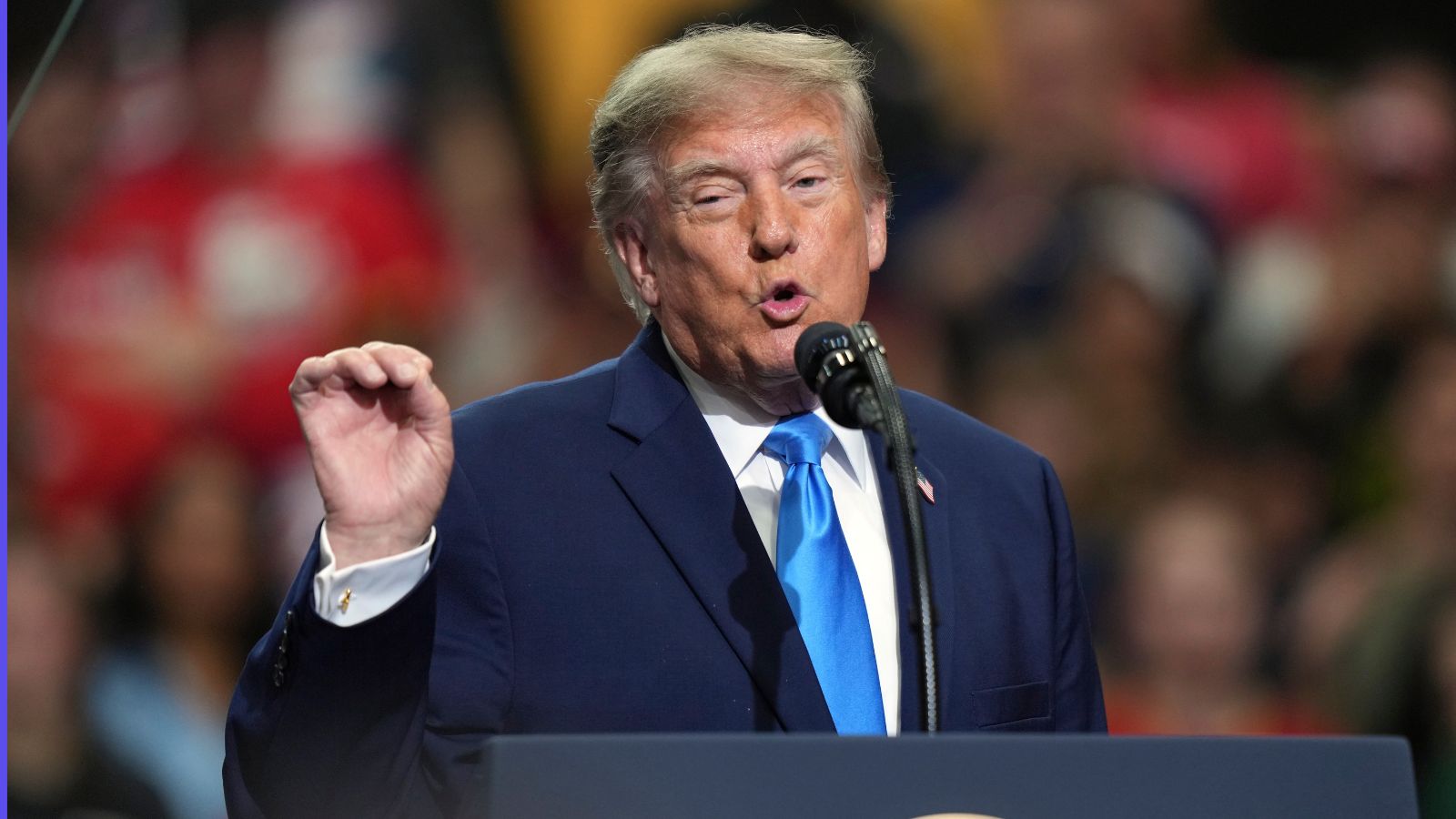
Donald Trump knew this better than anyone.
His public appearances have long operated on a different frequency, one where exactitude is secondary to momentum. When he referenced that imaginary Indian voter turnout while discussing the electoral rhythms playing out in Brazil, he wasn't checking an atlas. He was channeling a feeling. He was invoking the sheer scale of modern populism, casting a wide net where numbers are less about math and more about magnitude. Big. Massive. Unprecedented.
Yet, words have gravity.
When you stand before a microphone with millions listening, every stray thought becomes public architecture. People build their worldview out of your stray bricks. A watcher in Ohio hears the stumble and files away a warped mental map where Asia and South America bleed into one indistinguishable mass of political theater.
Let us step closer to the ground.
Imagine a classroom in a quiet Midwestern suburb. A teenager is scrolling through a news feed, thumb flickering across the glass screen at lightning speed. Headlines flash by like streetlights on a highway. Brazil. India. Trump. A gaffe. A viral clip. Within three seconds, the boundaries dissolve. To that student, foreign elections are not places where real people stand in long lines under a blistering sun, waiting to cast ballots on electronic machines with braille keypads. They are content. They are noise.
This is the hidden cost of our hyper-connected age. We have more information than any civilization in history, yet our sense of place has never been more fragile.
Consider what actually happened in those two distinct arenas.
In India, elections are an epic orchestration of human will. Officials trek across glaciers, ride on the backs of elephants, and paddle small boats down winding rivers just to ensure a single voter in a remote forest can cast a ballot. It takes weeks. It requires millions of civil servants, teachers, and security personnel. It is an act of staggering collective faith.
Meanwhile, down in Brazil, a high-stakes showdown was unfolding between Luiz Inácio Lula da Silva and Jair Bolsonaro. It was an election defined by deep polarization, economic anxiety, and a tense cultural tug-of-war. The electronic voting system, pioneered decades ago, delivered results with digital swiftness that left international observers breathless.
They are two entirely different stories. Two different histories. Two different heartbeats.
Yet, in the blender of global media, they were mashed into a single viral moment. A faux pas. A punchline.
Why do we care?
Because the slip-up reveals how easily our global conversation can be hijacked by scale. We are obsessed with bigness. We want our numbers to be astronomical, our political battles to be apocalyptic, our leaders to be larger-than-life figures who can casually mix up hemispheres without losing a beat.
When a public figure makes a mistake like this, it triggers a predictable cascade. Fact-checkers spring into action. Pundits analyze the psychology behind the slip. Social media algorithms reward the confusion with thousands of shares, turning an ordinary cognitive lapse into a cultural artifact.
We dissect the error, but we miss the symptom.
The symptom is our collective willingness to treat the planet as a background decoration for domestic political posturing. Whether speaking about India's colossal democratic machinery or Brazil's tense presidential standoff, the focus too often drifts away from the citizens whose lives are actually shaped by the outcomes.
A vote is not a statistic. It is a choice made in the quiet, trembling space between hope and cynicism.
When a voter in Mumbai steps into a polling booth, they are thinking about school fees, clean water, and the price of rice. When a voter in Rio de Janeiro presses a button, they are weighing the future of the Amazon, inflation, and social dignity. These concerns do not translate across borders easily. They cannot be swapped out or generalized into a casual talking point about big numbers.
When we blur the lines between nations in our public discourse, we flatten the dignity of the people who live in them.
The studio lights eventually dim. The cameras power down. The transcript of the speech is archived in digital catacombs, waiting for future historians or late-night comedians to unearth it.
The man who spoke the words has moved on to the next rally, the next microphone, the next crowd hungry for spectacle. But out there, across oceans and time zones, the real world keeps turning. Voters wake up. Governments pass laws. Bridges are built and roads crumble.
And somewhere in the dark, the map remains whole, waiting for us to finally learn how to read it.