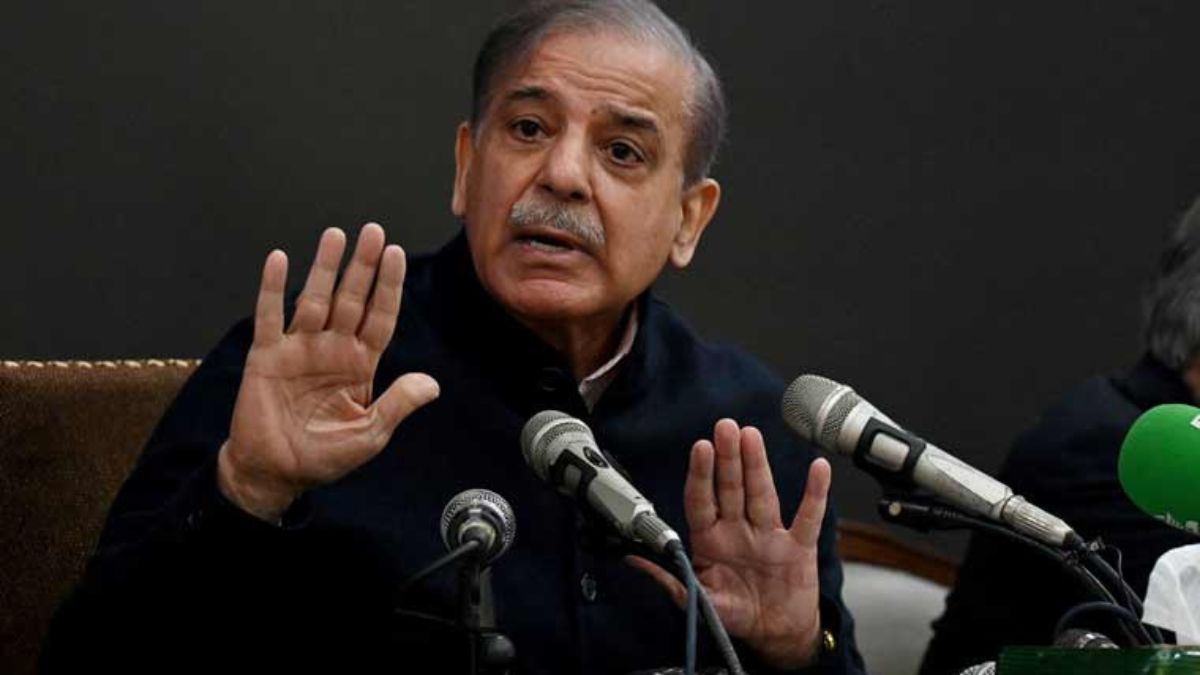
Every time a high-ranking American official steps up to a microphone and calls diplomatic talks with Tehran "unproductive" and their demands "unacceptable," financial news wires light up like a pinball machine. Algorithms instantly buy crude oil futures. Safe-haven currencies catch a bid. Retail traders panic-buy defense stocks, convinced that the Middle East is forty-eight hours away from a total blockade of the Strait of Hormuz.
They are wrong. Almost every single time.
The mainstream financial press—and the breathless Forex Factory tickers amplifying Bloomberg headlines—treats diplomatic posturing as literal military intelligence. They take Marco Rubio’s public dismissal of Iranian negotiating demands at face value, framing the breakdown as a binary switch flipped from "peace" to "kinetic war." That is lazy consensus at its absolute worst. It ignores the fundamental mechanics of coercive diplomacy, misreads how oil markets actually price geopolitical risk, and leaves amateur traders holding the bag when the inevitable backchannel compromise quietly emerges three weeks later.
If you are trading geopolitical headlines based on what politicians say outside a conference room, you are not analyzing risk. You are providing exit liquidity for institutional desks that actually understand how Washington and Tehran play this game.
The Anatomy of Diplomatic Theater
To understand why public pronouncements of failure are routine noise rather than actionable signals, you have to strip away the cable-news drama and look at negotiation theory.
Thomas Schelling, the Nobel Prize-winning economist who practically wrote the manual on nuclear strategy and bargaining, demonstrated decades ago that public intransigence is a mandatory tool of leverage. When a negotiator walks out of a room and declares the other side's terms "simply unacceptable," they are rarely ending the negotiation. They are anchoring the next round.
Think about the domestic audience problem both sides face.
In Washington, any administration—especially one featuring hawks like Marco Rubio—cannot be seen making early concessions to the Islamic Republic. Doing so invites immediate political destruction from Congress and key regional allies. Publicly rejecting Iranian demands establishes a hard ceiling. It signals to domestic critics that American resolve remains unbroken while simultaneously telling Tehran that its opening bid failed to move the needle.
Tehran operates under identical constraints, just inverted. The leadership in Iran answers to hardline factions within the Islamic Revolutionary Guard Corps (IRGC) who view any compromise on regional influence, ballistic missiles, or nuclear enrichment as existential surrender. Therefore, Iranian diplomats must enter every room with maximalist, borderline absurd demands. They demand immediate sanctions relief without verifiable rollbacks, knowing full well Washington will reject it.
When Rubio calls those demands unacceptable, both sides have successfully performed their required scripts for their respective domestic audiences. The real negotiation—the quiet, granular horse-trading over frozen assets, enrichment caps, and regional de-escalation—happens through Omani, Qatari, or European intermediaries long after the press corps goes home.
I have sat on macro desks where junior analysts burned millions of dollars in drawdown chasing these exact headlines. During the 2018-2019 maximum pressure campaign, every week brought a new proclamation that talks were dead, war was imminent, and oil was heading to $150 a barrel. Traders bought the rip on Tuesday, only to get stopped out by Friday when quiet waivers or backchannel talks surfaced. The market has a short memory, and financial media relies on that amnesia to sell clicks.
Why Forex and Oil Markets Misprice the Strait of Hormuz
The lazy consensus assumes a straight line between failed talks and disrupted supply.
Talks fail -> Sanctions tighten -> Iran retaliates -> Oil spikes -> Dollar rallies.
This causal chain breaks down under scrutiny because it ignores physical market realities and economic self-preservation. Let us dismantle the core assumptions driving this trade.
First, Iran does not want a hot war that shuts down Persian Gulf shipping. The Iranian economy survives on shadow-fleet crude exports, primarily flowing to independent "teapot" refineries in China. A military confrontation that closes the Strait of Hormuz stops Iranian oil exports just as effectively as it stops Saudi or Emirati tankers. Tehran uses the threat of disruption to extract a geopolitical risk premium, not the actual execution of economic suicide.
Second, the global crude market in the mid-2020s is structurally different from the oil markets of the 1970s or even 2011. Non-OPEC+ supply growth—driven by the US Permian Basin, Guyana, Brazil, and Canada—has created a massive buffer against regional supply shocks. Furthermore, OPEC+ routinely sits on millions of barrels per day of spare production capacity. When headlines scream about Iranian intransigence, physical crude traders look at floating storage, refinery margins, and spare capacity. Usually, they see plenty of oil.
Third, look at how currency pairs actually react versus how retail forums think they react. On a headline like Rubio's, you will see an immediate knee-jerk spike in USD/CHF or a drop in EUR/USD, driven by high-frequency trading algorithms scraping keywords like "unacceptable" and "Iran." Within hours, however, once human portfolio managers assess whether actual barrels of oil are leaving the market, that move fades.
Imagine a scenario where diplomatic talks officially collapse on a Tuesday morning. Brent crude jumps 4% in twenty minutes. By the New York close, if no tankers have been seized and no pipelines hit, algorithmic momentum stalls. By Thursday, commercial hedgers—producers locking in higher prices—flood the market with sell orders, driving prices right back to where they started. If you bought the breakout on the headline, you bought the absolute top.
What Traders Get Wrong About Geopolitical Risk
When market participants search for analysis on US-Iran negotiations, they usually ask the wrong questions. They ask: Will the US and Iran reach a deal? Or, How high will oil go if talks fail?
Both questions miss the point entirely.
Will the US and Iran reach a comprehensive deal?
No. Stop waiting for a grand bargain. A sweeping, permanent treaty that resolves nuclear enrichment, ballistic missiles, and regional proxy networks is politically impossible in both capitals. What you actually get are informal, unwritten understandings—often called "less-for-less" arrangements. Iran quietly caps enrichment below weapons-grade thresholds and restrains proxy attacks on US bases; Washington quietly dials back enforcement of certain secondary sanctions, allowing Tehran to sell enough oil to keep its currency from hyperinflating. Neither side admits to it. Both sides claim victory.
How high will oil go when diplomacy stalls?
Without a physical kinetic strike on energy infrastructure—like the 2019 Abqaiq-Khurais attack in Saudi Arabia—diplomatic breakdowns add a temporary $3 to $6 risk premium to crude, which decays rapidly over ten to fourteen trading days. Markets price disruptions, not disagreements. Until steel hits steel, diplomatic hostility is just noise.
Does a hawkish US stance automatically mean a stronger US Dollar?
Not necessarily. While initial flight-to-safety flows boost the greenback, sustained geopolitical tension that keeps energy prices artificially elevated acts as a tax on global growth. If high energy costs force the Federal Reserve into a corner—balancing sticky inflation against slowing domestic consumption—the dollar's trajectory becomes far messier than simple risk-off correlations suggest.
The Institutional Playbook for Diplomatic Deadlocks
If you want to survive geopolitical volatility without getting chewed up by algorithmic whipsaws, you have to stop trading the press conference and start trading the market structure.
Fade the Initial Headline Spike (With Strict Risk Parameters)
When a major diplomatic breakdown hits the wires and crude or safe-haven currencies gap up without any accompanying physical incident, wait for the initial algorithmic frenzy to exhaust itself. Watch the order flow at key technical resistance levels. Institutional desks routinely sell into retail panic when the underlying physical supply-demand balance remains unchanged. You are not betting on peace; you are betting on the decay of an unearned risk premium.Watch Options Skew, Not Spot Prices
Spot prices tell you what algorithms are doing right now. The options market tells you what smart money actually fears. Look at the 25-delta risk reversal on Brent crude or major currency pairs. If Rubio calls talks unproductive and spot oil jumps 3%, check out-of-the-money call skew. If institutional players are not aggressively bidding up deep out-of-the-money calls, they do not believe an actual supply shock is coming. They are treating the headline as transient noise.Monitor Physical Flow Indicators
Ignore the pundits and track what actually moves across the water. Watch tanker tracking data for Iranian crude loadings out of Kharg Island. Watch the Brent-Dubai EFS (Exchange of Futures for Swaps) spread, which measures the relative strength of Atlantic Basin crude versus Middle Eastern sour crude. If Middle Eastern physical grades aren't blowing out relative to Brent, the physical market is telling you that supply is completely safe, regardless of how angry diplomats sound in front of cameras.Separate Tactical Leverage from Strategic Shifts
Learn to distinguish between a negotiating tactic and a doctrinal shift. A politician calling demands "unacceptable" is a tactic. The deployment of additional carrier strike groups to the Fifth Fleet, combined with emergency diplomatic evacuations of embassy personnel, is a strategic shift. Until the hardware moves, the words are cheap.
The Counter-Argument You Cannot Ignore
Every contrarian thesis carries a fatal flaw if applied blindly. The danger of fading diplomatic breakdowns is assuming that rational actors always maintain control over escalation ladders.
History is littered with conflicts that nobody wanted, triggered by a local commander making a bad decision in the dark. A miscalculation in the Persian Gulf—an anti-ship missile hitting a commercial vessel by mistake, or a drone strike causing unexpected American casualties—instantly invalidates every rule of diplomatic theater. In that scenario, the risk premium does not decay; it explodes, and fading the move will wipe out an undercapitalized account in seconds.
That is why you never fade a headline with uncapped downside. If you sell into a geopolitical spike, you use defined-risk structures—like bear call spreads in options—or hard, non-negotiable stop-losses placed above structural resistance. You respect the tail risk while refusing to pay retail prices for the panic.
Stop Reading the Transcripts
The next time a Bloomberg headline flashes across your terminal quoting Marco Rubio—or any other senior official—declaring that talks with Iran have hit a brick wall, take your hands off the mouse.
The diplomats are doing their jobs. They are posturing for cameras, appeasing hardliners at home, and trying to squeeze an extra millimeter of leverage out of an adversary who is doing the exact same thing. The financial media is doing its job, too: turning routine diplomatic friction into existential drama to keep your eyeballs glued to the screen.
Your job is not to react to the theater. Your job is to price reality. Watch the physical barrels, check the options skew, and let the retail crowd chase the headlines while you wait for the inevitable, quiet reversion to the mean.