US Secretary of State Marco Rubio just touched down in India, and if you think this is just another standard diplomatic grip-and-grin photo op, you're missing the real story.
The top Trump administration official started his four-day, four-city tour on Saturday with a highly symbolic, brief stop in Kolkata before immediately jetting off to New Delhi to face Prime Minister Narendra Modi. On paper, it's a tour about trade, energy, and the upcoming Quad Foreign Ministers' meeting. In reality, it's a high-stakes damage control mission.
Ties between Washington and New Delhi have been noticeably strained. President Donald Trump's aggressive tariff policies have battered Indian exports. At the same time, the White House has thrown some curveballs by warming up to China and re-engaging with Pakistan. Rubio is walking into a diplomatic pressure cooker, trying to patch up a critical alliance while holding a basket of complicated demands.
The Calculated Symbolism of Kolkata
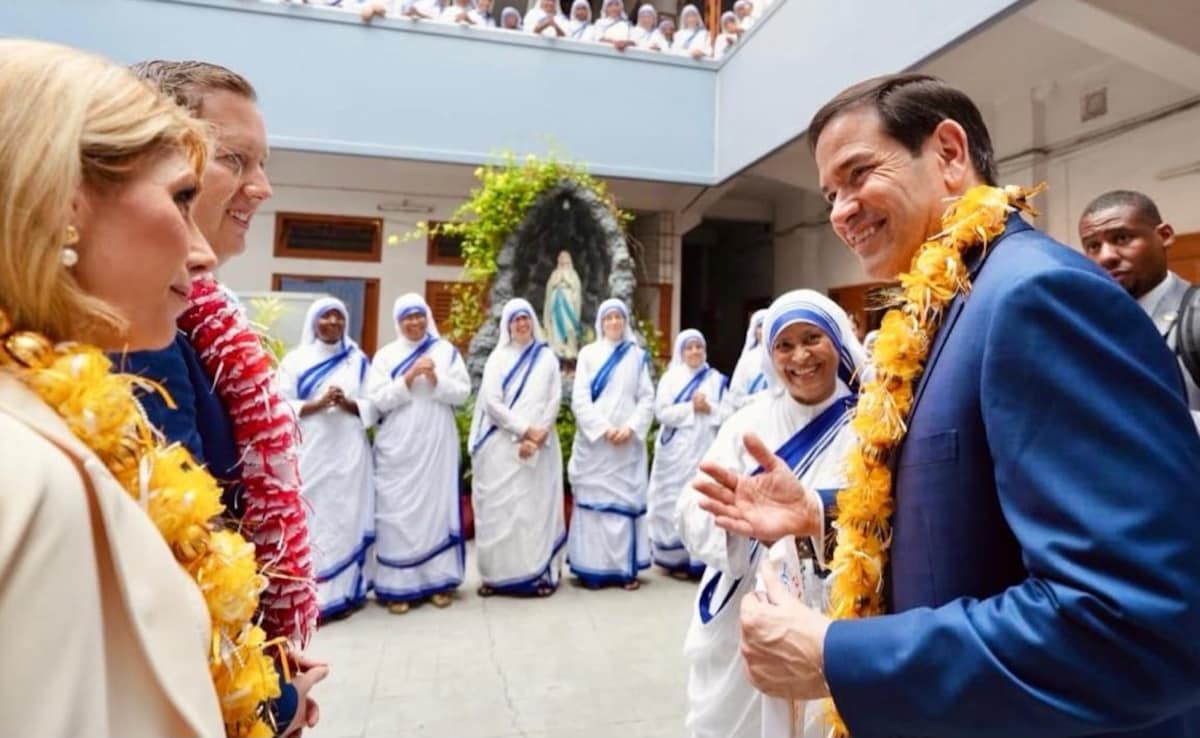
It's been 14 years since a US Secretary of State set foot in Kolkata—Hillary Clinton was the last to do it back in 2012. Rubio, a devout Catholic, chose the Mother House, the headquarters of Saint Teresa’s Missionaries of Charity, as his very first stop.
While US Ambassador Sergio Gor tweeted out pictures and praised the visit as a reflection of shared values, the timing and location are deeply political. Elements of Trump’s political base back home have consistently raised flags about the treatment of Christians in India under the current administration. By making a beeline for Mother Teresa’s tomb the second he landed, Rubio gave a quiet nod to those domestic concerns without uttering a single controversial word to the press.
According to Sister Concettina, the Secretary General of the Missionaries of Charity, it was entirely Rubio's initiative to get a blessing at the tomb. She described it as a quiet, family-like get-together. But in diplomacy, nothing is just a family get-together.
Immediately after the blessings, Rubio hopped back on his plane and headed straight for the capital.
The Shadow of the Iran War and an Energy Crisis
The real urgency behind this trip isn't cultural; it's economic. The ongoing conflict involving Iran has completely destabilized global markets. With Tehran choking off the strategic Strait of Hormuz, global oil prices are skyrocketing, and India is feeling the squeeze.
India's fast-growing economy relies heavily on imported fuel. Before leaving for this trip, Rubio openly stated that the US wants to sell India as much oil and energy as it can handle. The US is pumping oil at historic production and export levels, and Washington smells a massive commercial opportunity to replace Middle Eastern supplies.
But it's not a straightforward sales pitch. The US Treasury recently extended a 30-day sanctions waiver allowing countries to buy Russian seaborne oil to help cushion the energy shock. India has been leaning hard on cheap Russian crude, a point of friction that Washington has tolerated but wants to eventually steer toward American suppliers. Rubio is using the current energy panic to push US oil, but New Delhi won't just abandon its diversified energy portfolio because Washington asks nicely.
Tariffs and the Stalled Trade Deal
If you want to know why Modi and Trump have been cool toward each other lately, look no further than the ongoing tariff war. Trump hit Indian goods with massive reciprocal tariffs, at one point setting duties as high as 50%.
Back in February, the two nations managed to hammer out an interim framework that lowered those duties to 18%, and eventually down to 10% for certain items, contingent on India cutting back its reliance on Russian oil. But the deal is stuck. The Trump administration is still pursuing investigations into what it calls unfair trade practices, threatening to slap those high tariffs right back on if India doesn't budge.
The American side is reportedly frustrated, feeling that New Delhi expects a stellar deal without giving up any real market access. Rubio's deputy, Christopher Landau, made the administration's stance clear when he publicly vowed not to repeat the "same mistakes" the US made with China, warning that India's economic rise shouldn't come at the expense of American businesses. Rubio has to find a way to break this deadlock, but local trade experts don't expect him to magically reverse the downward trajectory of these negotiations in a single weekend.
The Quad and the China Paradox
The official anchor of this trip is the Quadrilateral Security Dialogue meeting on Tuesday. Rubio will sit down with Indian External Affairs Minister S. Jaishankar, Australian Foreign Minister Penny Wong, and Japanese Foreign Minister Toshimitsu Motegi.
The Quad has long been championed as the democratic counterweight to Beijing’s aggressive maritime pushes in the South China Sea and the wider Indo-Pacific. Rubio has been vocal about his commitment to the alliance, pointing to initiatives like the Critical Minerals Initiative meant to wrest control of electric vehicle supply chains away from China.
The paradox? Trump is simultaneously rewriting the rulebook on China. Just last week, Trump concluded a state visit to Beijing where he floated the idea of a "G2" partnership between the US and China. That rhetoric has sent shockwaves through New Delhi. India views China as a direct territorial threat, especially along their disputed borders. If Washington is flirting with a G2 framework with Beijing while simultaneously cozying up to Pakistan, India begins to wonder how reliable the US actually is as a security partner.
To make matters more awkward, India’s requests to secure a firm commitment for a Trump visit to a full Quad summit have gone unanswered. Rubio has to convince Jaishankar and Modi that the US isn't playing double games in Asia.
What Happens Next
Rubio's itinerary moves from New Delhi to the cultural stops of Agra and Jaipur, but the hard work happens behind closed doors in the capital.
Look closely at the joint statements over the next 48 hours. If the language remains locked in vague generalities about "shared democratic values" and "bonds of friendship," it means the trade and energy disputes remain deeply gridlocked. If we see concrete numbers on US LNG shipments or a sudden breakthrough on the interim trade tariff framework, Rubio will have pulled off a major diplomatic win.
For India, the strategy is clear: hold the line on strategic autonomy, protect its energy pipeline from Russia, and refuse to sign a lopsided trade deal just to appease Washington's tariff threats. For Rubio, the mission is to prove that the Trump administration still values New Delhi as a premier ally, even when the America First doctrine makes that partnership incredibly difficult to maintain. Watch the trade margins and the energy contracts; that's where the real winner of this trip will be decided.