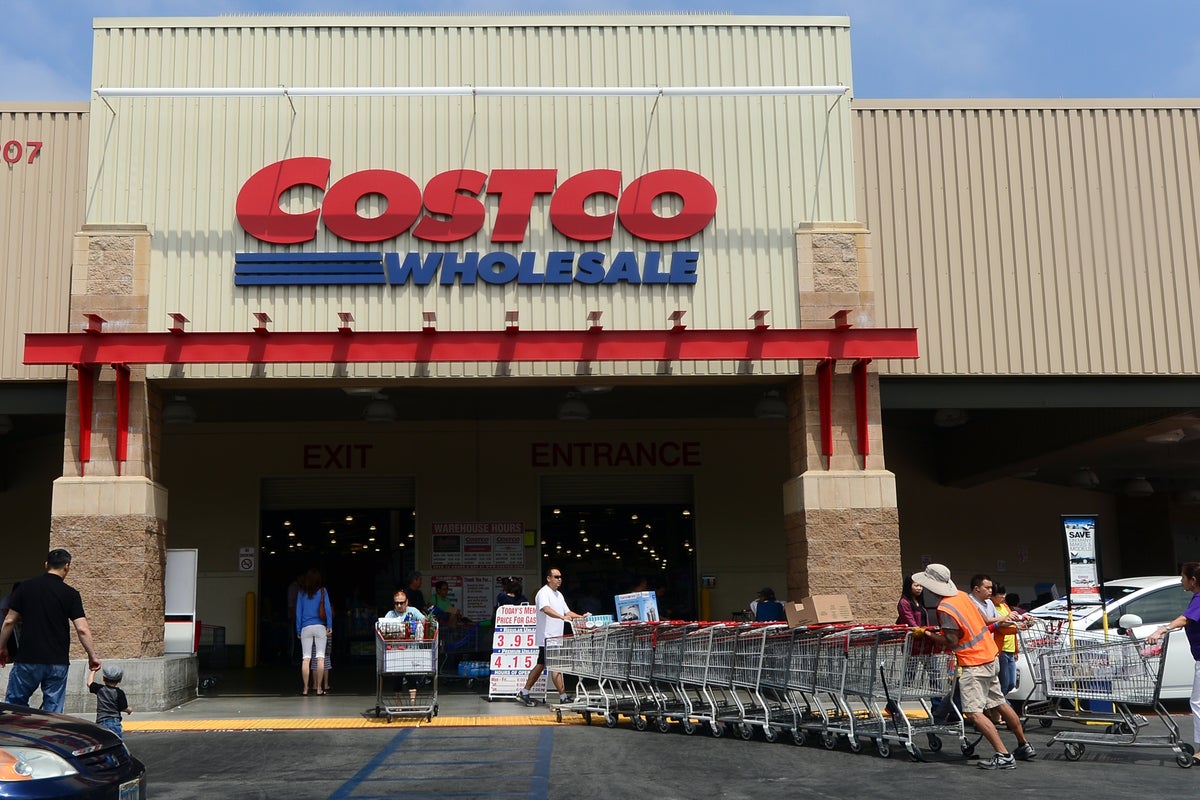
The retail price adjustment for Kirkland Signature full-synthetic motor oil signals a structural shift in wholesale supply chain economics. When Costco wholesale warehouses moved the price of a two-pack of five-quart containers from approximately thirty dollars to fifty-seven dollars ninety-nine cents, alongside a strict two-box weekly purchase limit per membership, observers misinterpreted the move as a routine retail price fluctuation. This event reflects a severe upstream bottleneck rooted in global petroleum refining yields, specialized base oil scarcity, and the operational economics of private-label wholesale distribution.
The Refining Economics of Group III Base Oils
High-performance internal combustion engines require synthetic lubricants formulated on Group III base oils. Unlike conventional motor oils derived from simpler fractional distillation of crude oil, synthetic variants undergo severe hydroprocessing and catalytic dewaxing to achieve high viscosity index ratings. This technical refinement process links the cost structure of synthetic lubricants directly to the availability and pricing of specific refinery feedstock streams.
When geopolitical instability constricts crude oil flows through critical maritime transport lanes, such as the Strait of Hormuz, refiners face immediate capacity constraints. Global energy markets respond by prioritizing high-volume distillate yields. Refineries shift distillation fractions toward transportation fuels, specifically jet fuel, diesel, and regular gasoline, where crack spreads and gross refining margins offer superior financial returns.
Lubricant base oils represent a secondary fraction by volume in many modern fluid catalytic cracking units. As petroleum refiners optimize operations for immediate fuel demand during supply deficits, the production volume of Group III base stocks contracts. Importers relying on Middle Eastern processing facilities experience immediate inventory shortfalls. The resulting supply deficit forces wholesale purchasers to bid aggressively for remaining global inventories, driving up acquisition costs long before retail shelves feel the pinch.
Wholesale Private Label Margin Architecture
Costco operates under a distinct structural model where private-label offerings like Kirkland Signature serve as primary vectors for member retention and perceived value. Historically, private-label motor oil functioned as a traffic driver, priced aggressively near wholesale acquisition cost to attract high-value members into the warehouse ecosystem. The near-doubling of the price point breaks this historical pricing ceiling, demonstrating that wholesale procurement costs have eclipsed internal margin absorption capacities.
Wholesale clubs maintain strict caps on gross margins across product categories, typically targeting ceilings between ten and fourteen percent. When upstream acquisition costs escalate by nearly one hundred percent, absorbing the delta would require operating the category at an unsustainable negative margin. Passing the entire cost increase to the consumer protects warehouse gross profit metrics but destroys the historical value proposition that distinguished DIY maintenance from professional service centers.
Furthermore, the price convergence between retail DIY maintenance and independent quick-lube services alters consumer calculation models. When a ten-quart DIY oil change rises to nearly sixty dollars, exclusive of specialized filters and disposal fees, the cost differential against professional service providers narrows to negligible levels. Consumers weigh the opportunity cost of labor, fluid handling, and time against professional shop pricing, triggering a downward adjustment in category demand velocity.
Behavioral Economics and Inventory Rationing Mechanics
The introduction of purchase limits—specifically two boxes per member per week for private-label containers and five units for branded alternatives like Mobil 1—serves a specific operational function. In environments characterized by acute physical scarcity, unconstrained retail pricing triggers preemptive consumer hoarding. When retail prices rise rapidly without rationing controls, fear of future shortages accelerates inventory depletion, creating artificial out-of-stock events that independent market forces alone cannot clear.
Rationing protocols alter inventory turnover metrics. By capping individual transactions, warehouses smooth out the consumption curve, preventing commercial operators or panic-driven hoarders from draining regional distribution hubs in single purchase cycles. This mechanism preserves stock availability for standard retail members, maintaining perceived equity across the broader membership base.
However, rationing introduces inventory management distortions. Distribution logistics must handle higher transaction frequencies for constrained items while managing inventory allocations across regional warehouse nodes. Warehouses experiencing localized demand spikes must rebalance stock levels frequently, increasing logistical overhead and administrative friction at the point of sale.
Upstream Propagation Across Competing Retail Channels
Private-label pricing adjustments by dominant warehouse operators exert immediate pricing pressure across competing retail channels, including traditional auto parts chains, mass merchants, and online fulfillment platforms. While competitors often delay price adjustments to capture market share from constrained rivals, prolonged raw material deficits eventually force universal price corrections.
Mass merchants operating on high inventory turns face difficult choices regarding price elasticity. If competitors absorb margin pressure to protect market share, raising prices risks volume erosion. Conversely, maintaining legacy price points while wholesale costs rise depletes operating capital. The absence of immediate price matching by competing national retailers during the initial phase of the supply shock highlights divergent inventory procurement agreements and hedging strategies across the retail sector.
Long-term supply contracts insulate certain large-volume buyers temporarily, but fixed-price agreements expire rapidly in volatile commodity markets. Once contract resets occur across the supply chain, retail pricing converges toward the new marginal cost of production, cementing higher price floors across all distribution tiers.
Strategic Allocation and Commercial Procurement Execution
Procurement divisions must decouple private-label sourcing dependencies from single-region base oil suppliers. Organizations should establish multi-region sourcing frameworks that incorporate Group III refiners in North America and Europe to mitigate geopolitical choke-point exposure. Pricing agreements must transition from fixed quarterly terms to dynamic formula-based contracts linked to underlying base oil spot indices rather than crude oil benchmarks alone, ensuring cost transparency and predictable margin retention during supply contractions.