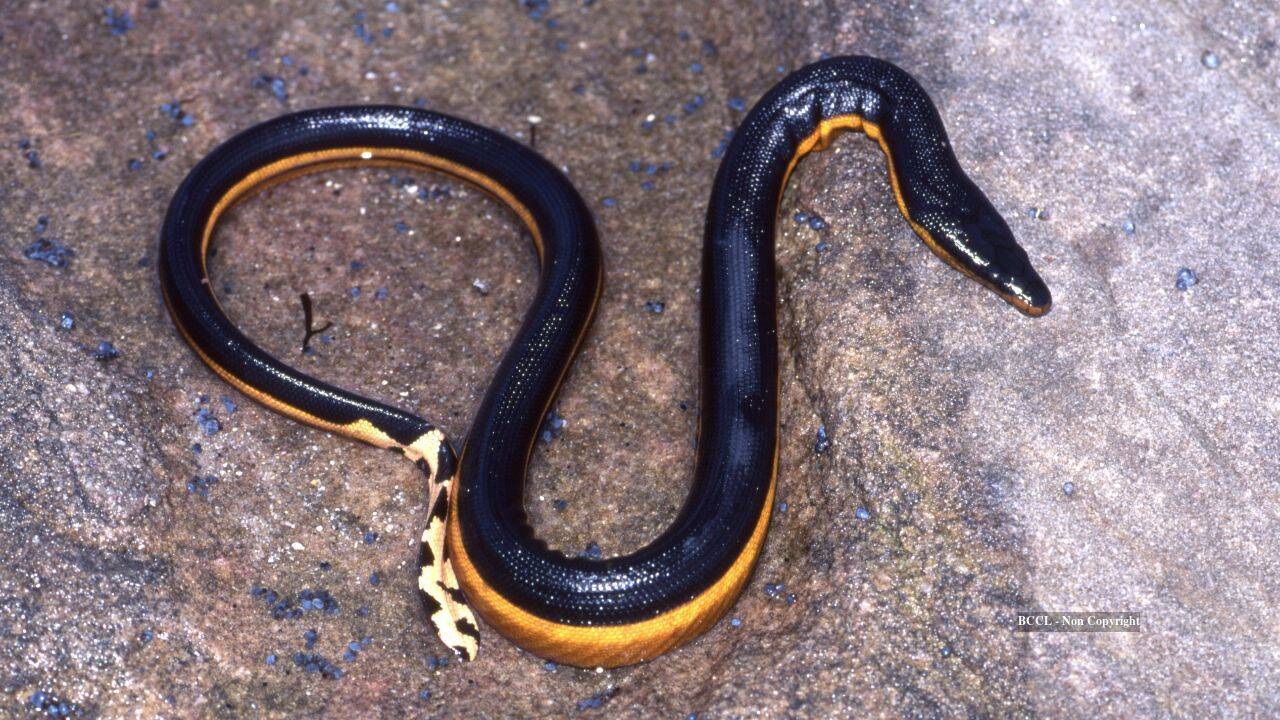
The reappearance of a pelagic marine organism outside its primary endemic range represents a significant signal in marine biogeography. When specimens such as the yellow-bellied sea snake appear along temperate coastlines after multi-year absences, public discourse often leans toward speculative commentary. A rigorous evaluation requires shifting the framework from isolated anomaly to ecological indicator, examining thermal tolerance thresholds, oceanic transport vectors, and the behavioral mechanics governing range expansion.
Thermal Physiology and Environmental Boundaries
Marine reptiles inhabiting tropical and subtropical waters rely heavily on ambient sea surface temperatures to maintain metabolic equilibrium. The yellow-bellied sea snake is primarily restricted by a lower thermal limit, typically documented near eighteen degrees Celsius. Below this threshold, physiological efficiency declines rapidly, impairing locomotion, foraging capability, and predator avoidance.
The occurrence of individuals in higher-latitude zones such as central or northern California is governed by discrete environmental variables:
- Surface Temperature Anomalies: Temporary marine heatwaves or elevated coastal water temperatures lift the thermal barrier, allowing ectothermic species to survive past their historical latitudinal limits.
- Current Vector Dynamics: Major oceanic transport structures, including the northward flow of seasonal currents or localized coastal eddies, act as passive distribution conveyances. An individual caught in a warm-core ring can be transported far outside its normal habitat before thermal regression occurs.
- Metabolic Cost Function: As ambient temperatures drop toward the lower tolerance boundary, energy expenditure required for basic cellular maintenance exceeds energy intake from diminishing prey availability, creating an unsustainable physiological deficit.
Behavioral Mechanics and Drift Ecology
Unlike teleost fish or marine mammals equipped with active thermoregulatory mechanisms or large-scale migratory mapping, pelagic sea snakes are largely at the mercy of prevailing hydrodynamic forces. Their primary behavioral adaptation involves surface basking to optimize thermal absorption, which concurrently subjects them to wind-driven surface currents.
This transport mechanism explains the sporadic nature of these sightings. Rather than representing an intentional migration or permanent colonization event, these occurrences are drift-dependent anomalies. The timing—often separated by intervals of several years—correlates directly with multi-year climatic cycles such as El Nino-Southern Oscillation phases, which alter surface current velocities and temperature distributions across the Pacific basin.
Ecological Implications and Monitoring Frameworks
Documenting these occurrences provides marine ecologists with empirical data points regarding shifting species distributions under modern climatic variability. While a single specimen washed ashore does not confirm permanent establishment—due to the absence of a localized breeding population and lethal winter water temperatures—it highlights the elasticity of marine biogeographical boundaries.
Future monitoring must focus on standardizing the collection of environmental telemetry at stranding sites, correlating physical oceanographic data with specimen conditions to map the precise hydrodynamic pathways driving these rare distributional events.