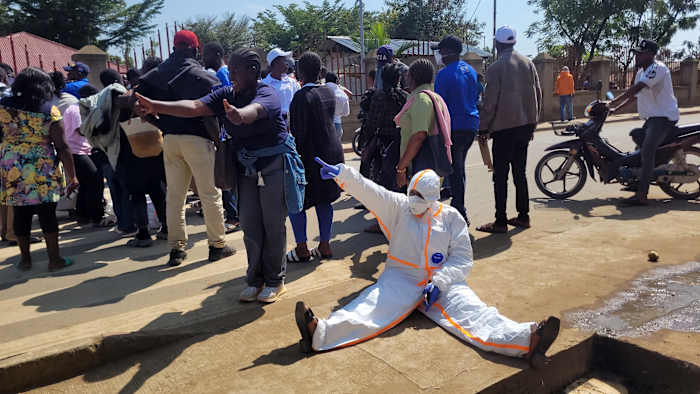
Pathogen containment protocols fail not from a lack of political will, but from a fundamental miscalculation of epidemiological variables. When an infectious agent breaches localized thresholds—such as the historical inflection point in Liberia where recorded mortality reached 84 deaths out of 131 baseline cases (Green et al., 2018)—the transition from an isolated outbreak to a Public Health Emergency of International Concern (PHEIC) is governed by predictable, non-linear biological mechanisms (Le Roux-Kemp, 2018; Stawicki et al., 2014). Media narratives routinely obscure these dynamics by focusing on superficial symptom checklists or arbitrary casualty counts.
Evaluating public health risk requires mapping the precise structural interactions between viral pathophysiology, transmission vectors, and institutional response bottlenecks. Deconstructing these elements transforms an emotionally driven health scare into an actionable blueprint for epidemiological containment and systemic risk mitigation.
The Tri-Phasic Pathophysiological Progression
The clinical manifestation of Ebola Virus Disease (EVD) is systematically mischaracterized as a sudden, uniform systemic collapse. It is more accurately modeled as a tri-phasic biological cascade, where the transition between phases alters both the patient's survival probability and their epidemiological transmission profile (Mohd et al., 2024).
[ Phase 1: Incubation & Early Prodomal ]
  ├── Duration: ~11 Days (Asymptomatic, Non-infectious)
  └── Signs: Non-specific Febrile Onset (Myalgia, Chills, Cephalea)
        │
        ▼
[ Phase 2: Gastrointestinal Escalation ]
  ├── Fluid Loss: Up to 10 Liters/Day
  └── Transmission Risk: Logarithmic Increase via Emesis & Diarrhea
        │
        ▼
[ Phase 3: Coagulopathy & Vascular Collapse ]
  ├── Mechanism: Disseminated Intravascular Coagulation (DIC)
  └── Outcome: Endothelial Disruption, Multi-organ Failure, Shock
Phase 1: The Asymptomatic Incubation and Prodromal Onset
Following an average incubation period of approximately 11 days, the patient experiences a non-specific febrile onset (Stawicki et al., 2014). Initial clinical markers include severe cephalea, myalgia, and chills (World Health Organization, 2025). During this prodromal period, viral replication is primarily localized within dendritic cells and macrophages, meaning the patient is not yet highly infectious. The non-specific nature of these early symptoms creates a diagnostic bottleneck, as they mimic endemic pathologies like malaria or typhoid fever (World Health Organization, 2025).
Phase 2: Gastrointestinal Escalation
As the viral load increases exponentially, the pathology targets the epithelial lining of the gastrointestinal tract. This triggers severe, unremitting diarrhea, vomiting, and acute abdominal pain (World Health Organization, 2025). The volume of fluid loss can reach up to 10 liters per day. At this juncture, the biological transmission risk increases logarithmically, as the external environment becomes contaminated with highly infectious, viral-laden fluids.
Phase 3: Terminal Coagulopathy and Vascular Collapse
The final stage of the disease is defined by endothelial disruption and disseminated intravascular coagulation (DIC). The virus downregulates cell-adhesion molecules, leading to increased vascular permeability and localized hemorrhaging, such as epistaxis, hematemesis, and subconjunctival bleeding (World Health Organization, 2025). Terminal progression is driven by a profound pro-inflammatory cytokine storm, culminating in multi-organ failure, refractory hypovolemic shock, and death.
The Transmission Function and Environmental Drivers
The mathematical escalation of an EVD outbreak is defined by its basic reproduction number $R_0$. If $R_0 > 1$, the chain of transmission expands exponentially. The transmission dynamics of EVD are governed by a distinct structural equation:
$$T = f(C, V, \mu)$$
Where:
- $C$ represents the frequency of direct contact with infected biological fluids.
- $V$ represents the viral load density of the vector source.
- $\mu$ represents the structural and cultural variables of the local environment.
Ebola is not an airborne pathogen; transmission requires direct contact with the blood, secretions, organs, or other bodily fluids of infected individuals or deceased victims (Mohd et al., 2024). The transmission vector changes dramatically over the lifecycle of an outbreak due to specific environmental variables.
The first structural variable is nosocomial amplification. In under-resourced healthcare facilities, the absence of standardized personal protective equipment (PPE) converts medical clinics into primary transmission hubs. Healthcare workers face an exceptionally high attack rate when standard isolation protocols are absent, which rapidly depletes the local clinical response capacity (Le Roux-Kemp, 2018; Rojek et al., 2017).
The second variable centers on post-mortem transmission mechanics. The viral load within a deceased human body remains highly stable and exceptionally dense for days following death. Traditional burial practices that involve close contact with the deceased generate major transmission clusters (Green et al., 2018). Consequently, containment strategies that ignore local anthropological realities cannot interrupt the transmission function, regardless of clinical intervention scale (Venables & Pellecchia, 2017).
Institutional Bottlenecks in Outbreak Containment
When a localized outbreak escalates into a global concern, it points to a failure in the international health infrastructure's containment response. This systemic failure unfolds across three distinct layers.
| Containment Layer | Primary Structural Bottleneck | Downstream Epidemiological Impact |
|---|---|---|
| 1. Diagnostic Velocity | Lack of localized point-of-care PCR assays | Prolonged contact windows; misclassification of patients |
| 2. Logistical Supply Chains | Cold-chain requirements for advanced therapeutics | Inability to deploy vaccines or monoclonal antibodies to remote areas |
| 3. Risk Communication | Misalignment with local sociocultural dynamics | Public denial, institutional distrust, and hidden community transmissions |
The first limitation is diagnostic velocity. In remote or under-developed regions, laboratory confirmation of EVD often requires transporting blood specimens to centralized national facilities, a process that can take several days (World Health Organization, 2025). During this delay, suspected patients are either co-mingled with uninfected populations or sent home, which extends the contact tracing window and accelerates community transmission.
The second bottleneck involves cold-chain logistics. Modern countermeasures, including the rVSV-ZEBOV vaccine, require ultra-low temperature storage infrastructure (Mohd et al., 2024). Deploying these assets into regions with fragmented power grids and poor transport infrastructure creates an operational logjam. This restricts defensive ring-vaccination strategies to urban centers, leaving rural populations exposed.
The third failure occurs within risk communication networks. Standard top-down public health messaging often triggers community resistance and institutional distrust (Venables & Pellecchia, 2017). When health agencies fail to coordinate with local authority structures, the resulting informational disconnect drives symptomatic individuals underground, rendering active surveillance systems ineffective.
Strategic Action Plan for Global Biosecurity
Halting an accelerating epidemic requires transitioning from reactive containment to a proactive, structured intervention matrix. The following data-driven strategies outline the mandatory plays for international health authorities.
- Deploy Decentralized Point-of-Care Diagnostics: Transition away from centralized laboratory testing by deploying field-ready, multiplex molecular diagnostic platforms. Reducing the turnaround time for PCR or GeneXpert assays to under two hours allows for immediate triage and containment, which effectively closes the window for nosocomial transmission (World Health Organization, 2025).
- Institutionalize Anthropological Co-Design Protocols: Public health mandates must not be imposed unilaterally. Containment teams should partner with local leaders to adapt safe burial protocols and isolation procedures to match regional cultural frameworks (Venables & Pellecchia, 2017). Respecting local traditions while maintaining biological safety lowers public resistance and improves the accuracy of contact-tracing efforts.
- Implement Aggressive Early Supportive Care Matrices: While waiting for targeted monoclonal antibody therapies, clinical teams must prioritize aggressive, early volume-replacement therapy (Stawicki et al., 2014). Standardizing intravenous rehydration and electrolyte correction protocols directly counters the primary mortality mechanism—hypovolemic shock—and can significantly reduce case fatality rates.
- Establish Pre-Funded Regional Emergency Management Reservist Units: International bodies must move past ad-hoc funding models during a crisis. Establishing pre-funded, logistically autonomous medical reserve units ensures that clinical expertise, specialized isolation gear, and cold-chain assets can be deployed to any global epicenter within 48 hours of laboratory confirmation.
References
Green, E., Chase, R. M., Zayzay, J., Finnegan, A., & Puffer, E. S. (2018). The impact of the 2014 Ebola virus disease outbreak in Liberia on parent preferences for harsh discipline practices: a quasi-experimental, pre-post design. Global Mental Health, 5, e24. https://doi.org/10.1017/gmh.2017.24
Cited by: 35
Le Roux-Kemp, A. (2018). International and operational responses to disease control: Beyond Ebola and epistemological confines. Indiana Health Law Review, 15(1), 247-293. https://doi.org/10.18060/3911.0049
Cited by: 11
Mohd, O. B., Sawaqed, S., Kundu, M., Ghannam, R. A., Mohd, A. B., AlSamhori, J. F., Musallam, O. K., Altiti, A., Hasan, H., & Khaity, A. (2024). The development of Ebola virus outbreaks: A review of epidemiological trends, clinical features, and treatment advances. Cureus, 16(11), e74078. https://doi.org/10.7759/cureus.74078
Cited by: 2
Rojek, A., Horby, P., & Dunning, J. (2017). Insights from clinical research completed during the west Africa Ebola virus disease epidemic. The Lancet Infectious Diseases, 17(9), e280-e292. https://doi.org/10.1016/s1473-3099(17)30234-7
Cited by: 96
Stawicki, S. P., Kalra, S., Kelkar, D., Galwankar, S. C., Papadimos, T. J., Arquilla, B., Hoey, B. A., Sharpe, R. P., Sabol, D., & Jahre, J. A. (2014). The emergence of Ebola as a global health security threat: From ′lessons learned′ to coordinated multilateral containment efforts. Journal of Global Infectious Diseases, 6(4), 164–177. https://doi.org/10.4103/0974-777x.145247
Cited by: 168
Venables, E., & Pellecchia, U. (2017). Engaging anthropology in an Ebola outbreak. Anthropology in Action, 24(2), 1-8. https://doi.org/10.3167/aia.2017.240201
Cited by: 33
World Health Organization. (2025). Weekly bulletin on outbreaks and other emergencies. IRIS, (February), 1-5.