Mathematical Dynamics of Epidemic Acceleration
The current surge of the Bundibugyo ebolavirus strain in the eastern Democratic Republic of the Congo (DRC) reached 1,000 confirmed cases in roughly 40 days—a threshold that took the 2018 North Kivu outbreak 235 days to cross. Standard public health narratives attribute rapid transmission to general institutional breakdown. However, a quantitative examination of transmission networks reveals three distinct structural vectors driving this exponential curve: absolute vaccine deficit, deep contact-tracing latency, and institutional collapse caused by labor disputes and regional conflict.
[Undetected Reservoir Transmission]
                │
                ▼
  ┌──────────────────────────┐
  │  Primary Community Case  │
  └─────────────┬────────────┘
                │
                ├──────────────────────────────────────┐
                ▼                                      ▼
  ┌──────────────────────────┐           ┌──────────────────────────┐
  │ Nosocomial Transmission  │           │ Community Terminal Care  │
  │ (Facility Labor Strike)  │           │ (80% Tracing Breakdown)  │
  └─────────────┬────────────┘           └─────────────┬────────────┘
                │                                      │
                └──────────────────┬───────────────────┘
                                   │
                                   ▼
                   ┌──────────────────────────────┐
                   │ Rapid Spatial Diffusion      │
                   │ (Ituri, North Kivu, Uganda)  │
                   └──────────────────────────────┘
Structural Acceleration Drivers: The Three Failures
The acceleration rate of an epidemic is dictated by the effective reproduction number ($R_e$), expressed as:
$$R_e = R_0 \cdot S \cdot v$$
Where $R_0$ is the basic reproduction factor, $S$ is the susceptible population proportion, and $v$ represents intervention clearance velocity. In the DRC outbreak, all three parameters have decoupled from standard control models.
1. Immunological and Therapeutic Vacuums
Unlike the Zaire ebolavirus variant—which possesses proven prophylactic countermeasures like Ervebo ($rVSV\Delta G-ZEBOV-GP$)—the Bundibugyo ebolavirus strain currently has no regulatory-approved vaccine or specific therapeutic monoclonal antibody regimen.
- Prophylactic Failure: Ring vaccination strategy, the core containment mechanism used to establish protective barriers around confirmed contacts, cannot be executed.
- Therapeutics Gap: Medical interventions rely solely on supportive care (intravenous rehydration, electrolyte management, and symptom control) rather than specific viral clearance therapeutics.
- Impact on $S$: The susceptible population fraction ($S$) remains at 1.0 across all contact nodes.
2. Failure of Surveillance Latency and Tracing Breakdown
Epidemiological containment breaks down when contact tracing coverage drops below the threshold needed to interrupt secondary transmission chains. World Health Organization field reporting indicates that roughly 80% of new confirmed cases emerge from unmapped transmission chains.
- Untraced Vector Penetration: With contact tracing coverage dropping to approximately 67% in core zones like Ituri, 8 out of 10 new patients develop high viral loads outside isolation centers.
- Community Terminal Care Hazards: A significant proportion of deaths occur within community settings rather than healthcare isolation units. Terminal stages of Ebola virus disease involve extreme fluid loss carrying viral loads exceeding $10^8$ RNA copies/mL, turning family caretaking and traditional burial practices into high-volume transmission events.
3. Operational Friction and Systemic Disincentives
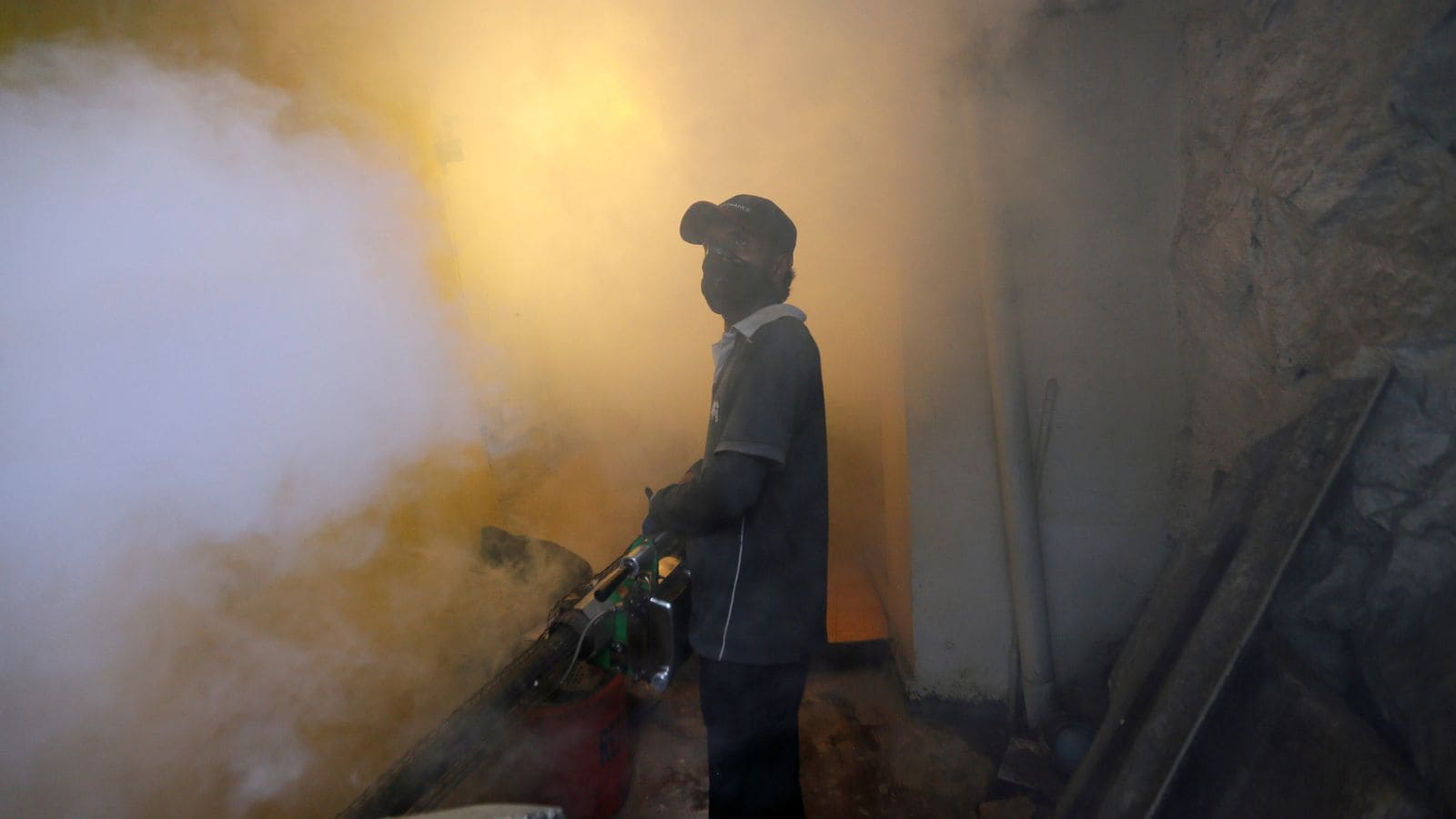
Active conflict in eastern DRC involving armed non-state actors presents structural barriers to health deployment. Over 12 targeted attacks on medical infrastructure have occurred since the May outbreak declaration.
This structural danger is compounded by administrative failure: non-payment of local healthcare workers led to strikes at key facilities such as Bunia General Hospital. Healthcare worker strikes create two compounding failure states:
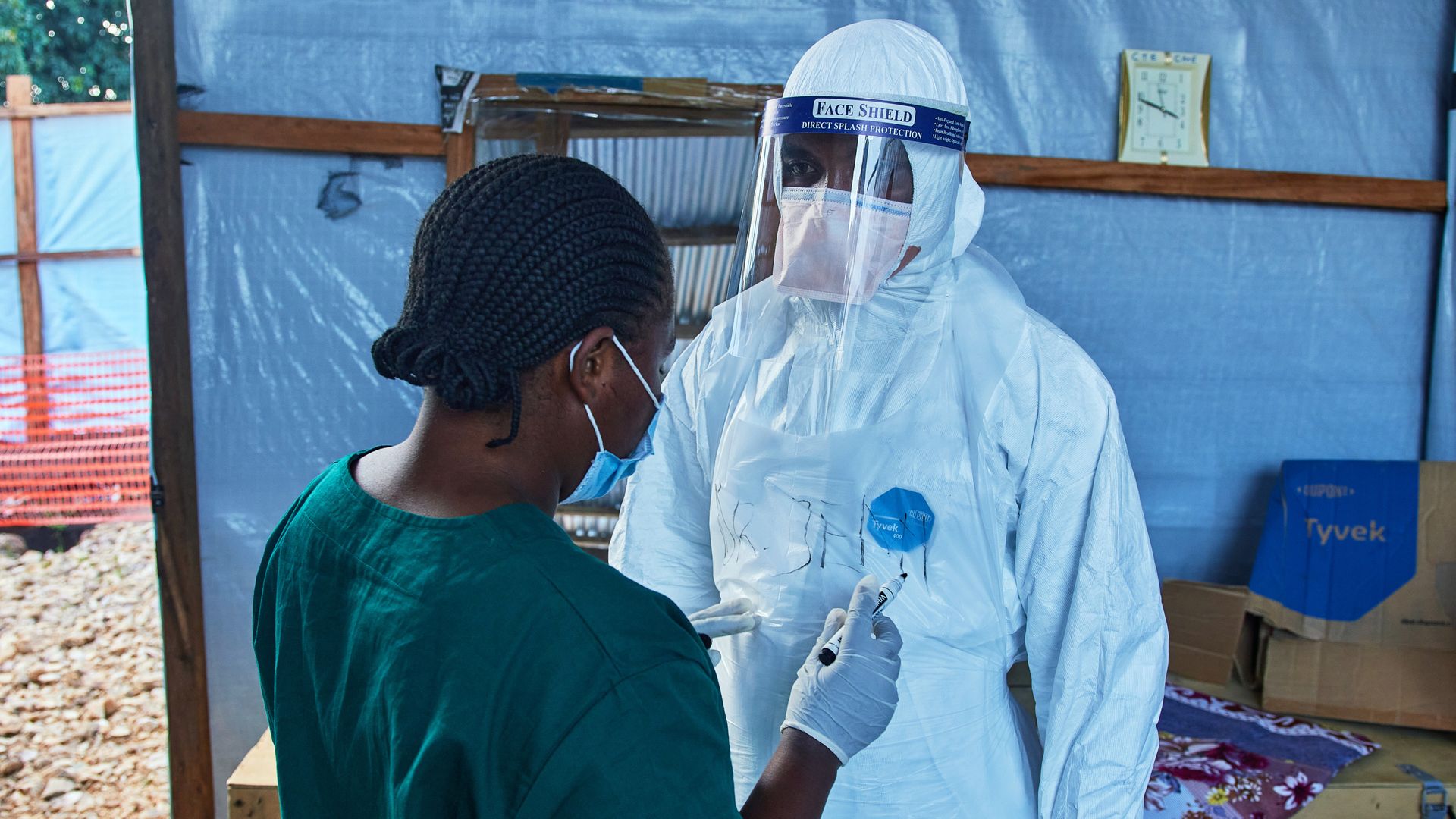
- Nosocomial Amplification: Facilities operating with skeletal staffing fail to maintain strict Infection Prevention and Control (IPC) protocols, transforming hospitals into disease distribution centers rather than containment nodes.
- Systemic Avoidance: Patients avoid hospitals due to reduced care capacity, choosing instead to remain in the community and accelerating secondary household transmission.
Disease Spread: Spatial and Metric Comparison
The velocity of this outbreak outpaces previous hemorrhagic fever events across Central Africa. The operational metrics highlight the divergence between historical baseline assumptions and current spread dynamics.
- 40-Day Case Threshold: Over 1,000 confirmed cases within 40 days of response activation, compared to 235 days during the 2018 Kivu outbreak.
- Case Fatality Rate (CFR): Stabilized near 34% to 39% across hospital and community nodes, driven up by delayed clinical presentation.
- Geographic Penetration: Expanded from the initial epicenter in Ituri province to North Kivu, South Kivu, Haut-Uele, and Tshopo, alongside exported urban cases confirmed in Kampala, Uganda.
- Healthcare Worker Casualty: Over 36 medical personnel deaths recorded due to systemic personal protective equipment (PPE) shortages and IPC breakdowns.
Tactical Containment Framework
To counter exponential growth without an approved vaccine, emergency management must shift from passive ring-containment to direct operational control across three core levers.
Direct Healthcare Worker Financial Stabilization
- Execution: Immediately establish direct off-budget escrow payment mechanisms managed by international third parties (e.g., WHO/UNICEF) to bypass regional administrative bottlenecks.
- Metric: Restore 100% operational staffing levels across hospital zones within 72 hours to prevent nosocomial spreading and restore public confidence.
Rapid Deployment of Phase II/III Clinical Trial Protocols
- Execution: Accelerate real-time candidate monoclonal antibody and candidate vaccine trials in active urban zones like Bunia.
- Metric: Transition candidate therapeutics from observational protocols to active randomized ring-administration to reduce the susceptible pool ($S$) in localized hot spots.
Decentralized Rapid Isolation (DRI) Units
- Execution: Shift from large centralized treatment facilities—which face high security risks and transport delays—to modular community-level isolation units.
- Metric: Lower community-based mortality by providing localized supportive care and safe burial teams within a 5-kilometer radius of every identified cluster.
Priority execution must focus on immediate liquidity deployment to settle healthcare worker payroll. Halting internal labor disputes neutralizes nosocomial transmission nodes and restores the clinical capacity needed to drive unmapped transmission chains down to zero.