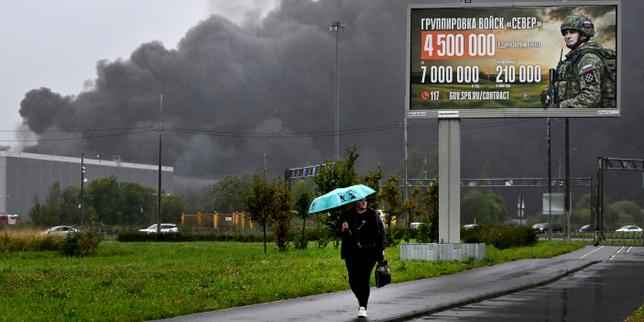
Long range kinetic strikes directed at deep interior industrial nodes modify the operational calculus of state-directed conflict far beyond immediate physical destruction. When asymmetric vectors such as long range uncrewed aerial systems target critical infrastructure, the impact propagates through concentrated supply chains, localized logistical bottlenecks, and constrained capital reserves. Evaluating the systemic strain on the Russian economy requires examining the friction points where military expenditure intersects with civilian commercial capacity, liquidity reserves, and logistical distribution networks.
The Refining Bottleneck and Product Distribution Friction
The primary transmission channel from tactical strikes to macroeconomic strain is the domestic energy processing sector. Refining infrastructure operates on continuous, highly integrated processing cycles. When primary distillation units experience structural disruption, the resulting loss of throughput capacity cannot be easily substituted due to specialized engineering requirements and import restrictions on advanced catalytic components.
The cascading effects of refinery outages manifest immediately in regional fuel markets rather than aggregate crude export statistics. While crude oil extraction and seaborne transport continue via alternative shipping channels, domestic finished product markets experience severe supply compression. Distribution networks rely on precise geographic balancing between regional refineries and local consumption hubs. When a major regional processing node goes offline, transport costs spike, and distribution terminals face inventory depletion.
To mitigate regional shortages, administrative interventions are frequently deployed, including export restrictions, lowering environmental fuel standards to emergency baselines, and temporary rationing quotas. These measures protect short term availability at the expense of long term mechanical reliability, as lower-grade fuels accelerate wear on commercial transport fleets and agricultural machinery.
Capital Scarcity and Fixed Investment Compression
Beyond physical energy infrastructure, the broader financial architecture exhibits structural vulnerabilities driven by high borrowing costs and restricted access to external capital markets. Monetary authorities maintain elevated key interest rates to suppress inflationary pressures driven by high liquidity injections and supply chain friction. This monetary stance introduces severe friction for industrial fixed investment.
Capital expenditure relies heavily on either retained corporate earnings or accessible debt markets. As operational expenses climb due to logistics rerouting, compliance overhead, and security fortification of industrial sites, profit margins contract. Simultaneously, high borrowing rates render capital-intensive modernization projects economically unviable. Consequently, fixed investment metrics contract year-on-year across non-military industrial sectors, creating a dual-speed economy where state-subsidized defense manufacturing crowds out productive civilian investment.
Fiscal Absorption and Sovereign Reserve Depletion
The fiscal position of the state depends on the balance between commodity export revenues and mounting expenditure commitments. While periodic fluctuations in global energy prices provide temporary revenue buffers, the structural cost of maintaining an expanded military-industrial complex permanently shifts baseline state budgets.
Liquid reserves held in sovereign funds act as the primary shock absorber for federal budget deficits. As these liquid buffers face sustained drawdowns to cover recurring fiscal gaps, the state loses its capacity to cushion secondary economic shocks. The interaction between persistent budget deficits, high domestic borrowing costs, and constrained liquid reserves limits the fiscal space available for regional subsidies or infrastructure maintenance.
Logistical Vulnerabilities Across Connected Networks
The extension of kinetic targeting to secondary industrial infrastructure—such as logistics hubs, transport corridors, and data processing nodes—reveals the fragility of hyper-centralized commercial systems. Modern economic activity relies on digital integration for inventory management, financial transactions, and transport coordination. When targeted disruptions affect these central digital and physical nodes, downtime spreads rapidly across dependent sectors, impacting retail distribution, banking services, and regional supply chains.
The systemic cost is defined less by the replacement value of the physical asset destroyed and more by the operational downtime imposed on interconnected commercial networks. Restoring these nodes requires specialized technical labor and imported components that face prolonged procurement cycles under trade restrictions.
Resource Allocation and Strategic Trajectory
The ongoing stress on the economic apparatus is characterized by the friction of substitution. As logistics networks adapt to recurrent disruptions, the friction manifests as higher operational overhead, degraded equipment longevity, and constrained capital formation. Strategic planning must account for the reality that asymmetric attrition targeting critical nodes compounds macro-financial instability over multi-year horizons, progressively narrowing the margin for economic maneuver.