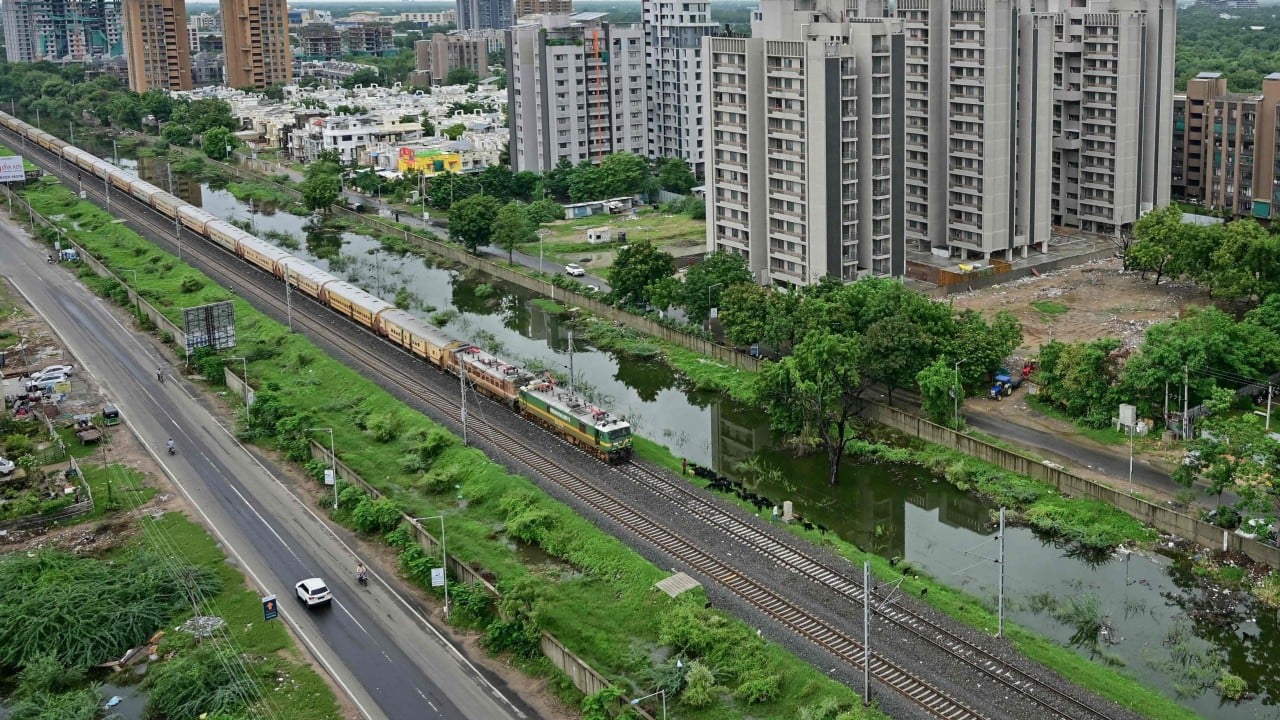
India faces a structural shortage of nearly 10 million urban residential units priced for entry-level buyers, even as transaction values in the top seven metropolitan real estate markets exceed six lakh crore rupees. This divergence between high-value capital inflows and an acute supply freeze in low-ticket housing exposes a fundamental market failure. While developers allocate capital toward luxury and ultra-luxury portfolios, the economic engine driving urban migration stalls against a wall of compounding entry barriers.
To understand why the domestic housing sector fails to clear the market for lower-income brackets, one must examine the operational mechanics governing land acquisition, statutory friction, and unit economics.
The Margin Compression Equation
Residential real estate operates on velocity and margin. When input costs outpace consumer purchasing power, rational capital migrates up-market.
Over the past five years, urban land values in core micro-markets across Mumbai, Bengaluru, and the National Capital Region have escalated by 40 to 55 percent. Concurrently, post-pandemic construction costs expanded by 25 to 30 percent, encompassing raw material inflation and labor recalibrations. Developers attempting to build units within the government-mandated affordable bracket—historically capped at forty-five lakh rupees with a carpet area ceiling of sixty square meters in metros—face an unviable cost function.
Statutory burdens exacerbate this margin compression. Municipal and state levies, including stamp duty, development charges, registration fees, and the Goods and Services Tax, frequently consume up to 30 to 50 percent of a project's gross realization depending on the micro-market. Because compliance overheads and approval cycles remain fixed regardless of unit price, a developer deploying capital into a low-ticket project absorbs disproportionate risk. A minor dip in sales velocity destroys thin margins, making affordable construction a value-destructive proposition for private enterprise.
Consequently, the share of residential supply priced below forty-five lakh rupees collapsed from over 50 percent of new launches to single-digit percentages across major urban centers.
The Regulatory and Floor Space Bottleneck
Urban density restrictions compound the physical scarcity of land. Archaic Floor Space Index (FSI) caps and strict limitations on building heights artificially constrain the volume of usable floor area that can be constructed on a given parcel of land.
When FSI is restricted in central urban zones, land prices per square foot of buildable area surge. Developers are forced to push lower-income developments toward peripheral city outskirts where land is nominally cheaper. However, this spatial displacement transfers the cost burden from land acquisition to urban transit and infrastructure. Peripheral developments in corridors lacking transit integration impose severe commuting penalties on buyers, rendering homes hours away from primary employment hubs.
Furthermore, rigid tenancy frameworks and lengthy pre-construction approval cycles—often spanning two to three years before ground-breaking—lock up capital and expose developers to macroeconomic shocks, interest rate volatility, and inflationary spikes.
The Credit and Capital Allocation Void
The mechanics of project finance reinforce this bifurcation. Institutional capital prefers risk-adjusted returns associated with Grade-A commercial spaces and premium residential assets. Affordable housing projects struggle to secure low-cost institutional debt for early-stage land acquisition, relying instead on expensive domestic credit lines.
On the demand side, household debt service capacity has deteriorated. EMI-to-income ratios for entry-level buyers have shifted from historical norms of roughly 43 percent toward nearly 60 percent, while middle-income brackets face ratios approaching 40 percent. This compression restricts mortgage eligibility, reducing the pool of qualified buyers and dampening sales velocity for volume-driven projects.
Strategic Realignment for Market Equilibrium
Bridging the urban deficit requires structural interventions that alter the underlying economics of construction rather than relying on superficial price caps.
Municipal authorities must decouple FSI limits from outdated density assumptions, tying vertical expansion directly to mass-transit corridors to eliminate peripheral sprawl. Simultaneously, tax rationalization and single-window clearance mechanisms must be institutionalized to shorten development lifecycles and lower compliance drag. Without targeted regulatory adjustments that protect project margins at the entry level, private capital will remain entirely concentrated in high-yield segments, leaving the structural housing deficit to widen unchecked.