The ink on the newly minted Mecca Joint Defense Agreement barely had time to dry before ballistic missiles started tearing through Saudi airspace. When Riyadh officially triggered the pact's mutual defense clause following a fierce escalation of Houthi drone and missile strikes, foreign policy experts expected a show of unified military muscle. Instead, what followed was a masterclass in diplomatic hesitation.
If you thought a NATO-style security architecture centered around Saudi Arabia, Turkey, and Pakistan would instantly crush asymmetric threats in the Arabian Peninsula, you haven't been paying attention to how regional alliances actually work in practice. The ongoing Houthi assault isn't just testing missile defense batteries over Riyadh and Khamis Mushait; it's exposing the severe structural limits of the Mecca Pact before it's even fully off the ground.
The Illusion of Automatic Collective Security
On paper, the logic of the Mecca agreement looks bulletproof. Article 2 explicitly states that an armed attack against any member is an attack against all. It sounds great for press releases. But reality bites hard when those provisions face actual stress tests.
When Saudi Arabia called for backing after renewed strikes hit critical infrastructure, neither Turkey nor Pakistan rushed to launch retaliatory sorties against Yemen. Why? Because mutual defense pledges rarely survive conflicting national priorities. Pakistan has its own internal security headaches and an uneasy frontier with Taliban-ruled Afghanistan. Turkey's strategic bandwidth is stretched across Syria, the Caucasus, and the Mediterranean. Neither capital wants to get sucked into the Yemeni quagmire just because Riyadh demands activation of a joint defense clause.
Why Riyadh Had to Look Beyond Washington
For years, Saudi security relied almost entirely on a security umbrella provided by the United States. But shifting geopolitical winds left Riyadh exposed. Washington's reluctance to open new military fronts or back aggressive anti-Houthi campaigns—preferring messy diplomatic talks instead—pushed Saudi leadership to diversify its partnerships.
Enter the expanded Mecca alliance. By pulling in major regional military players like Turkey and Pakistan, Saudi Arabia hoped to build an independent deterrent force. Yet, building an alliance on paper is entirely different from achieving operational interoperability. Riyadh has the cash and the hardware, Turkey brings advanced defense-industrial integration, and Pakistan offers immense operational depth. However, they operate on completely different military doctrines, use incompatible command structures, and view regional threat actors through vastly distinct lenses.
The Houthi Calculus
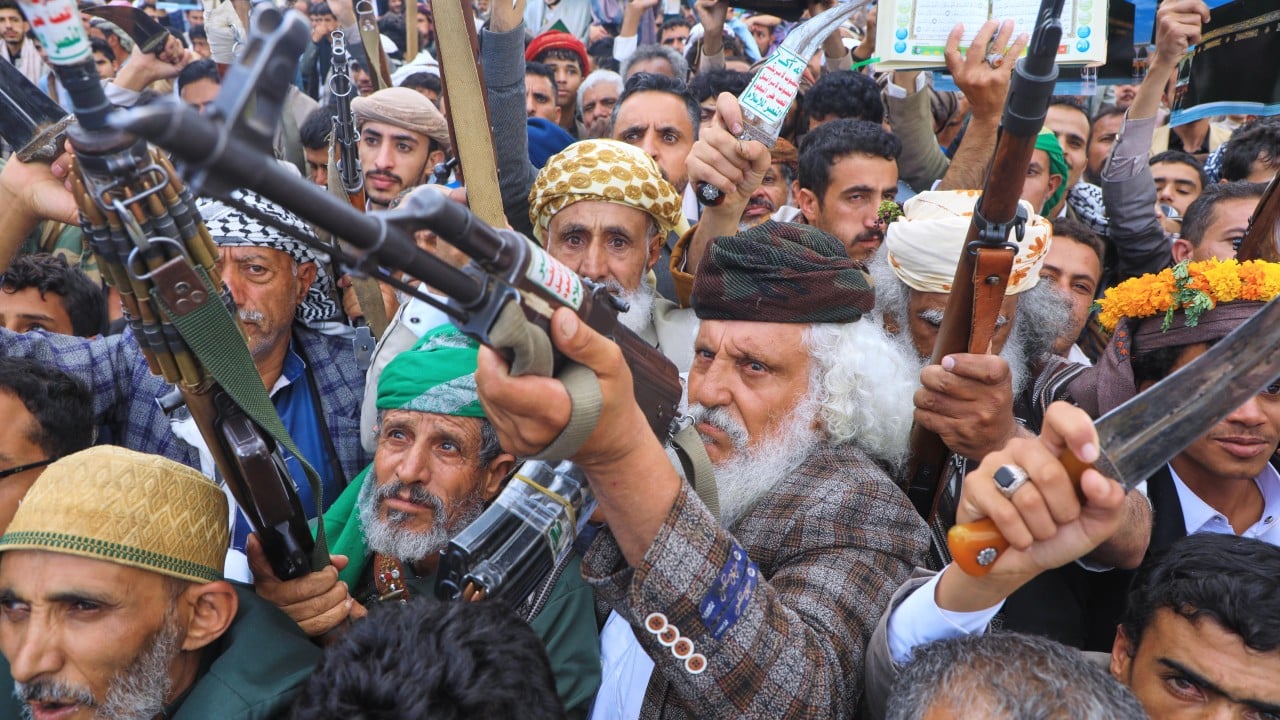
The Houthis aren't intimidated by new multilateral signatures. By continuing to target Saudi airports, financial districts, and defense installations, they are actively probing the credibility of the kingdom's new security architecture. Every missile that slips past defenses or forces interception scrambles sends a clear psychological message: a defense pact with Ankara or Islamabad doesn't automatically translate into immediate kinetic deterrence on the ground.
Making matters messier, diplomatic channels are moving parallel to the violence. Member nations of the Mecca framework have found themselves holding meetings with Iranian officials to hash out de-escalation frameworks, proving that even the architects of the pact prefer backroom diplomacy over triggering a full-scale regional war.
What Happens Next for Gulf Security
The Mecca Pact isn't entirely useless, but it's suffering from a massive expectation gap. It works fine for intelligence sharing, joint military training, and defense-industrial cooperation. But when it comes to fighting an active, entrenched insurgency firing drones across the border, mutual defense agreements stall out.
If Riyadh wants real security, it has to realize that collective defense treaties don't automatically replace hard-fought political settlements. Until member states align their actual threat perceptions instead of just signing mutual defense clauses, the pact will remain a diplomatic shield rather than an active sword.
Houthis' 'Direct Hit' On Saudi Ministry: After Mecca Pact, Egypt's 'Defensive' Support Fail?
This video provides an in-depth look at the recent Houthi missile claims targeting the Saudi defense ministry and how regional powers are reacting to the strained security pact.