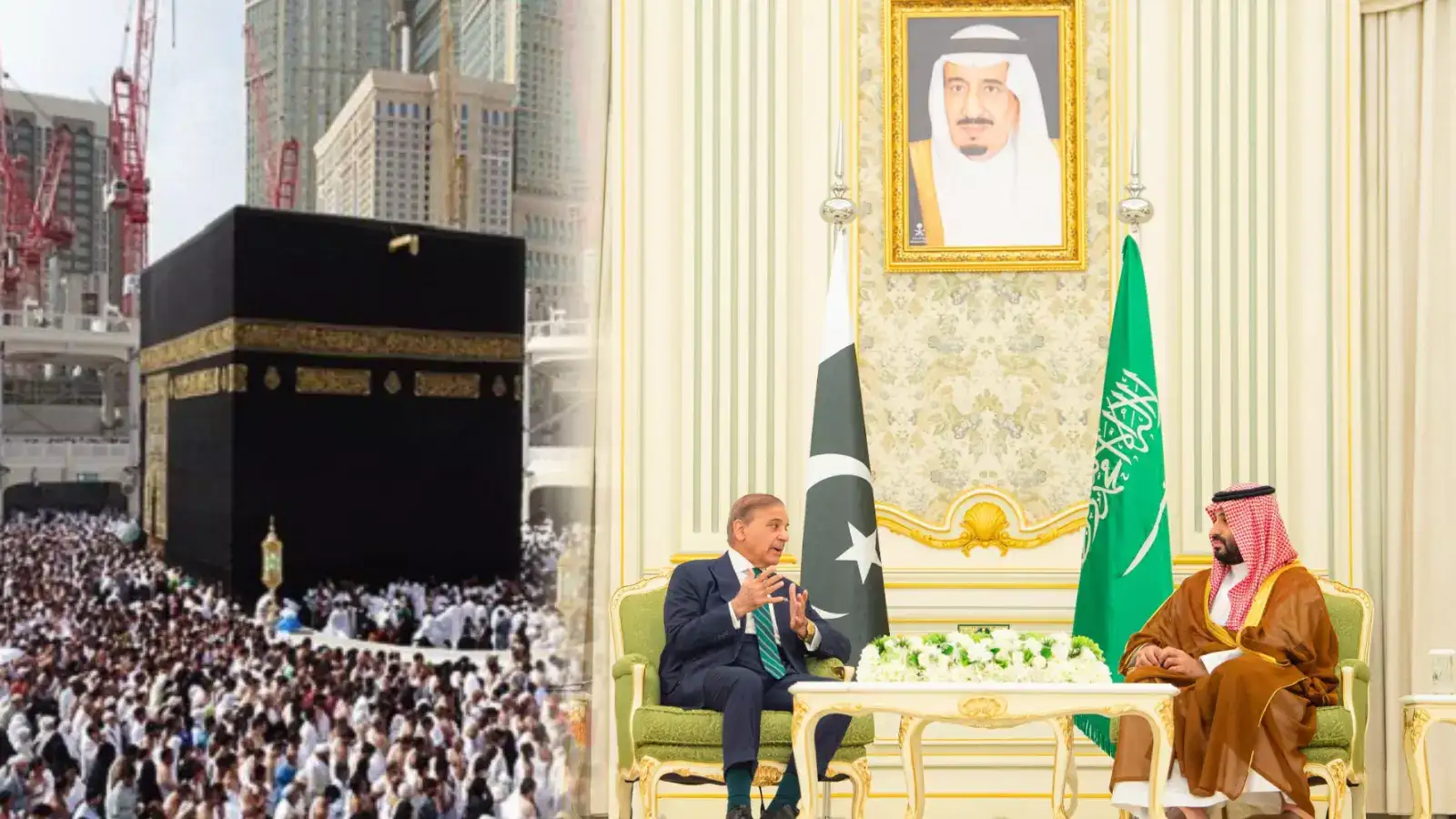
The headlines are breathless. Mainstream pundits are hyperventilating over the newly minted Mecca Joint Defence Agreement, calling it a historic eastern NATO. Donald Trump took to social media to cheer the trilateral pact between Saudi Arabia, Turkey, and Pakistan as a big, bold step for regional self-reliance. Analysts are treating this alliance—stipulating that an attack on one is an attack on all—as a tectonic shift in global security.
They are completely wrong. Expanding on this topic, you can also read: Why Trump Blaming National Mall Grass Damage on Vandals Misses the Point.
Beneath the polished photo ops in Saudi Arabia lies a diplomatic mirage. This agreement is not a new security architecture; it is a symptom of profound anxiety, structural weakness, and mutual distrust wrapped in grandiose rhetoric. If you think Riyadh, Ankara, and Islamabad are about to bleed for each other because of a signed parchment, you do not understand the hard math of modern geopolitics.
The Article 5 Delusion
Let us dismantle the primary lazy consensus: the comparison to NATO's Article 5. Observers at The Guardian have also weighed in on this trend.
In a true collective defense framework, member states share an integrated command structure, standardized logistics, unified intelligence operations, and—most importantly—a shared existential threat perception. NATO works because its members spent decades tethering their military hardware and nuclear doctrines together under an explicit American security umbrella.
The Mecca Agreement has none of this.
Pakistan brings a nuclear deterrent and a battle-hardened army, but it also faces a suffocating domestic economic crisis and a restive western border with Afghanistan. Turkey brings NATO’s second-largest standing military and an advanced defense industrial base, but its foreign policy under Recep Tayyip Erdoğan is a volatile pendulum swinging between Moscow, Washington, and Brussels. Saudi Arabia brings bottomless petrodollars, but its military relies almost entirely on Western contractors, maintenance networks, and intelligence feeds.
Imagine a scenario where a drone strike from an Iranian proxy hits a Saudi oil refinery tomorrow. Does anyone genuinely believe Turkish jets will scramble from Incirlik, or Pakistani nuclear assets will activate to incinerate a target on behalf of Riyadh? Of course not.
Declarative text is cheap. Blood and treasure are expensive. When push comes to shove, national sovereignty always trumps paper solidarity.
Strategic Hedging, Not Brotherhood
We need to look past the fraternal language of Islamic solidarity and examine what is actually happening. This pact is an insurance policy against American withdrawal and unpredictability.
For decades, the Gulf monarchies outsourced their ultimate security to Washington. But as successive U.S. administrations pivot toward domestic priorities or focus on great power competition elsewhere, Riyadh has realized it cannot bank on American intervention during a crisis. Turkey is managing its own bitter disillusionment with Western alliances. Pakistan is perpetually looking for external financial lifelines and diplomatic leverage.
This trilateral arrangement is defensive posturing designed to signal independence, not an offensive or cohesive military bloc. It allows Riyadh to diversify its security dependencies without actually solving its core vulnerability: a lack of indigenous strategic depth.
The Geopolitical Friction Points Ignored by the Mainstream
Commentators love to talk about what these three nations have in common. They conveniently ignore why this alliance will strain under its own contradictions.
- Divergent Threat Matrices: Turkey's primary security concerns involve the Eastern Mediterranean, Syria, and its tense relationship with various regional actors. Pakistan is anchored to its hyper-fixation on South Asian stability and its ongoing friction with New Delhi. Saudi Arabia is consumed by the fallout from the active conflicts involving Iran and its proxies. Expecting these three distinct focal points to align during a crisis is pure fantasy.
- The Command Control Vacuum: You cannot simply declare mutual defense without interoperability. Saudi and Turkish military doctrines are fundamentally incompatible. Pakistan operates on entirely different logistics chains. Without years of joint command integration—which does not exist—an integrated response is logistically impossible.
- The Regional Blowback: By formalizing this exclusive Sunni-leaning alignment amidst active regional turmoil, the signatories risk provoking the very escalations they want to avoid. Tehran has already noted the pact with wary skepticism, while traditional partners elsewhere are reassessing their positions.
Stop Falling for Symbolic Diplomacy
We live in an era where politicians trade in high-impact optics because actual strategic solutions are too difficult to forge. The Mecca Joint Defence Agreement provides a convenient headline for leaders needing a win. It gives domestic audiences the illusion of strength and regional deterrence.
True authority in statecraft comes from institutional integration, economic interdependence, and hard operational capability. Signing a mutual defense clause while maintaining fundamentally divergent foreign policies is not a masterstroke. It is a distraction.
Do not look at what leaders sign in holy cities under the cameras. Look at where they allocate their defense budgets, who services their jets, and where they run their command drills. By those metrics, this alliance dissolves into thin air the moment a real bullet flies.