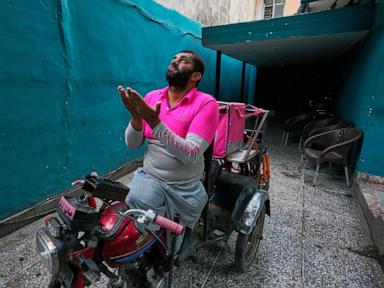
Physical disability resulting from lower-limb amputation transforms personal transportation from a simple utility into a complex engineering challenge. In developing economies, where public transit infrastructure lacks universal accessibility standards and commercial adaptive vehicles remain cost-prohibitive, custom modification of small-displacement motorcycles serves as the primary mechanism for restoring physical autonomy. The adaptation process requires modifying standard mechanical controls—traditionally distributed across four distinct physical limbs—into a centralized interface operated entirely by upper-body inputs.
Achieving functional mobility through custom motorcycle modifications involves three distinct structural challenges: control interface re-engineering, chassis stability enhancement, and ergonomic load distribution. Understanding these mechanics reveals how localized, low-cost engineering solves critical transport deficits without institutional support.
Control Interface Re-Engineering and Manual Transfer Mechanics
Standard motorcycle architecture relies on a quad-point control distribution. The right hand manages throttle and front brake force; the left hand operates the clutch; the right foot controls the rear hydraulic or mechanical brake; and the left foot actuates the gear shift lever. When lower-limb functionality is eliminated, all four operational channels must be migrated to the handlebars without compromising system reaction latency or rider stability.
The Rear Brake Migration Problem
Migrating the rear braking system represents the most critical safety variable. On a standard motorcycle, the rear brake provides stabilization during low-speed maneuvers and contributes up to 30 percent of total stopping force during emergency braking.
Two primary mechanical solutions exist for manual rear brake actuation:
- Dual Hand-Lever Assembly: A secondary lever is mounted on the left handlebar below the clutch lever, or integrated alongside the front brake lever on the right handlebar. This approach requires precise cable routing to prevent mechanical binding during full steering lock. The primary constraint is hand span and grip strength, as operating two levers on a single side during rapid deceleration creates extreme muscle fatigue.
- Hand-Operated Linkage Rods: A rigid or semi-rigid push-rod extends from the handlebar level directly down to the existing rear brake foot pedal. Pushing or pulling the rod manually actuates the stock mechanical drum or hydraulic master cylinder. While mechanically simple, this configuration requires the rider to temporarily remove one hand from the primary steering grip, introducing a control delay of 200 to 400 milliseconds.
Gear Selection and Actuation Hydraulics
Standard sequential transmissions require a vertical toe movement to cycle through gears (one down, four up in typical modern setups). The elimination of lower-limb input demands an alternative mechanical pathway:
- Mechanical Hand-Shifter: A direct lever extension connected to the gear selector shaft on the engine casing. The rider pushes or pulls a vertical stick located adjacent to the fuel tank. The mechanical trade-off is significant: gear shifts require complete disengagement of the left hand from the handlebar, disrupting vehicle stability during acceleration phases.
- Pneumatic or Electro-Mechanical Solenoids: Push-button switches mounted on the switchgear send electrical pulses to an actuator installed near the shift lever. Actuation occurs within 50 to 80 milliseconds. While superior in ergonomics and safety, this mechanism introduces reliance on the vehicle's electrical charging system, which on small-displacement (100cc to 150cc) engines often yields less than 150 watts of total output, leading to battery drain issues during high-frequency city riding.
Chassis Geometry and Trike Conversion Physics
Operating a two-wheeled vehicle requires dynamic equilibrium. The driver maintains balance through active body positioning and continuous, micro-steering corrections (counter-steering) above walking speeds. When a rider lacks lower-limb support to anchor their lower torso against the tank or clear their feet during stops, static stability becomes mandatory. This necessitates modifying a two-wheeled chassis into a three-wheeled platform (trike).
Outrigger versus Parallelogram Axle Configurations
Converting a standard motorcycle into a stable, three-wheeled vehicle follows two primary structural paths, each altering handling mechanics differently.
Standard Motorcycle Chassis
         │
         ├── Structural Weld / Bolt-on Frame
         │
         ├── Option A: Fixed Rigid Axle (Tadpole or Delta)
         │     ├── Pros: High static stability, simple manufacture
         │     └── Cons: Zero lean angle, severe lateral G-force transfer
         │
         └── Option B: Parallel Articulating Suspension
               ├── Pros: Preserves leaning mechanics, absorbs road shock
               └── Cons: High mechanical complexity, increased maintenance points
The fixed rigid axle configuration remains the predominant choice in non-industrial workshops due to material availability and low fabrication complexity.
Torque Transfer and Differential Dynamics
Converting a single rear wheel to a dual-wheel rear axle introduces differential friction problems during cornering.
- Solid Axle (Spool) Conversions: Both rear wheels locked to a single rotating shaft force the inner and outer tires to rotate at identical angular velocities during turns. On low-friction surfaces, this causes tire scrubbing and understeer. On high-friction asphalt, it significantly increases steering effort, placing high torsional load on the modified rear swingarm assembly.
- Open Differential Integration: Adapting an auto-rickshaw or small car differential allows independent wheel speeds during cornering. This eliminates tire scrub but introduces weight penalties, often adding 25 to 40 kilograms to the rear of a lightweight chassis. The extra mass shifts the center of gravity backward, destabilizing front-wheel traction under steep hill climbs unless counter-weighted.
Ergonomic Stabilization and Biomechanical Load Distribution
A non-disabled rider uses their feet, knees, and core to absorb vertical shock and counteract deceleration forces. In lower-limb disability adaptations, the lower body cannot absorb kinetic energy, redistributing all load forces directly to the upper spine, shoulders, and wrists.
Seat Architecture and Lateral Support Mechanics
Stock motorcycle seats are contoured for dynamic movement, allowing the rider to shift weight laterally. For an amputee or paraplegic rider, this flexibility turns into a instability hazard.
To prevent lateral sliding during cornering, custom seat modifications must incorporate:
- Deep-Bucket Ergonomics: Recessing the seating plane 5 to 10 centimeters lowers the rider’s personal center of mass relative to the frame, improving roll stability.
- Lateral Lumbar Bolsters: Padded side supports extending from the seat base stabilize the pelvis, preventing torso drift when negotiating curves without lower-body bracing.
- Chest and Lap Restraints: Quick-release harness systems anchor the upper body to the frame. The structural integrity of these anchor points must be balanced against safety risks: a fixed harness holds the rider in place during operation, but prevents clean ejection if the vehicle rolls over.
Shock Absorption and Frame Fatigue Metrics
Adding structural steel tubing to fabricate a rear axle subframe alters the flex dynamics of the factory chassis. Standard motorcycle frames are engineered with specific lateral flex profiles to absorb road imperfections while leaning. Rigid welded rear subframes eliminate this flex, concentrating mechanical stress directly onto the engine mounting bolts and central frame neck.
Without proper damping adjustments, vertical shocks from road surface irregularities pass unattenuated through the rigid frame directly into the rider's spinal column. To mitigate this risk:
- Dual independent coil-over shock absorbers must replace the central mono-shock or single swingarm dampeners.
- Spring rates must be calculated based on the augmented total un-sprung mass (additional axle, wheels, and frame extensions) rather than factory specifications.
- Tire pressures on non-leaning rear axles must be dropped from standard operational levels (30-35 PSI) to lower operational levels (18-22 PSI) to allow the tire sidewall to act as a secondary pneumatic suspension layer.
Socio-Economic Feasibility and Capital Offsets
The implementation of adaptive transport systems in low-income regions operates under strict economic constraints. Institutional adaptive vehicles or imported specialized tricycles carry price tags exceeding thousands of dollars, placing them outside the financial reach of average citizens.
Local garage adaptations rely on salvaged automotive parts, structural mild steel, and rudimentary arc welding, keeping total modification costs low.
Cost Component Breakdown for Localized Adaptation

Component / Modification       Estimated Cost (USD)    Primary Failure Mode
─────────────────────────────────────────────────────────────────────────────
Scrap Axle & Differential      $80 - $150              Bearing Seizure
Custom Subframe Fabrication    $50 - $100              Weld Fatigue Cracks
Hand Control Linkages          $20 - $40               Cable Stretch / Snap
Adjustable Seat / Harness      $30 - $60               Material Degradation
Total Conversion Cost          $180 - $350             --
While these low-cost solutions solve immediate personal transport requirements, they introduce long-term operational trade-offs:
- Fuel Efficiency Penalties: Increased curb weight and rolling resistance reduce fuel economy by 20 to 35 percent, increasing daily operational expenses.
- Component Wear Rates: Standard drivetrain components—such as the primary drive chain and clutch plates—experience accelerated wear due to moving up to 50 percent more total vehicle weight.
- Maintenance Overhead: Non-standardized fabrication means replacement parts cannot be ordered off the shelf; every repair requires custom fitting, welding, or component cannibalization.
Operational Deployment Protocol
Executing a functional vehicle conversion requires a structured engineering approach rather than trial-and-error fabrication.
Step 1: Biomechanical Force Audit
Assess the specific physical capacities of the operator. Measure upper-body push/pull force limits, hand grip pressure, and torso self-righting capability. Design all manual linkages to require actuation forces well below maximum strength levels to prevent operational fatigue.
Step 2: Chassis Geometry Alignment
When welding the rear axle subframe to the donor motorcycle frame, maintain exact alignment between the front wheel track and the rear axle centerline. A mismatch of as little as two degrees introduces constant steering pull, causing rapid front tire wear and upper-body strain over short distances.
Step 3: Linkage Friction Reduction
Minimize mechanical friction in long hand-control cables or push-rods. Use Teflon-lined inner cables and ball-bearing pivot points at linkage joints rather than plain pin joints. High friction in control linkages slows input response time and degrades feedback, making fine control during emergency maneuvers difficult.
Step 4: Incremental Load and Stability Testing
Validate the structural integrity of custom welds and linkages through progressive load testing before open-road deployment. Conduct static tip-over angle tests, low-speed panic braking runs on closed surfaces, and high-load stress testing on degraded road profiles to identify structural weak points prior to daily use.
Restoring independent mobility through adaptive vehicle engineering requires balancing structural stability, control latency, and material cost. When custom modifications are executed with proper alignment, shock distribution, and mechanical leverage, low-cost engineering successfully transforms a standard commuter motorcycle into a resilient, long-term personal transit platform.