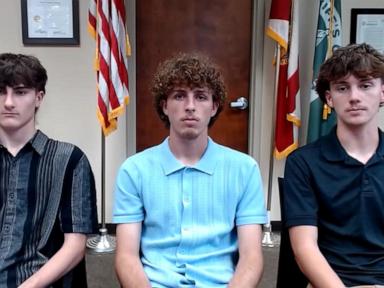
The probability of a positive outcome in a life-threatening medical emergency is inversely proportional to the latency of the initial bystander response. In the incident involving a group of teenagers intervening to save a man’s life during a routine tire change, the transition from a mundane mechanical task to a life-saving medical intervention represents a rare convergence of situational awareness and rapid resource reallocation. This event serves as a case study in the Architecture of Spontaneous Rescue, revealing how cognitive agility and the suspension of the "bystander effect" can override the systemic failures of professional emergency response times.
The Lifecycle of an Emergency Intervention
To understand why this specific interaction succeeded where others fail, we must decompose the event into three distinct operational phases: Detection, Transition, and Execution.
1. Detection and the Threshold of Awareness
Most observers fail to intervene not because of malice, but because of Social Proof Theory. When individuals see a person in distress, they look to others to gauge the appropriate reaction. If no one moves, the situation is classified as "non-critical." In this case, the teenagers bypassed this cognitive bottleneck. They were already physically engaged with the subject (changing a tire), which eliminated the proximity barrier. Physical proximity reduces the abstraction of the crisis, forcing the observer to acknowledge the subject as a human in immediate need rather than a distant data point.
2. The Transition from Mechanical to Biological Support
The pivot from a low-stakes mechanical task (fixing a flat) to high-stakes biological preservation (CPR or medical monitoring) requires an immediate shift in the internal Hierarchy of Priorities.
- Mechanical Priority: The objective is the vehicle’s mobility.
- Biological Priority: The objective is the subject’s oxygenation and perfusion.
The speed at which these individuals abandoned the tool-based task to focus on the man’s physical state indicates a high level of Adaptive Capacity. This is the ability to re-evaluate environment-specific goals when new, high-weight variables—such as a sudden loss of consciousness or cardiac arrest—enter the equation.
3. Execution under Stress-Induced Cognitive Load
Emergency situations trigger a massive release of cortisol and adrenaline, which typically narrows focus and can lead to "tunnel vision." However, when a group acts in concert, they create a decentralized support network. One individual handles direct physical intervention (e.g., chest compressions), while others manage communication with emergency services and environment control. This distribution of labor prevents the "Cognitive Overload" that often paralyzes a solo rescuer.
The Cost Function of Bystander Apathy
The "Bystander Effect" is often discussed in moral terms, but it is more accurately described as a Diffusion of Responsibility. In a dense social environment, the perceived cost of intervention—legal liability, social embarrassment, or physical risk—outweighs the perceived benefit when the individual assumes someone else will act.
The teenagers in this scenario operated outside this standard cost-benefit model. Their intervention was driven by what sociologists call Small Group Cohesion. Because they were a pre-existing unit (a group of friends), the internal social pressure to act collectively was higher than the external pressure to remain passive. The group dynamic functioned as a catalyst, where the first person to move provided the "permission" for the others to follow, effectively nullifying the social friction that usually prevents action.
Mathematical Foundations of Survival Rates
Survival in cardiac or respiratory distress follows a decay curve. For every minute that passes without intervention, the probability of a successful resuscitation drops by approximately 7% to 10%.
$$P(s) = P_0 \cdot e^{-kt}$$
In the above expression:
- $P(s)$ is the probability of survival.
- $P_0$ is the initial probability at the moment of collapse.
- $k$ is the decay constant representing physiological degradation.
- $t$ is the time elapsed before intervention.
By initiating the response immediately, the teenagers effectively held $t$ at a minimum, keeping the survival probability within the "Golden Window" where professional medical services can still achieve a viable outcome.
Institutional Limitations and the Civilian Buffer
Modern emergency medical services (EMS) are optimized for transport and advanced stabilization, not for the immediate gap between collapse and arrival. Even in well-funded urban environments, response times rarely fall below five to eight minutes.
The "Civilian Buffer" is the period where the victim is entirely dependent on the nearest available human. This incident highlights a systemic reliance on Unregulated First Responders. Unlike trained EMTs, these teenagers have no legal mandate or professional equipment, yet they are the most critical link in the chain of survival. This creates a paradox: the most important medical intervention is often performed by the least qualified individuals present, simply because they are the only individuals present.
Variables Governing Successful Outcomes
Not all interventions are successful. The efficacy of the "Teens Save Man" outcome was dependent on a specific set of variables that are frequently absent in other cases:
- Environmental Visibility: The incident occurred in a space where the distress was clearly visible and not obscured by physical barriers.
- Physical Capability: The rescuers were young and physically capable of performing the strenuous task of chest compressions or maintaining the recovery position.
- Communication Clarity: The ability to provide clear, actionable data to 911 dispatchers is a frequently overlooked variable. Relaying a precise location and symptom profile reduces the "Dispatch Lag Time."
The Liability Myth and the Good Samaritan Framework
A significant deterrent to bystander intervention is the fear of legal repercussions if the intervention results in injury (e.g., broken ribs during CPR). However, the legal landscape is heavily weighted in favor of the rescuer through Good Samaritan Laws.
These statutes generally protect individuals who provide "gratuitous" assistance in an emergency, provided they do not act with gross negligence or willful misconduct. The teenagers' actions were protected under this framework, yet many adults—who are more aware of legal complexities—often hesitate due to a miscalculation of risk. The "lack of experience" in the teenagers actually served as an advantage; they were unburdened by the fear of litigation, allowing them to focus entirely on the physiological urgency of the situation.
Structural Training Gaps in Secondary Education
While this incident is framed as a "miracle" or a "heroic act," it actually exposes a deficiency in standardized education. If the survival of a citizen is dependent on the random presence of teenagers with a specific moral compass, the system is failing.
True optimization of civic safety requires moving away from "heroism" and toward Universal Competence. Integrating Basic Life Support (BLS) training into secondary school curricula would transform these isolated "feel-good" stories into a predictable, measurable public health metric. The goal is to move the civilian response from a variable to a constant.
Strategic Recommendation for Local Municipalities
To replicate the success of this incident on a systemic level, local governments must pivot from reactive "gratitude" to proactive "readiness."
- Mandate BLS Certification for Licensure: Any individual applying for a driver’s license should be required to demonstrate proficiency in basic intervention techniques. Since drivers are the most common bystanders to roadside emergencies, this creates a high-density network of potential rescuers.
- Public Access Defibrillation (PAD) Programs: Increase the density of Automated External Defibrillators (AEDs) in residential and industrial zones, not just commercial hubs.
- Gamification of Response Training: Use simulation-based training in schools to reduce the "Startle Response" (the period of paralysis following a shock).
The teenagers’ intervention was a successful "edge case" in a system that usually defaults to failure. Their ability to manage a tire change—a task requiring basic mechanical logic—perhaps primed them for the procedural logic required for a medical save. The focus must remain on the Transferability of Skills: the same mindset that allows a person to solve a mechanical problem (a flat tire) can be leveraged to solve a biological problem (a failing heart) if the individual is conditioned to see both as manageable systems rather than overwhelming tragedies.
The final strategic move for any observer is the rejection of the "authority bias." Do not wait for a professional to arrive when the physiological clock is ticking. The presence of a pulse is a binary state; your objective is to maintain that state by any means available until the system of professional care can take over. The teenagers did not "save" the man in a vacuum; they bought the time necessary for the medical system to function. Mastery of the "Golden Window" is the only metric that matters in the survival of the individual.