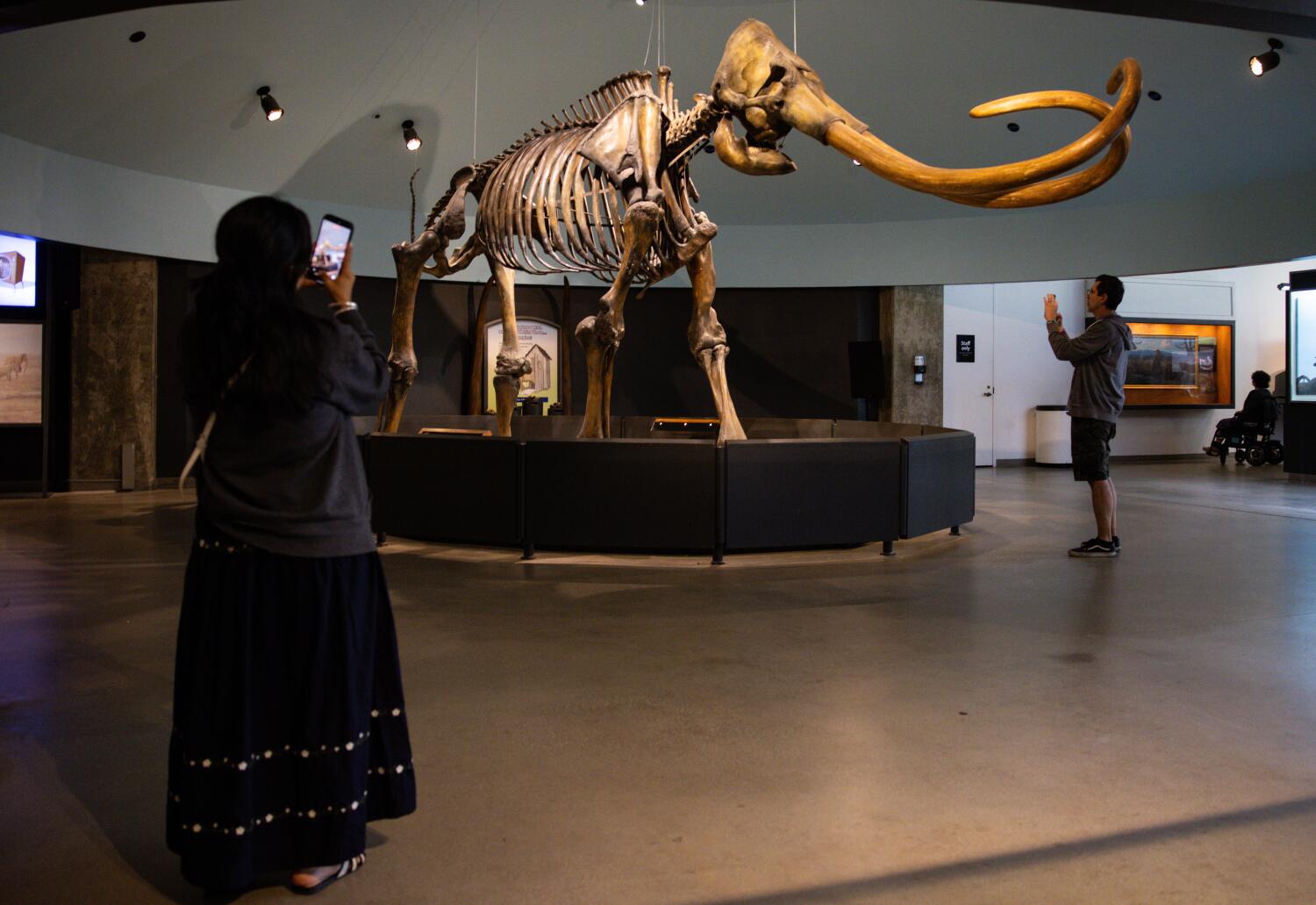
The announced two-year closure of the La Brea Tar Pits represents a significant disruption in the urban cultural economy and global paleontological research infrastructure. When a primary municipal asset closes its doors, public commentary typically centers on sentimental loss. A rigorous structural analysis, however, reveals that this shutdown triggers a cascading deprivation effect across three distinct vectors: public educational throughput, localized tourism economics, and active field taphonomy. Evaluating this closure requires analyzing the operational tradeoffs of modernizing a live, urban excavation site and assessing the friction points this transition creates for stakeholders.
The Tri-Axe Impact Framework
The operational suspension of Hancock Park’s primary institution cannot be viewed as a simple temporary pause. It is a systemic shutdown of an integrated research and consumer engine. To quantify the scope of this disruption, the impact must be disaggregated into three core operational pillars.
                  [La Brea Tar Pits Closure]
                             │
       ┌─────────────────────┼─────────────────────┐
       ▼                     ▼                     ▼
[Educational Capacity] [Economic Spillover]  [Scientific Yield]
 - K-12 Field Trips     - Hyper-local Retail  - Excavation Halt
 - Digital Pivot        - Foot Traffic Drop   - Microfauna Delay
1. Educational Throughput and Institutional Displacement
The La Brea Tar Pits operates as a high-volume educational node within Southern California. The physical site serves as a foundational component of regional K-12 life sciences curricula.
- The Volumetric Deficit: The immediate casualty of a 24-month closure is the absolute cessation of on-site student hosting. Based on historical institutional capacity, this eliminates field trip access for hundreds of thousands of students annually.
- The Digital Substitution Fallacy: While institutions frequently attempt to mitigate physical closures by deploying virtual programming, digital curricula fail to replicate the tactile and spatial comprehension generated by viewing active excavation sites like Pit 91 or Project 23. The pedagogical value drops significantly when transitioning from three-dimensional, sensory-engaged learning to two-dimensional screens.
- Institutional Strain on Counterparts: The displacement of student groups creates an immediate demand shock for neighboring cultural institutions. Facilities such as the Los Angeles County Museum of Art (LACMA) and the Academy Museum of Motion Pictures face immediate pressure to absorb displaced weekday student traffic, altering their own operational equilibriums and crowd-management strategies.
2. Hyper-Local Economic Deceleration
The economic footprint of the Tar Pits extends far beyond ticket sales and museum memberships. The institution acts as an anchor tenant for the Miracle Mile district, generating massive positive externalities for local commercial ecosystems.
The primary mechanism driving this economic engine is foot traffic elasticity. The museum attracts a highly predictable daily volume of domestic and international tourists who exhibit specific spending patterns.
A complete closure eliminates the primary foot traffic driver for the immediate Wilshire Boulevard corridor. Neighboring casual dining establishments, independent retail shops, and parking infrastructures suffer an immediate contraction in demand.
Furthermore, tourist spending exhibits a compounding geographic decay. While a visitor might travel to the area exclusively for the Tar Pits, their secondary capital allocation occurs within a three-block radius. Removing the primary destination causes this localized economic activity to collapse, as the substitute destinations (such as beach communities or downtown cultural hubs) divert that capital to entirely different municipal sub-markets.
3. Scientific Discontinuity and Research Bottlenecks
Unlike standard art or historical museums where collections are static, La Brea is a living laboratory. The facility continuously processes unrefined asphaltic matrix material. A two-year freeze introduces severe friction into the global paleontological research pipeline.
[Active Excavation] ──> [Matrix Washing & Sorting] ──> [Microfossil Identification] ──> [Peer-Reviewed Publication]
        │                                                                                        ▲
        └─────────────────────────────── TWO-YEAR FREEZE ────────────────────────────────────────┘
The primary research bottleneck occurs in the processing of microfossils. While large-scale megafauna elements (such as Smilodon fatalis or Mammuthus columbi limb bones) command public attention, the true scientific value of the site lies in its microfauna and flora—rodent teeth, insect exoskeletons, and seed pods. These specimens provide the high-resolution data required to construct paleoclimate models.
A structural shutdown halts the active washing and sorting of the asphaltic matrix. This delay creates a multi-year backlog in data availability. Graduate research projects, international collaborative studies, and peer-reviewed publication timelines are tied directly to the steady extraction and cataloging of these specimens. The closure effectively introduces a two-year data void in Quaternary period research.
The Modernization Tradeoff: Structural Architecture vs. Live Science
The justification for a two-year operational freeze rests on the necessity of structural modernization. The existing facility, designed in the 1970s, suffers from systemic architectural limitations that inhibit contemporary collection management and visitor engagement.
The Preservation Paradox
The core engineering challenge of the La Brea site is its unique geological setting. The museum sits directly atop active petroleum seeps. This creates a highly complex subterranean environment where methane gas mitigation, foundational shifting, and asphaltic intrusion are constant operational hazards.
Executing a major architectural overhaul requires heavy vibration, deep excavation, and structural shoring. The paradox lies in the threat this construction poses to the unexcavated fossil deposits remaining in the park.
The use of heavy machinery introduces acoustic and kinetic energy into the surrounding asphaltic matrix. This kinetic transfer risks shifting unexcavated fossil beds, potentially crushing fragile specimens or altering the stratigraphy of untapped deposits. Mitigating this risk requires a prolonged, highly conservative construction cadence, explaining the lengthy two-year timeline.
Optimizing the Internal Layout
The modernization aims to solve a fundamental flow-efficiency problem within the museum's interior layout. The current footprint lacks the spatial flexibility required to handle modern tourist volumes while simultaneously showcasing active laboratory work.
The redesign seeks to alter the visibility matrix of the institution. By expanding the physical footprint of the transparent fossil preparation labs (the "Fishbowl Labs"), the architecture transforms scientific labor into a primary public asset.
This structural integration increases the transparency of the scientific process, but maximizing this layout requires stripping the building down to its structural core, rendering it entirely uninhabitable for staff, researchers, and visitors alike.
Tactical Mitigation Strategies for Institutional Survival
To prevent total brand obsolescence and economic collapse during the 24-month dark window, institutional leadership must deploy aggressive, non-traditional asset utilization strategies. Sitting idle is an operational failure; the institution must pivot from an anchor-site model to a distributed network model.
Implementing Pop-Up Micro-Museums
The institution possesses millions of cataloged specimens currently held in off-site or subterranean storage. A closed main facility presents an opportunity to monetize and utilize these dormant assets through a decentralized exhibition strategy.
Leadership should establish temporary, high-density micro-museums in high-traffic regional commercial centers, such as Century City or downtown transit hubs. By deploying mobile, secure display cases featuring iconic megafauna elements alongside interactive digital displays, the institution can maintain brand visibility, capture alternative retail revenue streams, and fulfill its educational mandate.
                     [Dormant Off-Site Storage Assets]
                                     │
       ┌─────────────────────────────┼─────────────────────────────┐
       ▼                             ▼                             ▼
[Pop-Up: Transit Hubs]     [Pop-Up: Retail Centers]    [Traveling Exhibition Nodes]
 - High commuter volume     - High discretionary spend  - Educational partnerships
 - Micro-monetization       - Membership retention      - Regional brand presence
Deep-Storage Processing Pivots
The suspension of public-facing excavation allows the scientific staff to redirect 100% of their operational capacity toward backlogged tasks. Over decades of digging, the institution has accumulated a massive inventory of unwashed matrix and unidentified microfossils stored in crates.
The closure should be leveraged as an intense curation sprint. Staff can focus exclusively on clearing the cataloging backlog without the daily disruption of public tours and educational presentations. This strategic pivot will result in a surge of clean, categorized data ready for analysis when the museum reopens, effectively offsetting the research delay caused by the halt in active excavation.
Cross-Institutional Exhibition Loans
The La Brea collection holds global cultural equity. Sabertooth cats, dire wolves, and mammoths are universally recognized symbols of the Pleistocene epoch. During the physical site closure, the museum should aggressively pursue international artifact loan agreements.
Leasing complete composite skeletons to European, Asian, and domestic natural history museums achieves two strategic goals simultaneously:
- It generates substantial, non-ticket-dependent revenue through loan fees and shared exhibition merchandise sales.
- It elevates the global profile of the institution, ensuring that when the physical facility reopens, it does so with a pre-primed pipeline of international tourist interest.
The Multi-Variable Risk Matrix
Any capital project of this scale carries inherent risks that can extend deadlines and inflate budgets. The La Brea modernization project faces a unique set of constraints due to its geological and political environment.
| Risk Category | Primary Trigger | Compounding Variable | Operational Impact |
|---|---|---|---|
| Geological Methane Intrusion | Subterranean excavation rupturing pocket gas | High local water table forcing gas upward | Work stoppage, mandatory deployment of specialized mitigation systems, budget inflation |
| Paleontological Discovery Halt | Construction crews striking unmapped fossil deposits | Strict state mitigation laws requiring immediate scientific salvage | Prolonged project delays as construction zones transform into active salvage digs |
| Labor Supply Volatility | Shifts in municipal construction demands | Specialized union labor requirements for museum-grade infrastructure | Delayed construction milestones, increasing the closure window beyond 24 months |
The Post-Modernization Landscape
The successful execution of the two-year modernization project will fundamentally redefine the cultural and scientific value proposition of the Miracle Mile corridor. Upon completion, the institution will shift from a mid-century display warehouse to an optimized, high-throughput scientific destination.
The final operational play relies on leveraging the newly engineered space to capture premium market share in the regional tourism sector. The expanded facility will support higher peak-hour visitor densities, reducing crowd-induced friction and increasing the average per-capita spend on-site.
Concurrently, the integration of advanced climate control and seismic stabilization systems will allow the museum to host high-value, sensitive traveling exhibitions that were previously barred by insurance and conservation standards.
The institutional focus must remain on strictly managing the two-year transition window. By aggressively deploying pop-up footprints, clearing internal research backlogs, and safeguarding the surrounding unexcavated deposits from construction dynamics, the institution will ensure that the physical closure acts as an operational catalyst rather than an economic deadweight.