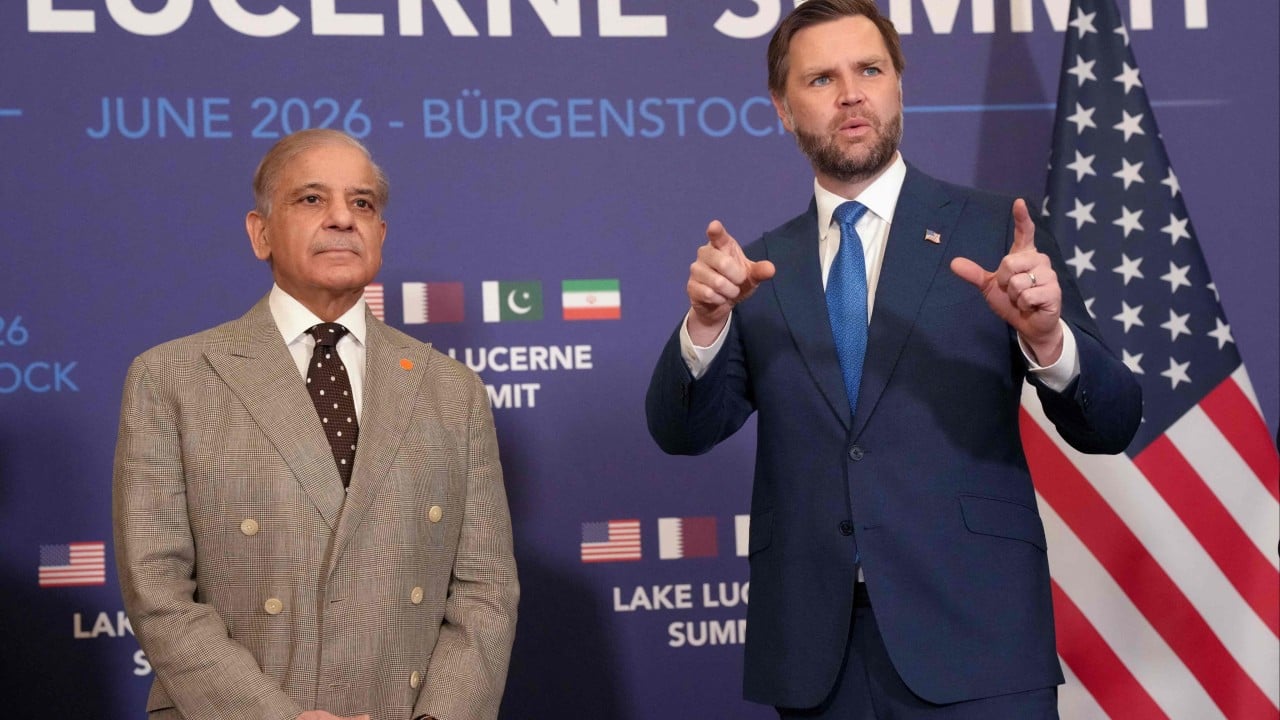
The arrival of United States and Iranian delegations at a Swiss resort signifies less an inflection point for peace and more a calculated stress-test of asymmetric bargaining positions. Traditional journalistic narratives treat these summits as binary events—success versus failure—driven by political willpower or vague notions of diplomatic momentum. A rigorous strategic assessment reveals that the talks are governed by a rigid matrix of domestic political constraints, misaligned verification protocols, and competing escalation game theories.
The negotiation process operates under a distinct structural bottleneck: neither party can afford the domestic political cost of early concessions, yet both require tangible economic or security concessions to justify prolonged engagement. This creates a strategic deadlock where the venue serves not as a laboratory for breakthrough compromises, but as a controlled environment to gauge the adversary's breaking point without triggering kinetic escalation.
The Tripartite Framework of Diplomatic Leverage
To understand the trajectory of these negotiations, the current environment must be disassembled into three distinct operational vectors: the domestic veto players, the economic baseline of sanctions efficacy, and the technical parameters of nuclear and military breakout capacity.
+-------------------------------------------------------------+
|             THE TRIPARTITE FRAMEWORK OF LEVERAGE            |
+-------------------------------------------------------------+
|                                                             |
|  1. DOMESTIC VETO PLAYERS                                    |
|     [US Congress / Hardliners] <---> [Iran Regime Integrity] |
|                                                             |
|  2. ECONOMIC BASELINE                                       |
|     [Sanctions Enforcement]    <---> [Sanctions Resistance]  |
|                                                             |
|  3. TECHNICAL PARAMETERS                                    |
|     [Enrichment & Breakout]    <---> [Verification Access]   |
+-------------------------------------------------------------+
1. The Domestic Veto Player Constraint
Negotiators do not operate in a vacuum; they are bound by a two-level game where any international agreement must simultaneously satisfy domestic ratification units.
For the United States, the executive branch faces systemic legislative friction. Congress possesses statutory mechanisms to review and potentially block sanctions relief, demanding an expansive scope that includes regional proxy networks and ballistic missile development. Any agreement perceived as a compromise on these fronts creates immediate electoral liabilities.
Conversely, the Iranian delegation operates under a highly centralized, non-democratic veto structure where the ultimate authority rests with the Supreme Leader and the Islamic Revolutionary Guard Corps (IRGC). For this faction, the preservation of the regime's ideological core and regional deterrence network is non-negotiable. Economic relief is highly desired, but not at the expense of structural security pillars.
The intersection of these two domestic realities means the zone of possible agreement (ZOPA) is exceptionally narrow, if not entirely non-existent.
2. The Sanctions Asymmetry and Resistance Function
The economic lever wielded by the United States relies on the global dominance of the dollar-denominated financial system. However, the marginal utility of incremental sanctions diminishes over time due to adaptive economic mechanisms. Iran has structured a comprehensive "resistance economy" characterized by:
- Illicit Energy Arbitrage: Utilizing a ghost fleet of tankers to bypass maritime insurance constraints and deliver crude oil to secondary markets, primarily China, at a steep discount.
- Import Substitution: Stimulating domestic manufacturing sectors to decrease reliance on foreign supply chains, thereby insulating the local population from hyperinflationary shocks.
- Alternative Financial Messaging: Integrating with non-Western financial networks to facilitate cross-border trade outside the SWIFT framework.
The United States operates under the assumption that maximizing economic pain forces compliance. The Iranian counter-strategy posits that by enduring the baseline shock of sanctions, they strip the US of its primary non-kinetic leverage point. When sanctions become a permanent structural condition rather than a temporary variable, their ability to compel behavior evaporates.
3. The Technical Parameters of Breakout Capacity
The underlying physical variable driving the urgency of the Swiss talks is Iran's technological advancement in uranium enrichment. The timeline required to produce sufficient weapons-grade fissile material—the "breakout time"—has shrunk from months to days. This shift alters the bargaining mathematics fundamentally.
The United States seeks to restore verifiable caps on centrifuge deployment and enrichment percentages. Iran utilizes its advanced enrichment status as a dynamic bargaining chip, accelerating or decelerating production to extract specific procedural concessions from Western negotiators. This creates a highly volatile feedback loop: technical advancements reduce the time available for diplomacy, while slow diplomatic progress incentivizes further technical escalation to generate leverage.
The Verification Bottleneck and Asymmetric Information
The core structural defect of past iterations of these talks is the verification mechanism. A durable agreement requires absolute transparency, yet both states operate with high degrees of asymmetric information.
   [ US Verification Demands ]               [ Iranian Sovereignty Limits ]
   - Any-time, anywhere inspections          - No military site access
   - Snapback sanctions trigger              - Permanent sanctions lifting
                     \                             /
                      \                           /
                       v                         v
                   [ DEADLOCK: Zero Trust, Zero ZOPA ]
The United States requires an intrusive verification protocol administered by the International Atomic Energy Agency (IAEA), extending to undeclared military sites. From the US perspective, any loophole creates an unacceptable risk of covert development.
Iran views total transparency as an existential threat to its national security, fearing that Western intelligence agencies will utilize inspection access to map conventional military infrastructure for future targeting. The Iranian delegation consequently demands front-loaded, irreversible sanctions relief before granting enhanced monitoring access.
The Western position demands sequential compliance: verification must precede relief. This fundamental disagreement on the sequencing of execution steps represents an irreconcilable operational bottleneck.
Escalation Dominance and the Risk of Miscalculation
The Swiss talks exist alongside a parallel theater of kinetic signaling. Both nations employ calculated escalation to test the boundaries of the opponent's deterrence strategy. This dynamic relies on the concept of escalation dominance—the ability to increase the stakes of a conflict to a level where the adversary cannot match the escalation without incurring unacceptable costs.
The United States utilizes strategic military deployments, targeted financial designations, and joint exercises with regional allies to signal a credible commitment to a military alternative if diplomacy fails.
Iran counters through its regional alignment strategy, leveraging non-state actors in Lebanon, Yemen, Iraq, and Syria to project power across vital maritime choke points and energy corridors. By demonstrating the capacity to disrupt global energy markets and inflict asymmetric costs on regional US assets, Iran seeks to neutralize the threat of American military intervention.
The risk inherent in this model is the high probability of miscalculation. When both sides engage in brinkmanship to improve their bargaining positions at the negotiating table, the margin for error narrows. An uncoordinated kinetic event in the region can instantly derail the diplomatic track, converting a controlled negotiation framework into an open conflict.
Strategic Forecast and Path Dependencies
Given the structural constraints outlined, three distinct paths emerge for the current round of talks in Switzerland.
The first and least probable outcome is a comprehensive, grand-bargain treaty. This path is blocked by the inability of the US executive branch to guarantee long-term treaty compliance across successive administrations, paired with Iran's refusal to dismantle its regional deterrence architecture.
The second path is an outright collapse of communication, leading to an immediate acceleration of Iran's enrichment program and a corresponding shift toward Western kinetic containment strategies. This scenario carries prohibitive economic and military costs for both sides, acting as a powerful incentive to maintain at least the appearance of a diplomatic process.
The optimal strategic play for both delegations is the negotiation of an uncodified, de-escalatory interim framework. This arrangement involves targeted, reversible concessions: Iran caps its enrichment activities at non-weapons-grade thresholds and permits limited IAEA monitoring, while the United States grants conditional waivers for specific frozen assets or limited oil sales.
This transactional model does not resolve the foundational conflict. It functions as a tactical pause, allowing both leadership structures to manage domestic pressures and mitigate the immediate risk of war without forfeiting their primary levers of strategic defiance. Expect the Swiss talks to yield a highly technical, ambiguous memorandum that defers the structural contradictions to a later date, preserving the status quo under the guise of diplomatic progress.