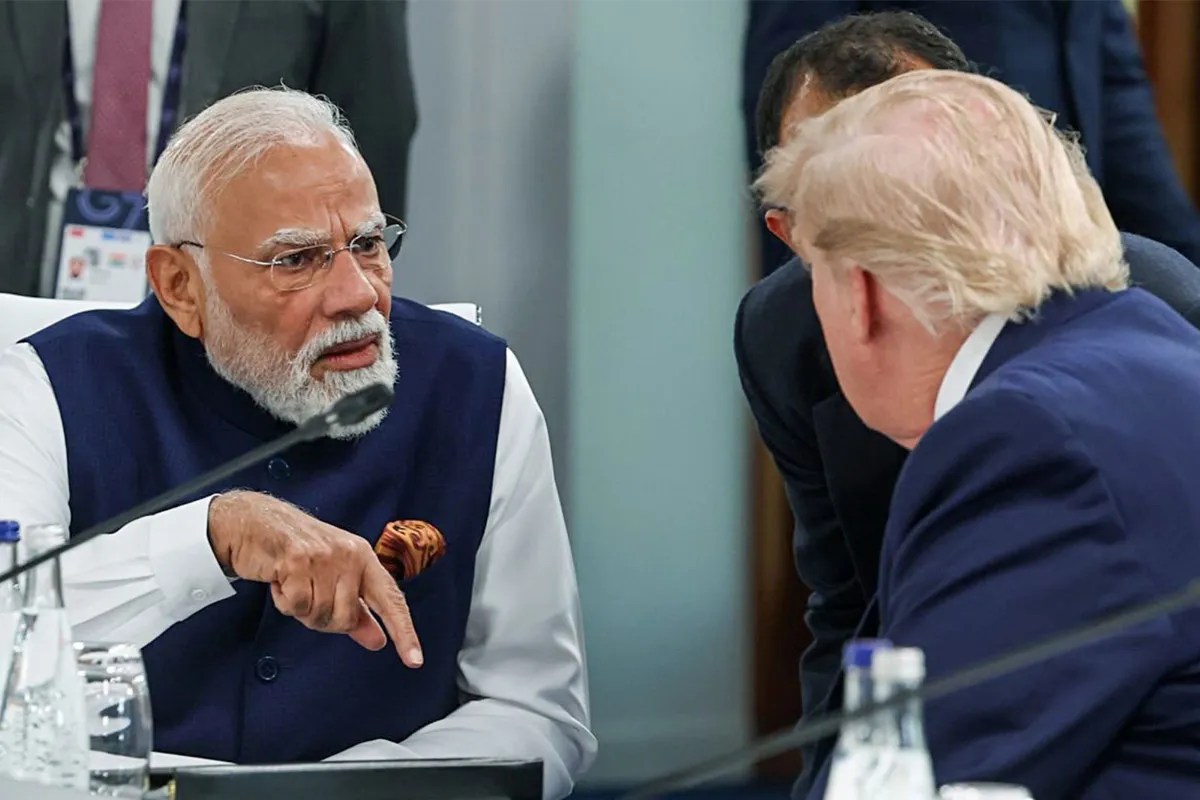
The bilateral summit between the Indian Prime Minister and the US President represents a critical recalibration of macroeconomic and geopolitical alignments, rather than a standard diplomatic encounter. The meeting addresses two distinct but structurally intertwined vectors: regional security escalation in the Middle East and the friction points of bilateral trade policy.
To evaluate the outcomes of these high-level negotiations, analysts must look past diplomatic rhetoric and focus on the structural constraints shifting both nations' positions. The strategic imperatives can be divided into a clear framework: energy security diversification, tariff optimization, and weaponized interdependence.
The Energy Security Constraint and the Iran Dilemma
India’s energy portfolio creates a structural vulnerability when West Asian tensions escalate. Historically, Iran served as a primary crude supplier to India, offering favorable credit terms and rupee-denominated payment mechanisms. The imposition of unilateral US sanctions forced a near-total cessation of these imports, forcing India to reallocate its energy procurement matrix toward spot-market purchases and alternative suppliers, including the US itself.
The economic consequence of this shift is governed by a clear cost function. When Indian refiners replace Iranian heavy sour crude with alternative grades, they face two distinct financial penalties:
- Logistical Premium: The freight cost per barrel increases due to longer transit distances from the US Gulf Coast or West Africa compared to the Persian Gulf.
- Refinery Configuration Mismatch: Indian public sector refineries are highly optimized for specific crude assays. Deviations from these baselines reduce secondary processing yields and lower overall refining margins.
During these bilateral talks, the Indian delegation's primary objective is to secure institutional assurances regarding energy market stability. This involves negotiating strategic exemptions or establishing alternative clearing mechanisms that protect Indian entities from secondary US sanctions.
From the American perspective, the enforcement of energy sanctions is a non-negotiable tool for regional deterrence. The US strategy relies on replacing lost Iranian volumes with domestic shale production to prevent global price spikes that could destabilize Western economies. This creates an interdependence where India requires predictable energy pricing, while the US requires Indian compliance to maintain the integrity of its sanctions regime.
Tariffs, GSP Status, and the Trade Friction Matrix
The economic friction between New Delhi and Washington centers on asymmetric trade protections. The US grievance focuses on India’s historic reliance on import substitution policies, high tariff walls, and strict data localization mandates. Conversely, India views American protectionism—specifically the revocation of its Generalized System of Preferences (GSP) status—as an arbitrary disruption to its export-led growth sectors.
The trade disagreement can be analyzed through three primary structural pillars:
1. The GSP Reciprocity Deficit
The US removal of India from the GSP program eliminated duty-free access for approximately $5.6 billion worth of Indian exports, spanning chemicals, auto parts, and textiles. The US position operates on a principle of market access reciprocity, demanding that India lower barriers for American agricultural products, medical devices, and dairy goods. India’s resistance is rooted in domestic political economy; opening these sectors threatens highly sensitive agrarian voter bases and domestic manufacturing initiatives like 'Make in India'.
2. Retaliatory Tariff Cascades
Following the US imposition of Section 232 tariffs on steel and aluminum, India implemented retaliatory duties on 28 American products, including almonds, walnuts, and apples. This retaliatory cycle alters the relative price advantages of both nations' exports. The strategic objective of the current summit is not the immediate drafting of a comprehensive Free Trade Agreement (FTA), but rather a limited, phase-one trade deal aimed at rolling back these specific punitive duties.
3. E-commerce and Data Sovereignty
A deeper systemic conflict exists regarding digital trade. India’s regulatory frameworks demand that foreign e-commerce entities maintain local data storage and restrict exclusive marketplace arrangements. US technology firms view these measures as non-tariff barriers designed to protect domestic competitors. The US negotiating team seeks a relaxation of these digital policies as a prerequisite for restoring India's preferential trade status.
Weaponized Interdependence and Defense Integration
Beyond trade and energy, the Indo-US relationship is increasingly defined by shared anxieties over regional hegemony in the Indo-Pacific. This shared threat perception has accelerated defense integration, transforming India from a traditional buyer of hardware into a co-development partner.
This shift operates through formal intelligence-sharing protocols and foundational defense agreements. The Communications Compatibility and Security Agreement (COMCASA) and the Industrial Security Annex (ISA) allow for the transfer of encrypted communication equipment and facilitate private-sector defense collaboration.
This deep integration introduces a significant strategic constraint: India's historic reliance on Russian defense systems, exemplified by the procurement of the S-400 missile defense system. This relationship triggers mandatory sanctions under the US Countering America's Adversaries Through Sanctions Act (CAATSAs).
The current summit serves as a mechanism to navigate this legal deadlock. The Indian state seeks a presidential waiver under CAATSA, arguing that its Russian hardware is a legacy requirement necessary for immediate deterrence along its northern borders. The US dilemma is structural: enforcing sanctions risks alienating a vital partner in the Indo-Pacific, while granting a waiver dilutes the deterrent value of its own domestic legislation.
Strategic Realignment Reassessment
The success of this summit cannot be measured by signed memoranda of understanding; it must be judged by whether it establishes a predictable framework for managing structural friction. A phase-one compromise will likely involve India increasing its imports of US liquefied natural gas (LNG) and agricultural products in exchange for a partial restoration of tariff preferences and a pragmatic bypass of CAATSA enforcement.
The long-term trajectory of the partnership depends on both nations accepting that strategic convergence in security does not automatically translate to alignment in trade policy. Policymakers must operate on the assumption that bilateral friction is an inherent feature of a multi-aligned foreign policy, requiring continuous structural adjustments rather than expecting a permanent diplomatic resolution. To mitigate these risks, corporate and state planners should diversify supply chains away from single-point political vulnerabilities, anticipating that tariff structures will remain volatile even amidst closer military cooperation.