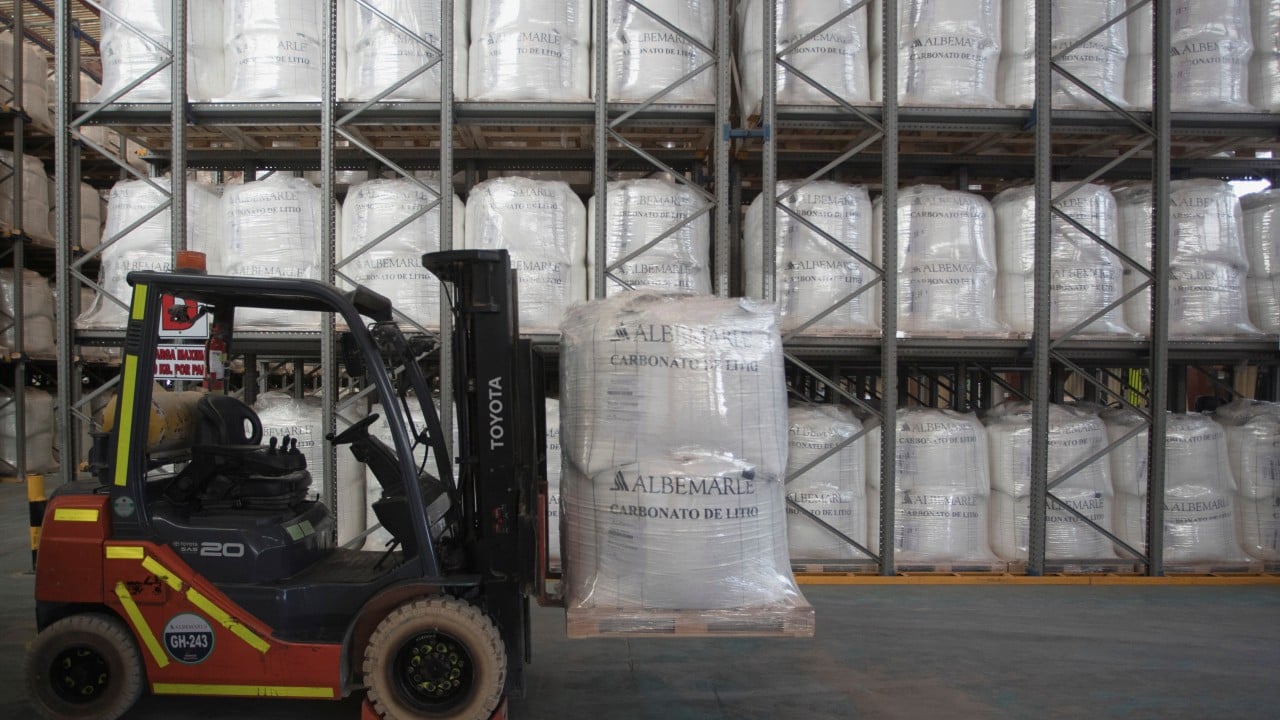
China’s decision to open its domestic lithium carbonate futures contracts on the Guangzhou Futures Exchange (GFEX) to international traders is not a mere regulatory optimization. It is a structural gambit to transition from a dominant refiner into the absolute price setter for the global energy transition.
By allowing foreign capital to directly trade its domestic lithium derivatives, Beijing is exploiting a structural blind spot in Western capital markets: the disconnect between where lithium is financially hedged and where it is physically processed. Controlling the benchmark price of lithium allows a nation to dictate the capital expenditure cycles of global automakers and miners alike. In related news, we also covered: The Destruction of Nord Stream A Brutal Breakdown of Infrastructure Asymmetry.
The Triad of Price Discovery Power
To understand why internationalizing the GFEX shifts the geopolitical balance of power, one must analyze the three variables that dictate whether a commodities exchange becomes a global benchmark: physical settlement proximity, liquidity density, and contract standardization.
1. Physical Settlement Proximity
The London Metal Exchange (LME) and the Chicago Mercantile Exchange (CME) offer lithium contracts, but they suffer from a geographical mismatch. The vast majority of the world’s lithium chemical refining occurs within Chinese borders. When an exchange relies on cash settlement or distant western warehouses, a decoupling occurs between the derivative price and the actual physical spot price at the factory gate. GFEX resolves this by tethering its derivatives directly to physical delivery warehouses situated inside China’s primary manufacturing hubs. International traders are forced to price their risk against real-time physical inventory levels in China, rather than speculative sentiment in London or New York. NPR has analyzed this important topic in great detail.
2. Liquidity Density and Volume Domination
A futures market is only as viable as its depth. Before internationalization, domestic retail and institutional volume within China already made GFEX the most liquid lithium contract globally by orders of magnitude. Opening the doors to international trading desks introduces arbitrageurs, multinational miners, and Western automotive OEMs. This influx of foreign capital pools into an existing ocean of liquidity, narrowing bid-ask spreads to levels Western exchanges cannot match. High liquidity creates a self-reinforcing loop: lower transaction costs attract more volume, which solidifies the exchange as the definitive source of truth for valuations.
3. Contract Standardization as a Regulatory Weapon
By dictating the strict chemical purity standards, moisture tolerances, and impurity thresholds required for physical delivery on the GFEX, China implicitly defines what constitutes "standard" battery-grade lithium carbonate globally. If a foreign miner produces lithium that fails to meet GFEX delivery specifications, that miner's product will trade at a structural discount. Western miners must alter their chemical processing techniques to align with Chinese exchange guidelines if they wish to utilize the world's most liquid hedging tool.
The Arbitrage Loop and Capital Asymmetry
Internationalizing the GFEX creates a highly efficient asymmetric arbitrage loop that works to the distinct advantage of Chinese market participants. Prior to this regulatory shift, Western market participants primarily used the CME lithium hydroxide contract to hedge exposure. However, the underlying physical flow of material typically moves from South American or Australian mines into Chinese conversion facilities, and then out to battery cell manufacturers.
The structural flow of this arbitrage operates across three distinct phases:
[Global Extraction] -> [GFEX Inbound Capital] -> [Chinese Conversion Hubs]
     (Miners)             (Foreign Hedging)          (Price Stabilization)
The introduction of foreign capital creates a direct transmission mechanism. A mining entity in Australia can now short GFEX lithium carbonate futures to lock in margins, while simultaneously selling physical spodumene concentrate to a Chinese refiner. Because the financial leg of the trade occurs on a Chinese exchange, the capital required to maintain margin requirements remains locked within the onshore or qualified offshore clearing ecosystem. This grants Chinese regulators unparalleled visibility into the hedging horizons and financial health of international mining firms.
This integration exposes a critical vulnerability for Western OEMs. If a European or American automotive manufacturer attempts to bypass Chinese supply chains by sourcing localized lithium under the US Inflation Reduction Act (IRA) frameworks, they still must price their long-term supply agreements. If the global benchmark price is dictated by GFEX, the Western OEM is forced to choose between hedging on an illiquid Western exchange or exposing its balance sheet to an exchange regulated by a strategic competitor.
Structural Bottlenecks and Institutional Risk
While this liberalization signals a sophisticated approach to market architecture, foreign market participants face severe structural risks that cannot be mitigated by standard hedging formulas. The internationalization of the GFEX occurs within the broader context of China’s closed capital account and managed currency regime.
- The Renminbi Conversion Friction: GFEX contracts are denominated in Chinese Yuan (RMB). International traders utilizing the Qualified Foreign Institutional Investor (QFII) or RQFII pathways encounter distinct challenges regarding cross-currency settlement and capital repatriation. If a sudden macroeconomic shock prompts Beijing to tighten capital controls, foreign funds locked in lithium margin accounts could face severe repatriation delays.
- Asymmetric Information and State Intervention: The boundary between state-owned enterprises (SOEs), domestic private refiners, and regulatory bodies in China is notoriously porous. Domestic market participants frequently possess superior insight into national stockpiling strategies, state-directed production curbs, or changes in regional environmental enforcement. Foreign trading desks operate under a permanent informational deficit, mispricing the risk of sudden, non-market interventions that can instantly skew the futures curve.
- The Carbonate vs. Hydroxide Bifurcation: The GFEX contract focuses heavily on lithium carbonate, the preferred precursor for Lithium Iron Phosphate (LFP) battery chemistry, which dominates the Chinese domestic electric vehicle market. Western automakers have historically favored Nickel Manganese Cobalt (NMC) chemistries, which require lithium hydroxide. While the two chemicals are tethered by baseline production costs, their spot market dynamics can decouple wildly based on regional factory utilization rates. Foreign traders attempting to hedge NMC supply chains on a carbonate-centric exchange introduce significant basis risk into their portfolios.
The Strategic Counter-Play for Western Capital
To prevent total capitulation over battery metal pricing power, Western supply chain architects and sovereign funds must pivot away from trying to replicate Chinese liquidity and instead focus on alternative mechanism designs.
The optimal strategy requires the mandatory indexing of non-Chinese lithium supply contracts to alternative, long-term structural metrics rather than daily exchange spot prices. This involves constructing direct, closed-loop consortiums where Western miners, refiners, and OEMs enter into cost-plus pricing agreements. By tying the price of delivered lithium to the audited operational cost of extraction plus a fixed capital return margin—rather than referencing a fluctuating exchange price dominated by GFEX volume—Western players can effectively insulate their supply chains from the volatility of Beijing's pricing engine.
Furthermore, Western capital must aggressively capitalize regional processing facilities outside of China to create alternative physical delivery points. Without local refining scale, any Western-based lithium futures contract will remain a synthetic financial instrument prone to dislocation, leaving the real power over the economics of the energy transition firmly in the hands of the clearinghouses in Guangzhou.