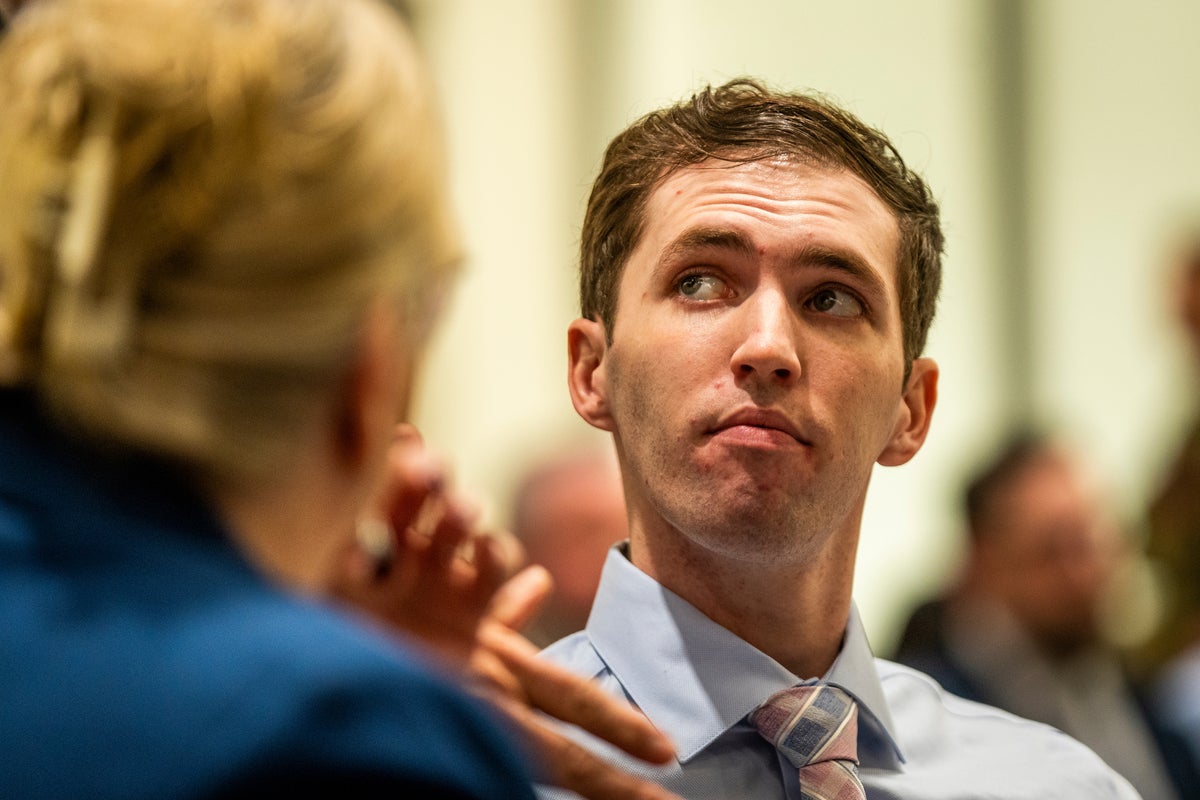
The defense motion to bar the death penalty in the prosecution of Tyler Robinson—the 23-year-old accused of the September 10 aggravated murder of conservative activist Charlie Kirk—represents a deliberate structural maneuver rather than a standard procedural objection. Filed in Utah’s 4th District Court before State District Judge Tony Graf, the motion leverages alleged prosecutorial extrajudicial misconduct as a mechanism to permanently alter the sentencing framework before the case reaches a jury.
By analyzing this case through the structural dynamics of capital litigation, the asymmetry of early forensic reporting, and the strategic calculus of jury pool insulation, we can map the friction between state prosecutorial leverage and constitutional due process guarantees in highly scrutinized proceedings. Recently making headlines in this space: Inside the Maldives Measles Crisis India is Rushing to Solve.
The Tripartite Structure of Capital Pre Trial Maneuvering
Capital defense strategies operate on three concurrent tracks: evidentiary suppression, systemic delay, and leverage reduction. The motion filed by Robinson's defense team targeting comments made by Deputy Utah County Attorney Christopher Ballard belongs to the third category.
In jurisdictions retaining capital punishment like Utah, the state maintains a distinct structural advantage during jury selection via a process known as death qualification. Jurors who state they would never impose the death penalty are excluded by law. Empirical legal data indicates that death-qualified juries lean statistically toward conviction. Removing the capital option early fundamentally shifts the demographic and psychological composition of the eventual jury pool. Additional details into this topic are explored by NBC News.
The defense strategy operates through three distinct levers:
- The Compulsion of Judicial Sanctions: Using Rule 3.6 of the Rules of Professional Conduct (Trial Publicity) to establish that state actors created substantial undue prejudice.
- The Mitigation of Narrative Asymmetry: Countering the state’s early monopoly on public information, particularly when a case involves a political public figure shot at an event with thousands of witnesses, such as the Utah Valley University venue.
- Forensic De-escalation: Forcing the court to evaluate the strength of the state's underlying evidence during the pre-trial phase rather than waiting for the formal presentation of evidence.
Forensic Asymmetry and the Ballistics Bottleneck
The immediate catalyst for the constitutional friction in this case is a preliminary ballistics analysis of a bullet fragment recovered from Kirk’s neck. The structural flow of forensic evidence through state and federal laboratories introduces a predictable vulnerability into high-profile prosecutions: the gap between preliminary findings and final validation.
[Forensic Discovery Phase]
       │
       ▼
[Preliminary Ballistics Report: Inconclusive Match]
       │
       ├───────────────────────────────────────────┐
       ▼                                           ▼
[Defense Strategic Disclosure]           [State Media Counter-Narrative]
· Labels evidence as "Exculpatory"       · Explains "Inconclusive" mechanics
· Shifts public/media sentiment          · Attempts to preserve jury pool
       │                                           │
       └─────────────────────┬─────────────────────┘
                             ▼
              [Accusation of Motion of Contempt]
                             │
                             ▼
              [Judicial Resolution on June 22]
The defense team made public a federal agency's initial ballistics test, which failed to definitively match the recovered bullet fragment with the rifle recovered by investigators. In isolating this finding, the defense exploited a common point of confusion in forensic science: the distinction between "inconclusive" and "exculpatory."
In legal frameworks, truly exculpatory evidence actively tends to clear a defendant of guilt. An inconclusive ballistics match typically denotes a lack of sufficient microscopic markings on a degraded bullet fragment to either confirm or deny a match. The tactical value of this disclosure for the defense was immediate. International and domestic media outlets picked up the filing, generating a public narrative that the state's physical evidence was flawed.
The state’s counter-response created the current legal vulnerability. To neutralize the defense-initiated media narrative, prosecutors discussed the nature of inconclusive forensic testing with journalists. This action exposed them to accusations of violating the court's strictures against external commentary.
The state argues its speech was protected under safe-harbor provisions allowing attorneys to mitigate substantial undue prejudicial effects caused by opposing counsel. Conversely, the defense argues the state went on an intentional media tour to steady its case and protect the prospective jury pool from contamination.
The Evidentiary Matrix and Capital Proportionality
To understand why the defense chose to move for the complete removal of the death penalty as a remedy for a media policy violation, one must examine the state’s parallel evidentiary architecture. Capital cases rarely rely on a single forensic vector. While the ballistics fragment remains contested, the state's broader evidentiary matrix consists of multiple independent data points:
- DNA Profiling: The prosecution asserts that DNA matching Robinson's profile was recovered from four separate locations on the weapon: the primary trigger mechanism, the fired cartridge casing, two unfired cartridges, and the textile wrapper used to conceal the rifle.
- Spatial and Temporal Proximity: The physical recovery of the weapon and the defendant’s geographic location relative to the Orem campus at the time of the shooting.
- Intent Factors: Aggravated murder under Utah law requires specific statutory aggravating factors, such as targeting a public figure to influence political or social behavior, or discharging a weapon into a crowd of thousands.
The defense motion relies on an earlier Utah criminal precedent where a prosecution team faced contempt charges. In that historical benchmark, the court ruled that while the facts did not justify barring the death penalty, the judiciary retained the inherent authority to strip the state of capital options if prosecutorial misconduct irreparably corrupted the integrity of the proceedings. By aiming for this maximum remedy, the defense establishes a high-stakes bargaining position ahead of the pivotal July 6 preliminary hearing.
Strategic Decision Matrix
Judge Tony Graf face a binary choice regarding the contempt allegation on June 22, with each path carrying specific long-term procedural consequences for the trial's trajectory.
Option A: Find the Prosecution in Contempt and Bar the Death Penalty
This outcome would mark a significant departure from standard judicial practice. It would immediately alter the economics of the trial. Capital defense litigation costs significantly more than non-capital homicide defense due to the necessity of dual-qualified counsel and extensive mitigation specialists.
Barring the death penalty would shorten the jury selection process by weeks and remove the structural conviction bias associated with death-qualified juries. However, it exposes the final verdict to an immediate state appeal, potentially delaying the trial on the merits for years.
Option B: Deny the Motion While Issuing Curative Orders
The more statistically probable judicial action is a rejection of the death penalty restriction, combined with a strict, enforceable gag order and potentially an expansion of the jury questionnaire to filter out individuals influenced by the media coverage. This preserves the state’s statutory right to seek maximum penalties while acknowledging the defense's concerns about jury pool contamination. It shifts the battleground entirely to the July 6 preliminary hearing, where the state must formally present its forensic chain of custody.
The optimal play for the defense has already been partially achieved. Regardless of whether Judge Graf strikes the death penalty option from the state’s ledger, the defense has successfully inserted a narrative of scientific ambiguity into the public record before a single juror is seated. For the prosecution, the strategic imperative now shifts to minimizing extrajudicial communication and allowing the DNA evidence on the trigger and cartridges to anchor the state's case at the preliminary hearing.
The complexity of high-profile litigation often requires a deeper dive into how courts handle media exposure and jury contamination. To see how these arguments play out in real time within Utah's fourth district court, the KSL News coverage on Robinson's preliminary challenges outlines the initial structural battles over cameras in the courtroom and public access.