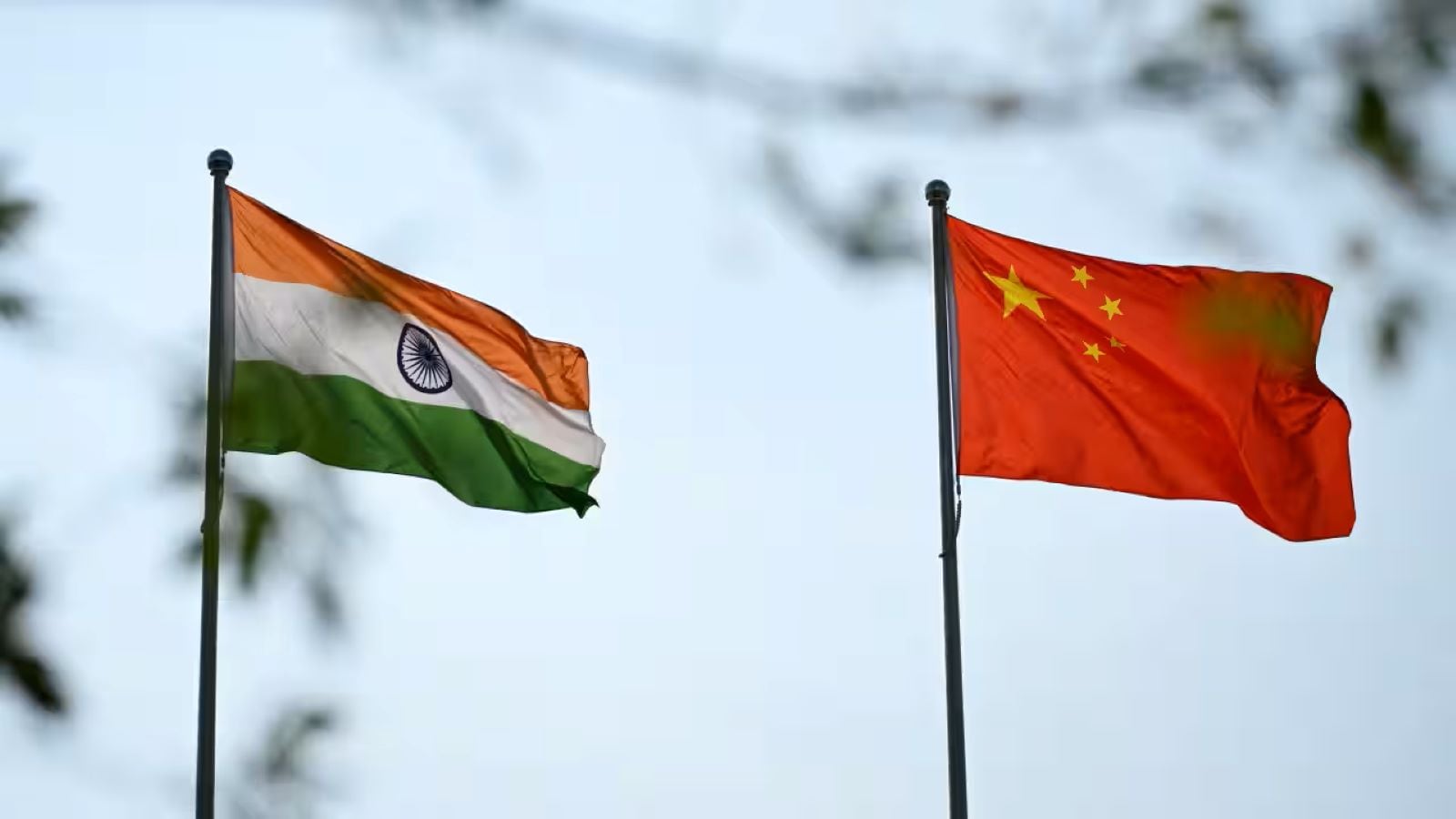
Bilateral engagements between rising neighboring powers are rarely about the immediate agenda items listed in diplomatic briefings. The June 2026 meeting between India's Consul General in Shanghai, Pratik Mathur, and scholars at the Shanghai Institute of International Studies (SIIS) serves as a prime case study. While official communiqués highlight trade, technology, tourism, and the resumption of the Kailash Mansarovar Yatra pilgrimage, the true mechanism at play is the structural stabilization of the New Delhi-Beijing relationship. This track-two and consular diplomacy functions as a necessary de-escalation valve while both nations navigate deep structural frictions along the Line of Actual Control (LAC).
Analyzing these diplomatic interactions requires moving past standard bureaucratic phrasing. To evaluate the trajectory of India-China ties, one must map the operational variables that dictate how the two nations manage their shared borders, multilateral commitments, and economic dependencies.
The Three Pillars of Tactical Stabilization
The engagement in Shanghai operates on three separate levels, each designed to balance national interest against the operational realities of great power proximity.
       [Sino-Indian Bilateral Stability]
                       │
     ┌─────────────────┼─────────────────┐
     ▼                 ▼                 ▼
[Multilateral     [Asymmetric      [Controlled De-confliction]
 Legitimacy]     Interdependence]  (People-to-People & Visas)
1. Multilateral Legitimacy Management (The BRICS Framework)
India holds the BRICS presidency, a position that alters the bargaining dynamics between New Delhi and Beijing. For India, the presidency provides an institutional platform to project leadership across the Global South without aligning exclusively with Western blocs. For China, cooperating within the BRICS framework acts as a critical hedge against Western containment strategies.
The strategic utility of BRICS for both states is driven by an institutional cost function: the benefit of collective bargaining power in global financial governance outweighs the bilateral frictions generated along the Himalayas. By emphasizing India’s BRICS presidency during consular dialogues in Shanghai, both sides signal that their systemic, multilateral interests require a baseline of bilateral predictability.
2. The Asymmetric Interdependence Curve
The discussion regarding trade and technology cooperation occurs against a backdrop of deep economic asymmetry. China remains India’s largest source of industrial goods, particularly in critical sectors such as active pharmaceutical ingredients (APIs), telecommunications components, and photovoltaic cells for solar energy.
India's strategy centers on a deliberate defensive policy: reducing strategic vulnerabilities via production-linked incentive (PLI) schemes while acknowledging that a total economic decoupling from China would impose prohibitive transaction costs on domestic manufacturing. Conversely, Chinese firms view the Indian consumer and industrial market as a vital outlet for excess industrial capacity. The consular track in eastern China—the country's primary commercial and technological engine—serves as the administrative pipeline through which these economic realities are negotiated, managed, and permitted to continue under strict state supervision.
3. Controlled Border De-confliction via Soft Variables
Agitating for the resumption of the Kailash Mansarovar Yatra or expanding academic exchanges at East China Normal University are not merely cultural or educational endeavors. In high-stakes diplomacy, soft variables serve as a low-risk mechanism to gauge an adversary's willingness to de-escalate.
Reopening institutional channels for tourism, visas, and academic dialogue allows both states to demonstrate goodwill without making territorial or military concessions along the LAC. These steps create a behavioral baseline. If a state is willing to streamline visa processing for students or open a pilgrimage route, it indicates that its central command is not actively seeking an immediate escalation in harder geopolitical arenas.
Structural Bottlenecks and Strategic Boundaries
A rigorous assessment of the relationship must account for the fundamental structural limitations that prevent a return to full normalization. Trust deficits cannot be resolved by academic exchanges or consular dialogues alone. The strategic goals of New Delhi and Beijing remain fundamentally unaligned on two major fronts.
- The Regional Order Disconnect: New Delhi envisions a multipolar Asia where India acts as an independent pole with its own sphere of influence in the Indian Ocean Region. Beijing operates on a unipolar Asian framework, viewing its rise as the central organizing axis of regional security and economics while categorizing India's partnerships with the Quad (United States, Japan, Australia) as an attempt at encirclement.
- The Security-Trade Paradox: India maintains that full normalization of economic and political ties is strictly conditional upon peace and tranquility along the borders, specifically requiring verifiable disengagement and de-escalation along the LAC. China argues that the border dispute should be placed in an isolated box, allowing trade and diplomatic coordination to proceed independently of security frictions.
Because of this paradox, minor diplomatic wins—like the ones discussed at SIIS—cannot scale into a comprehensive grand bargain. Instead, they act as stabilizing buffers designed to prevent miscalculations.
Expected Trajectory
The structural reality of India-China relations points toward a state of persistent, managed competition rather than outright conflict or complete reconciliation. The diplomatic exchanges in Shanghai provide the operational blueprints for this relationship going forward.
Expect India to leverage its BRICS presidency to secure incremental concessions on market access and visa normalization for its citizens, while maintaining a firm defensive posture along the LAC. China will likely continue to utilize track-two dialogues with Indian diplomats to discourage a tighter, formal military alignment between New Delhi and Washington. Ultimately, these consular and academic discussions do not represent a diplomatic breakthrough. They are the calculated calibration of a highly complex relationship where both sides recognize that managing competition is far more cost-effective than managing conflict.