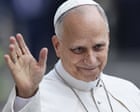
The mainstream press loves a cheap boxing match. Put a white-cassocked pontiff in one corner and a chainsaw-wielding libertarian economist in the other, sell tickets to a "showdown," and watch the clicks roll in.
It is lazy journalism. It is intellectually bankrupt. And it completely misses the real story unfolding in Buenos Aires.
The competitor’s framing—that a papal return to Argentina represents an ideological cage match between Catholic social teaching and "hyper-capitalism"—relies on a cartoonish caricature of both men. Media commentators look at Pope Francis and see a socialist firebrand; they look at Javier Milei and see a heartless market fundamentalist. Both readings are dead wrong. If you actually read the foundational texts of Catholic social doctrine alongside Austrian economics, you discover something that makes cable news producers deeply uncomfortable: Francis and Milei are fighting the exact same enemy.
They are both at war with cronyism.
The Myth of the Ideological Showdown
Let’s dismantle the "showdown" narrative right out of the gate. Why does the foreign press insist on framing every interaction between the Vatican and the Casa Rosada as a zero-sum battle for Argentina’s soul? Because conflict sells, and nuance requires homework.
In reality, the friction between Jorge Mario Bergoglio and Javier Milei has never been about pure free markets versus pure charity. It has always been a clash of vocabulary masking a shared diagnosis of a rotting system.
For decades, Argentina was not a free-market economy, nor was it a functioning welfare state. It was a corporatist racket. Politicians printed money to buy votes, protected politically connected monopolies from competition, and trapped millions of citizens in permanent dependency on state handouts. Inflation exceeded 200 percent. Poverty surged past 40 percent before Milei even took office.
When Pope Francis rails against the "idolatry of money" and an "economy of exclusion," Western pundits lazily assume he is attacking free enterprise. He isn't. Having lived through the Peronist machine in Buenos Aires, Bergoglio knows firsthand how state-backed financial manipulation destroys the poor. Inflation is the most regressive tax on earth. It eats the wages of day laborers while wealthy insiders hedge their bets in offshore dollar accounts.
Milei’s chainsaw isn't aimed at the poor; it is aimed at the parasitic political caste that engineered that inflation. Calling their meeting a clash between "compassion" and "greed" isn't just inaccurate—it actively obscures how an economy actually lifts people out of misery.
What the Press Gets Wrong About Catholic Social Teaching
To understand why the media’s framing fails, you have to look at the actual mechanics of Catholic social doctrine. Most political reporters treat Rerum Novarum or Centesimus Annus like a manifesto for big government. They haven't read a word of either.
Pope John Paul II, writing in Centesimus Annus in 1991 after the collapse of Soviet communism, explicitly endorsed the free economy—defined as a system that recognizes the fundamental and positive role of business, the market, private property, and free human creativity. What he condemned was a system where freedom in the economic sector is not circumscribed within a strong juridical framework.
Notice the distinction. A market without the rule of law isn't capitalism; it’s organized theft.
And what about subsidiarity? This is the bedrock principle of Catholic social thought, formalized by Pope Pius XI in Quadragesimo Anno. Subsidiarity dictates that a central authority should perform only those tasks which cannot be performed effectively at a more immediate or local level. When a bloated federal bureaucracy in Buenos Aires confiscates wealth through money printing and redistributes crumbs through corrupt intermediaries, it violates subsidiarity at every turn. It strips families, parishes, and local communities of their agency.
Milei’s entire economic program—slashing ministries, eliminating price controls, auditing welfare distribution to cut out political middlemen—is an aggressive restoration of subsidiarity. He is stripping power away from distant bureaucrats and returning decision-making to individuals and local actors.
The "Hyper-Capitalist" Strawman
Let’s look at that buzzword the competitor threw into their headline: hyper-capitalist.
What does that even mean? In modern media parlance, "hyper-capitalist" is a smear used whenever a leader refuses to subsidize failing industries or dares to balance a national budget.
Argentina didn't have capitalism to be "hyper" about. Under previous administrations, the country had over 160 different taxes, strict currency controls that criminalized saving in stable money, and export tariffs that punished farmers for producing food. That isn't capitalism. That is economic asphyxiation.
When Milei took over in December 2023, the central bank had negative net reserves. The treasury was running massive fiscal deficits financed purely by the printing press. You do not need a doctorate from the University of Chicago to know where that leads. You get hyperinflation, societal collapse, and mass starvation.
By achieving a fiscal surplus within his first quarter in office—something Argentina hadn't seen in over a decade—Milei didn't act as a heartless zealot. He acted as an emergency room surgeon performing triage on a patient bleeding out on the table. Stopping the hemorrhage hurts. Removing price subsidies causes a temporary spike in living costs. Pretending that painless alternatives existed is pure fantasy.
The Real Reason for Past Friction
If their goals align so closely on anti-corruption and monetary stability, why did Milei once hurl brutal insults at the Pope before taking office?
Because Milei is a polemicist by nature, and during his campaign, he viewed the Argentine Catholic hierarchy as overly cozy with the Peronist establishment. For years, certain sectors of the local clergy marched alongside state-funded social movements—the piqueteros—whose leaders acted as gatekeepers for government welfare funds. To Milei, anyone defending those organizations was defending the corrupt status quo.
Yet look at what happened the moment Milei actually won the presidency and met Francis at the Vatican in February 2024. The fireworks vanished. They hugged. They laughed. They spent over an hour in private conversation.
Why? Because once the campaign theater ended, both men recognized the reality of the moment. Francis knows that if Milei’s stabilization plan fails, Argentina descends into an abyss that no amount of charitable soup kitchens can fix. Milei knows that without the moral stabilization and social cohesion the Church provides during a brutal economic adjustment, the street-level backlash could derail his reforms before they bear fruit.
Answering the Questions Nobody Dares Ask
When people search for news about the Pope visiting Argentina, they usually carry a set of flawed assumptions baked right into their queries. Let’s tear those assumptions apart.
Does the Pope oppose Milei’s economic reforms?
No, and anyone claiming otherwise is projecting their own politics onto the Vatican. Francis has consistently warned against policies that abandon the vulnerable, which is his job as a pastor. Warning a surgeon to be careful with the scalpel is not the same thing as telling the surgeon to put the knife down and let the tumor kill the patient. Francis has never demanded that Argentina return to printing money or running unsustainable deficits.
Will a papal visit trigger mass protests against the government?
This is the secret wish of every opposition politician in Buenos Aires, and it is a massive miscalculation. Pope Francis has not set foot in his homeland since becoming pontiff in 2013 precisely because he refuses to be used as a political football by local factions. If he returns, his message will focus on national unity, reconciliation, and care for the marginalized—not partisan endorsements. Trying to weaponize a papal mass into an anti-government rally would backfire spectacularly on whoever tries it.
Can libertarian economics and Catholic morality coexist?
Not only can they coexist, they desperately need each other. Look at the giants of the School of Salamanca in 16th-century Spain—Catholic theologians like Francisco de Vitoria and Juan de Mariana. Long before Adam Smith wrote The Wealth of Nations, these Dominican and Jesuit priests laid the intellectual groundwork for subjective value theory, free trade, and the evils of currency debasement. Juan de Mariana literally wrote a treatise in 1609 arguing that a ruler who debases the currency to fund state spending is stealing from his subjects without their consent. Sound familiar? That is Milei’s exact platform, articulated by a Jesuit priest four hundred years ago.
The Brutal Reality Both Men Must Face
I have watched political commentators and financial analysts lose millions of dollars misreading Latin American politics because they treat ideology like a religion and religion like a political party. If you bet on an apocalyptic clash between Francis and Milei, you are going to get burned.
However, admitting that the media’s "showdown" narrative is nonsense does not mean everything is smooth sailing. Both men face severe, undeniable risks in this dynamic—and ignoring them would be dishonest.
- The Risk for Milei: Pure market mechanics do not soothe human suffering in the short term. When inflation drops from 25 percent a month to low single digits, it is a macroeconomic triumph, but a retired pensioner whose fixed income hasn't caught up to grocery prices still goes to bed hungry. If Milei’s team treats human beings purely as data points on a spreadsheet and fails to communicate genuine empathy during the transition, he loses the moral high ground. Efficiency without compassion breeds rebellion.
- The Risk for Francis: The Pope’s rhetoric often leaves too much room for bad-faith actors to twist his words. When he critiques the excesses of global finance without explicitly distinguishing between free-market wealth creation and state-backed cronyism, authoritarian populists across Latin America use his speeches to justify seizing private property and bankrupting their nations. Precision matters. Ambiguity gets weaponized.
Imagine a Different Framework
Step outside the cable news echo chamber for a second. Imagine a scenario where an outsider looks at Argentina without knowing a single thing about Western culture wars.
They see a country blessed with immense natural resources—lithium, natural gas, fertile farmland, world-class human capital—that spent eighty years systematically impoverishing itself through state overreach and monetary fraud. They see a bold reformer finally dismantling the machinery of that fraud, enduring massive short-term pain to give the next generation a fighting chance at prosperity. And alongside him, they see a spiritual leader reminding the nation that wealth is a tool, not a god, and that nobody should be left behind while the house is rebuilt.
That isn't a brawl. That is a division of labor.
One man is tasked with fixing the balance sheet so the country can actually afford to feed itself. The other is tasked with guarding the soul of the nation so it doesn't forget why it exists in the first place.
The journalists waiting at the airport in Ezeiza with their pre-written stories about a "historic collision" are looking at the wrong scoreboard. Stop watching the theatrics and start watching the monetary base, the poverty indices, and the parish food banks. That is where the real verdict on Argentina is being written.