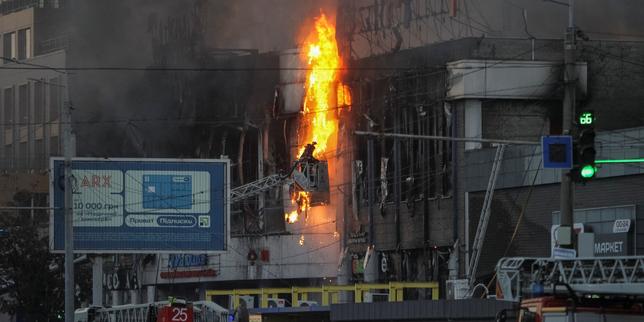
Every single headline coming out of the Sumy oblast right now relies on a lazy, dangerous fairy tale. You read the routine dispatches about civilian casualties, infrastructure strikes, and localized tragedies, and your brain is trained to feed you a comfortable, cinematic narrative: good versus evil, brute force clashing with righteous defense, a static line on a map where tomorrow looks remarkably like yesterday, just bloodier.
That narrative is complete garbage.
It keeps the Western public in a state of perpetual emotional paralysis, reacting to every tactical flashpoint with shock while missing the structural mechanics of what is actually happening. War is not a morality play broadcast on cable news. It is an aggressive, cold-blooded exercise in resource attrition, industrial capacity, and macroeconomic stamina. When commentators fixate exclusively on the daily tactical horrors without analyzing the brutal math underneath, they miss the entire point of modern state-level conflict.
Stop looking at the smoke. Look at the balance sheets.
The Attrition Trap Nobody Wants to Talk About
The standard media consensus treats every escalation as a turning point. It is not. It is noise. The actual signal is found in industrial output, demographic cliffs, and logistics chains that stretch from specialized factories in East Asia to muddy trenches in Eastern Europe.
I have spent years analyzing conflict economics and supply chain vulnerabilities for defense logistics, and the most glaring delusion among armchair strategists is the belief that moral outrage translates into operational sustainability. It does not. Wars of attrition are won by the side that can absorb catastrophic losses and still keep the generators running, the currency stable, and the supply trucks moving.
When a strike hits a border region like Sumy, the media frames it as an isolated barbaric act designed purely to terrorize. While the human cost is real and devastating, viewing it solely through a humanitarian lens blinds you to the strategic geography. Border oblasts are porous zones of constant friction, reconnaissance-in-force, and artillery duels designed to drain enemy reserves, force redeployments, and stretch air defense batteries thinner than tissue paper.
If you analyze the conflict through the lens of pure military efficiency, both sides are locked in an economic blender. The conventional wisdom states that international aid guarantees long-term parity. But international aid is a political variable, not an infinite natural resource. Every billion dollars approved faces domestic political fatigue, bureaucratic friction, and manufacturing bottlenecks that take years to clear. Meanwhile, industrial production lines do not care about parliamentary debates or moral high grounds. They care about steel, microchips, and propellant chemistry.
The Fallacy of the Decisive Breakthrough
Another comforting delusion peddled by cable news analysts is the obsession with the decisive counter-offensive. Every few months, the narrative shifts to a magical upcoming operation that will slice through enemy lines and restore pre-2014 borders.
This is military fan fiction.
Modern defensive technology—drone saturation, ubiquitous thermal optics, electronic warfare jamming, and dense minefields—has swung the pendulum decisively back in favor of the defense. When you stack cheap aerial reconnaissance against mechanized armor, movement equals death. You cannot mass forces for a breakthrough without every drone within forty kilometers spotting your assembly area and calling down a correction on your coordinates before your tanks even cross the line of departure.
Pretending that a breakthrough is just around the corner if we only send a few more specialized weapon systems is a disservice to the people fighting and dying on the ground. It creates unrealistic expectations, delays necessary strategic pivots, and feeds a cycle of public disillusionment. We are not watching a replay of the Second World War with modern aesthetics. We are watching a slow-motion industrial siege where territory is measured in meters and paid for in rivers of ordnance.
The Economic Shell Game
Let us address the elephant in the room that politicians and pundits refuse to touch: the financial sustainability of this endurance test.
Sanctions were supposed to crush the opposing economy within months. They did not. Instead, they forced a brutal, creative rewiring of global trade routes. Energy flows found new buyers in the East, secondary sanctions created leaky gray markets, and domestic production shifted onto a wartime footing.
On the flip side, the coalition supporting Ukraine is playing an increasingly difficult game of fiscal gymnastics. Inflation, debt servicing costs, and competing domestic priorities are squeezing public budgets across Western capitals. When the political will to write blank checks collides with economic reality, the nature of the support changes. It shifts from absolute capability to managed survival.
This is the uncomfortable truth nobody wants to print: protracted conflicts do not end with a dramatic cinematic collapse. They end when one side hits a wall of absolute exhaustion—demographic, financial, or industrial—and is forced to accept terms that look nothing like their initial war aims.
What You Should Be Asking Instead
When you see another breaking news alert about strikes in Sumy or missile barrages hitting power grids, stop asking how many drones were intercepted or who is winning the daily news cycle. Those questions are designed to trigger an emotional response rather than an intellectual one.
Instead, ask:
- What does the casualty replacement rate look like for infantry over the next six months?
- How long can the domestic industrial base sustain high-intensity artillery consumption without completely hollowing out strategic reserves?
- At what point does the cost of reconstruction outstrip the combined GDP of the supporting coalition?
If you cannot answer those questions, you do not understand the war. You are just consuming trauma porn disguised as journalism.
The sooner we strip away the moralizing rhetoric and look at this conflict through the cold, unfeeling prism of logistics and attrition, the sooner we can stop being surprised by reality. War is a grim, mechanistic accountant's game. It is time we started treating it like one.

