If you only watch mainstream news clips, you probably think the drone war in Ukraine is just a chaotic swarm of cheap quadcopters dropping grenades on trenches. That is a tiny slice of reality. Behind the daily skirmishes, military planners on both sides are completely restructuring how entire nations move supplies, fuel, and data.
The real story isn't just about what hits the target. It's about how the entire logistics map of Eastern Europe is adapting to persistent, long-range aerial threats.
The Shift Toward High-Speed Jet Propulsion
For years, the conversation centered around slow, propeller-driven loitering munitions that buzzed across the night sky like angry lawnmowers. You could hear them coming from miles away. Air defense units had plenty of time to calculate trajectories, position mobile gun teams, and coordinate searchlights.
That era is rapidly closing.
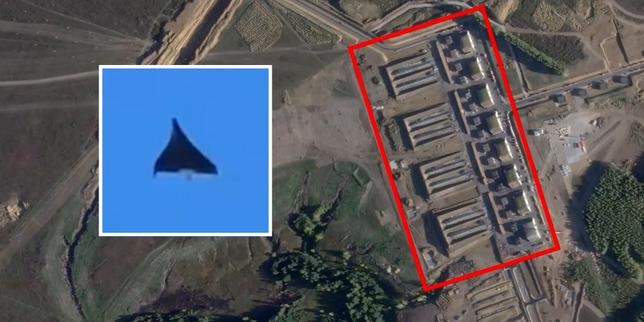
Recent intelligence reports and satellite analysis of forward deployment sites reveal a major pivot toward jet-powered variants like the Geran-5. These systems operate at speeds reaching up to 600 kilometers per hour. When you multiply velocity by distance, the math changes completely for defensive commanders.
- Reaction time shrinks: Traditional mobile defense groups lose their primary warning window.
- Interception windows close: Missiles and anti-aircraft guns have seconds, not minutes, to lock onto fast-moving targets.
- Infrastructure vulnerability skyrockets: Fixed logistics hubs, railway junctions, and fuel depots cannot easily relocate when strike speeds double.
Targeting the Digital Backbone
We talk endlessly about physical supply lines—trucks, trains, and pipelines. But modern armies run on servers, cloud architecture, and real-time data feeds. When drones strike deep inside enemy territory, the targets are increasingly digital.
Recent high-profile attacks against massive data centers and tech infrastructure hubs inside Russia demonstrated a brutal new calculus. Major domestic tech services and banking systems experienced cascading outages after precision strikes.
When a data center goes dark, military logistics don't just slow down—they blind themselves. Automated inventory systems freeze. Supply routing algorithms fail. Corporations and state supply chains alike suddenly find themselves scrambling for overseas server capacity or reverting to manual paperwork.
Why Fixed Supply Lines Are Becoming Obsolete
For decades, military doctrine relied on massive, centralized logistical nodes. You stack thousands of artillery shells in one warehouse, pump millions of liters of diesel into massive regional fuel farms, and distribute outward.
Drones have turned those mega-depots into liability traps.
Satellites and persistent reconnaissance mean that any concentration of supplies visible from space will eventually attract a swarm or a long-range strike. Both militaries are forced to decentralize. Instead of one massive warehouse, commanders must manage hundreds of hidden, micro-depots scattered across forests, industrial basements, and rural outposts.
This creates a massive management headache. How do you track inventory when your supply chain is atomized into thousands of tiny pieces? You get creative, or your frontline units run out of food, ammunition, and fuel.
The Industrial Supply Chain Behind the Guidance Chips
You cannot build a modern autonomous strike fleet without global components. Every time wreckage is analyzed, investigators pull apart microchips, navigation modules, and circuit boards.
Despite heavy sanctions, supply chains remain remarkably porous. Forensic audits of recovered guidance systems routinely point to components manufactured across multiple continents—spanning major economies in Asia and Western nations. Stopping the war isn't just about shooting down birds in the sky; it's about cutting off the invisible river of microelectronics that makes autonomous navigation possible in the first place.
If you want to understand where this conflict is heading, stop looking exclusively at the frontline trenches. Look at the software architecture, the decentralization of storage, and the race to build faster propulsion systems that bypass legacy air defenses entirely. Adaptability wins wars, and right now, both sides are rewriting the playbook on the fly.