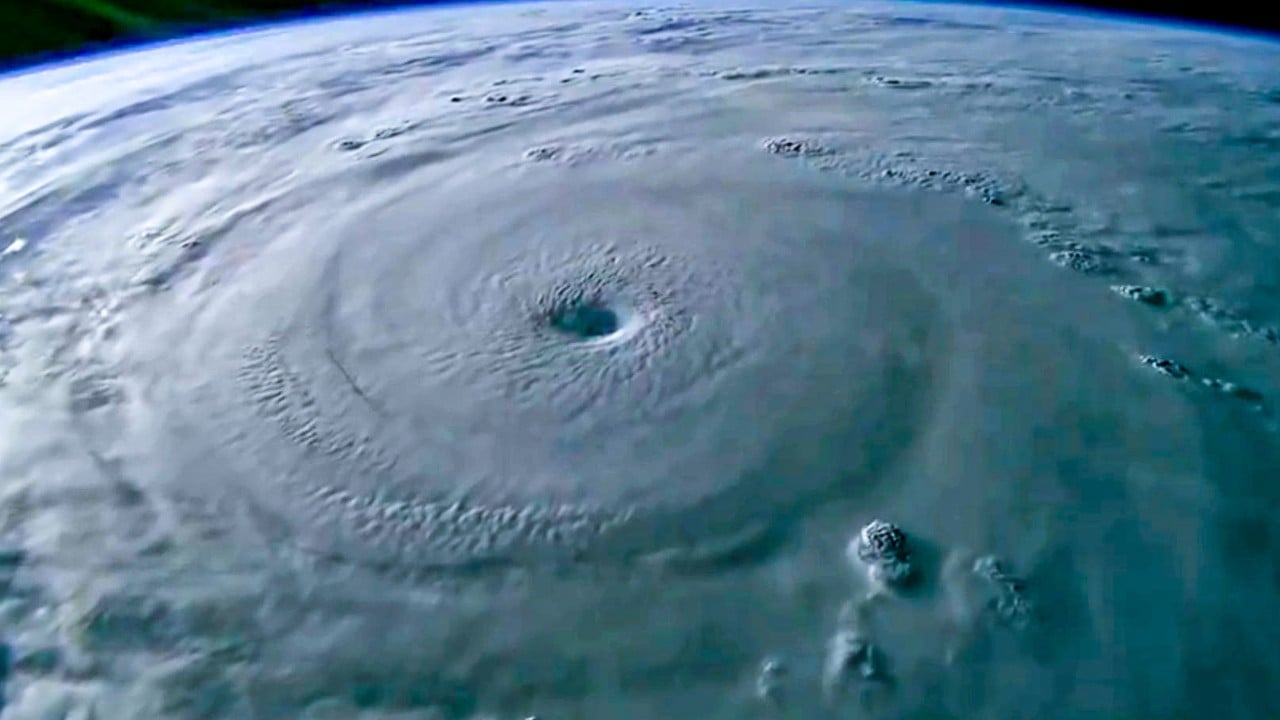
The headlines are predictable. Every time a tropical cyclone spins up in the South China Sea or the Western Pacific, the international press enters a state of collective hysteria. "High alert." "Bracing for the worst." They paint a picture of imminent doom, treating modern industrial superpowers as if they are fragile coastal villages built of straw and good intentions.
The coverage of Super Typhoon Bavi followed this exact script.
Sensationalist reporting loves a monster storm. It builds clicks around the imagery of howling winds, evacuated fishing boats, and ominous satellite imagery. But this breathless doom-mongering ignores how modern infrastructure actually functions. The media treats meteorological severity as a direct proxy for societal collapse. It is a lazy consensus that completely miscalculates risk.
The real story is not the storm. The real story is the staggering resilience of targeted, hard-engineered infrastructure that turns potential catastrophes into routine operational hurdles.
The Flawed Premise of the "High Alert" Narrative
Mainstream reporting implies that a high-alert status means a country is on the verge of buckling. This gets the psychology of modern disaster management entirely backward.
When a state apparatus triggers top-tier emergency responses, it is not a sign of panic. It is a sign of a highly optimized, bureaucratic machine executing a well-rehearsed playbook. Over the last two decades, coastal engineering and meteorological modeling have evolved from reactive guessing games into predictive sciences.
Consider how the media covers evacuations. A headline screaming that hundreds of thousands of people are being moved is designed to provoke fear. In reality, large-scale preemptive evacuation is evidence of superior logistics and precise data tracking. It means the system is working exactly as designed. The panic is a media construct; the reality on the ground is math, logistics, and concrete.
The Math of Meteorological Resilience
Let's look at the actual physics of storm mitigation. The media obsesses over peak wind speeds. They shout about Category 4 or Category 5 equivalents because high numbers sell papers.
But structural engineers do not look at wind speed in a vacuum. They look at structural load capacities, aerodynamic drag coefficients, and the sheer durability of reinforced coastal defense networks.
$$F = \frac{1}{2} \rho v^2 C_d A$$
The standard wind load formula demonstrates that force ($F$) scales quadratically with velocity ($v$). Yes, a doubling of wind speed quadruples the force on a structure. Media outlets use this exponential curve to imply total destruction. What they fail to mention is that modern industrial zones, deep-water ports, and urban grids along the East Asian coastline are engineered to withstand these exact scaling forces.
I have spent years analyzing supply chain vulnerability and structural asset management during extreme weather events. I have watched boards of directors lose their minds over weather channel graphics, pulling back investments and shutting down operations prematurely. Meanwhile, the actual physical assets—the seawalls, the breakwaters, the automated gantry cranes—slipped through the weather with minimal structural degradation. We routinely overestimate the fragility of modern engineering because it satisfies a narrative need for drama.
Dismantling the Supply Chain Myth
A recurring trope in typhoon reporting is the inevitable "global supply chain paralysis" narrative. The moment a port stops loading containers for 24 hours, analysts predict a domino effect that will cripple global commerce.
This is fundamentally wrong. It misunderstands how modern maritime logistics operate.
- Pushed, Not Paused: Ports do not just freeze; they accelerate ahead of the weather window. When a storm like Bavi tracks toward major shipping hubs, logistics networks initiate "vessel bunching" mitigation. Ships are sped up or slowed down hundreds of miles away to clear the port before the storm arrives, or to buffer just outside the impact zone.
- The Container Buffer: Modern container terminals are not fragile card houses. Grounded containers are stacked using specific locking mechanisms (twistlocks) that create highly stable, block-like structures capable of resisting extreme lateral forces.
- Rapid Asset Deployment: The moment the gale-force winds drop below operational thresholds, recovery is near-instantaneous. Automated systems and heavy machinery mean a port can return to 90% operational capacity within hours of the storm’s passage.
The idea that a single typhoon can break a national economy is an outdated holdover from the mid-20th century. Today’s industrial hubs are built with redundancy. If Port A closes for two days, cargo is dynamically rerouted to Port B or held in inland dry ports. The system absorbs the shock.
The Trade-off of Hyper-Preparedness
To be fair, this level of resilience does not come without a cost. Acknowledging the efficacy of modern infrastructure requires admitting the downsides of the strategy.
The financial cost of over-engineering coastal zones is astronomical. Billions of dollars are locked up in concrete seawalls and massive drainage pumps that sit idle for 350 days a year. Furthermore, the aggressive relocation of populations during storm paths causes short-term economic friction. Factories close, shifts are missed, and local commerce grinds to a halt.
But this friction is a deliberate choice. It is an insurance premium paid in real-time. The media frames these factory shutdowns as "damage caused by the typhoon." That is inaccurate. The shutdown is not damage; it is a controlled, calculated pause designed to eliminate human risk and protect capital equipment.
Redefining the Real Hazard
If the wind and the rain are not the real threats to a modern industrial society, what is?
The real hazard is the failure of secondary systems—specifically, localized power grid instability and the psychological contagion of panic.
[Typhoon Approach]
       │
       ├──> Physical Infrastructure (Withstands Load) ──> Rapid Recovery
       │
       └──> Information Ecosystem (Sensationalism) ────> Panic & Market Volatility
When media outlets run breathless coverage of a storm, they create artificial scarcity. People hoard supplies, panic-sell local equities, and disrupt the local economy far more effectively than a 120-mile-per-hour wind ever could. The physical infrastructure holds; the information infrastructure breaks.
Stop looking at the satellite loops of swirling clouds. Stop listening to commentators who treat every major storm as an unprecedented apocalypse. The next time a super typhoon approaches a major industrial coastline, ignore the narrative of fear. Look instead at the engineering standards, the logistical redundancies, and the structural realities that quiet gray concrete uses to defeat nature every single day.
The storm will pass, the ports will open, and the sensationalist headlines will move on to the next patch of low pressure, completely blind to the fact that the system worked.


