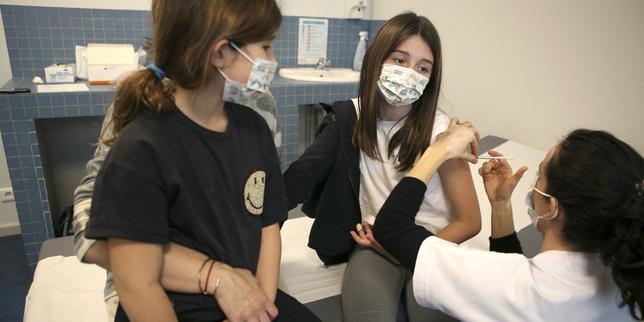
Picture a plastic chair in a brightly lit infusion suite. The clock on the wall ticks with a hollow, metallic echo, measuring out time in drops. A clear plastic bag hangs overhead, slowly feeding a cold, pale liquid through a catheter and into a vein in a tired person's arm. Four hours. Every single month. Four hours of stillness, muffled monitor beeps, and the quiet, persistent ache of an arm held too rigid for too long against the vinyl armrest.
Most people believe that medicine is invented in beakers on shiny laboratory benches down here on solid ground. They imagine brilliant chemists mixing powders under white hoods, solving diseases through sheer terrestrial willpower and heavy glass equipment. But gravity is a thief.
Gravity ruins things.
Down here, every time a scientist attempts to grow complex protein crystals—the delicate, intricate architecture required for modern monoclonal antibodies, enzyme replacement therapies, and targeted cancer treatments—Earth interferes. Gravity causes convection currents in liquids. It pulls heavier molecules downward while lighter ones drift upward, driven by subtle thermal gradients. It creates fluid turbulence and structural micro-flaws. The crystals grow jagged, crooked, and imperfect. They resemble a brick wall built by someone shaking during an earthquake. Because of these structural imperfections, these therapeutic proteins cannot be concentrated into simple solutions. They form thick, viscous liquids that refuse to pass through a fine gauge needle. They require massive hospital infrastructure, elaborate cold-chain storage networks, and hours of intravenous administration to deliver safely.
Then, you look up.
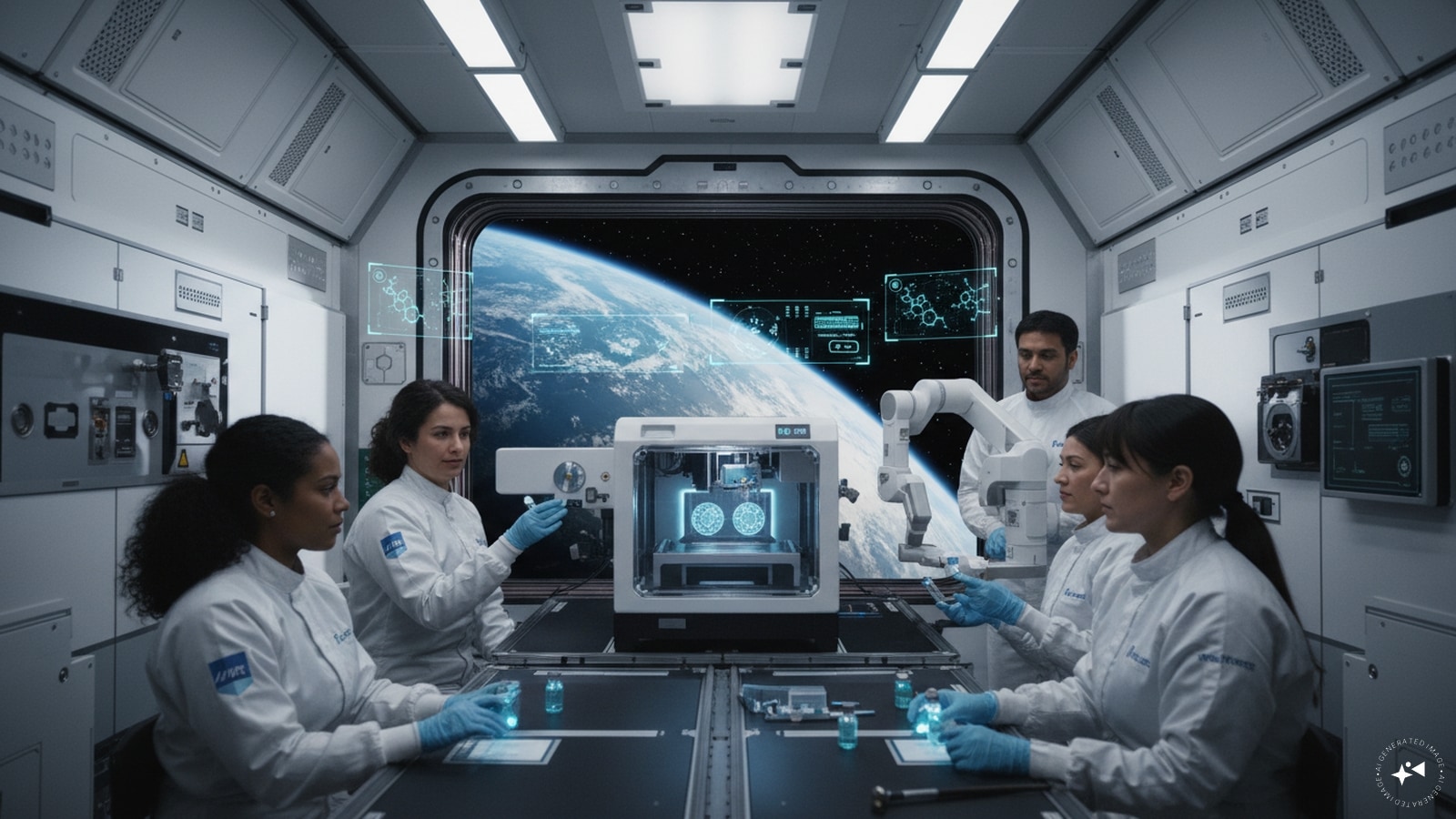
Four hundred kilometers above our heads, hurtling through the vacuum at seventeen thousand miles per hour, is a falling laboratory. On the International Space Station, gravity is effectively cancelled out. In that perpetual state of freefall, liquids behave with mesmerizing grace. Without gravity pulling downward, convection ceases entirely. Molecules no longer crash into each other due to thermal buoyancy; instead, they drift together in absolute peace, self-assembling into pristine, flawless geometric lattices that defy terrestrial limitations.
When scientists bring those space-grown crystals back to Earth, the difference is staggering. Proteins fold with absolute, mathematically pristine perfection. Solubility increases dramatically. A drug that once required a four-hour intravenous infusion at an urban oncology clinic can suddenly be delivered as a simple five-second subcutaneous injection via a tiny pre-filled syringe administered at a kitchen table.
This is not science fiction. This is the quiet, high-stakes frontier of space-based drug manufacturing.
Yet, a ticking clock hangs over this entire enterprise.
The International Space Station is old. Its metal bones are fatigued. Its joints groan under decades of thermal cycling and orbital debris impacts. International agreements point toward its retirement and controlled de-orbiting before the end of this decade. Humanity’s primary orbital cleanroom is scheduled to burn up in the upper atmosphere, plunging into the South Pacific Ocean.
Panic is too loud a word for what is happening in corporate boardrooms across Basel, Boston, and Cambridge. A quiet urgency is far more accurate. Major pharmaceutical executives are waking up to a sobering reality. The orbital laboratory that proved the viability of space-based biologics is vanishing, and the commercial infrastructure to replace it is still being bolted together in desert hangers and cleanroom tents.
Consider what happens next.
When the station drops out of the sky, where do we grow our medicine?
For decades, space was viewed by major drug companies as a playground for academic curiosity. Government-funded astronauts dropped pills into centrifuge tubes between maintenance shifts on toilets and solar arrays. It was charming. It was novel. It was also wildly insufficient for modern industrial pharmacology. Pharma companies do not invest billions of dollars on romantic views of Earth from the cupola. They care about yields, purity, regulatory compliance, and consistent supply chains.
Then came the data.
In recent years, commercial missions demonstrated that microgravity protein crystallization could dramatically improve the efficacy and stability of blockbuster drugs like pembrolizumab, the cancer immunotherapy. Researchers discovered that space-manufactured formulations could remain stable at room temperature for months, bypassing the brutal cold-chain distribution networks that leave rural clinics and developing nations without access. Suddenly, space-based drug manufacturing stopped being an expensive science fair project. It became a multi-billion-dollar commercial necessity.
Enter the orbital entrepreneurs.
While traditional pharmaceutical giants hesitated, nimble aerospace startups began building the next generation of space platforms. Companies like Varda Space Industries engineered autonomous, heat-shielded capsules designed to hitch a ride on commercial rockets, spend weeks in orbit manufacturing pharmaceuticals in automated microgravity factories, and then plunge back through the atmosphere to land softly in the Utah desert with vials of high-value crystals intact. Other commercial ventures are designing free-flying modular space stations meant to succeed the ISS as permanent orbital laboratories.
The transition is fraught with anxiety.
Space is unforgiving. A single software glitch during atmospheric re-entry can destroy millions of dollars of pharmaceutical precursors. Regulatory bodies like the Food and Drug Administration have no established rulebook for inspecting a factory orbiting at seventeen thousand miles per hour. Who audits the cleanroom when the cleanroom is weightless and ninety minutes away from a sunrise? How do you maintain sterile compliance when your technicians are sitting in Houston watching telemetry on a glowing screen?
These questions keep chief scientific officers awake at night. Yet, the cost of inaction is higher.
Imagine a patient diagnosed with rheumatoid arthritis or advanced oncology. Instead of traveling to an infusion center, enduring the prick of a butterfly needle, and waiting half a day for a chemical cocktail to enter their bloodstream, they receive a single subcutaneous injection derived from molecules synthesized in zero gravity. The drug is pure. It is stable. It requires no refrigeration truck traversing broken highways. It arrives intact.
That future is technically within our grasp. But it requires an unprecedented marriage between two industries that have historically spoken entirely different languages. Aerospace engineers measure success in orbital mechanics, thermal dissipation, and structural loads. Pharmacologists measure success in pharmacokinetic profiles, shelf-life stability, and molecular purity. Bringing them together requires translating equations of thrust into metrics of human healing.
The retirement of the orbital station is not an ending. It is a violent, necessary eviction.
For too long, space research has depended on a single, aging government-funded lifeboat. Its retirement forces the pharmaceutical industry to stand on its own two feet—or rather, its own independent rockets. Private capital is rushing into low Earth orbit not because billionaires want a view, but because the economics of molecular engineering demand it.
When we look back at this decade from the perspective of twenty or thirty years hence, we will realize something profound. We did not leave Earth merely to look at the stars. We left Earth because some problems are so stubborn, so heavy, and so deeply embedded in the physics of our planet that the only way to solve them was to let go of the floor.
The heavy machinery of human health is moving upward.
In cleanrooms that float in the silent vacuum of space, microscopic crystals are aligning with a perfection that terrestrial physics denies us. They are forming quiet promises in zero gravity. Promises that disease can be targeted with surgical precision. Promises that treatments can become simpler, faster, and universally accessible.
The old station will soon fall.
Before it does, it will have taught us a lesson we should have suspected all along. Sometimes, to heal the people standing firmly on the ground, we have to build our cures in the sky.