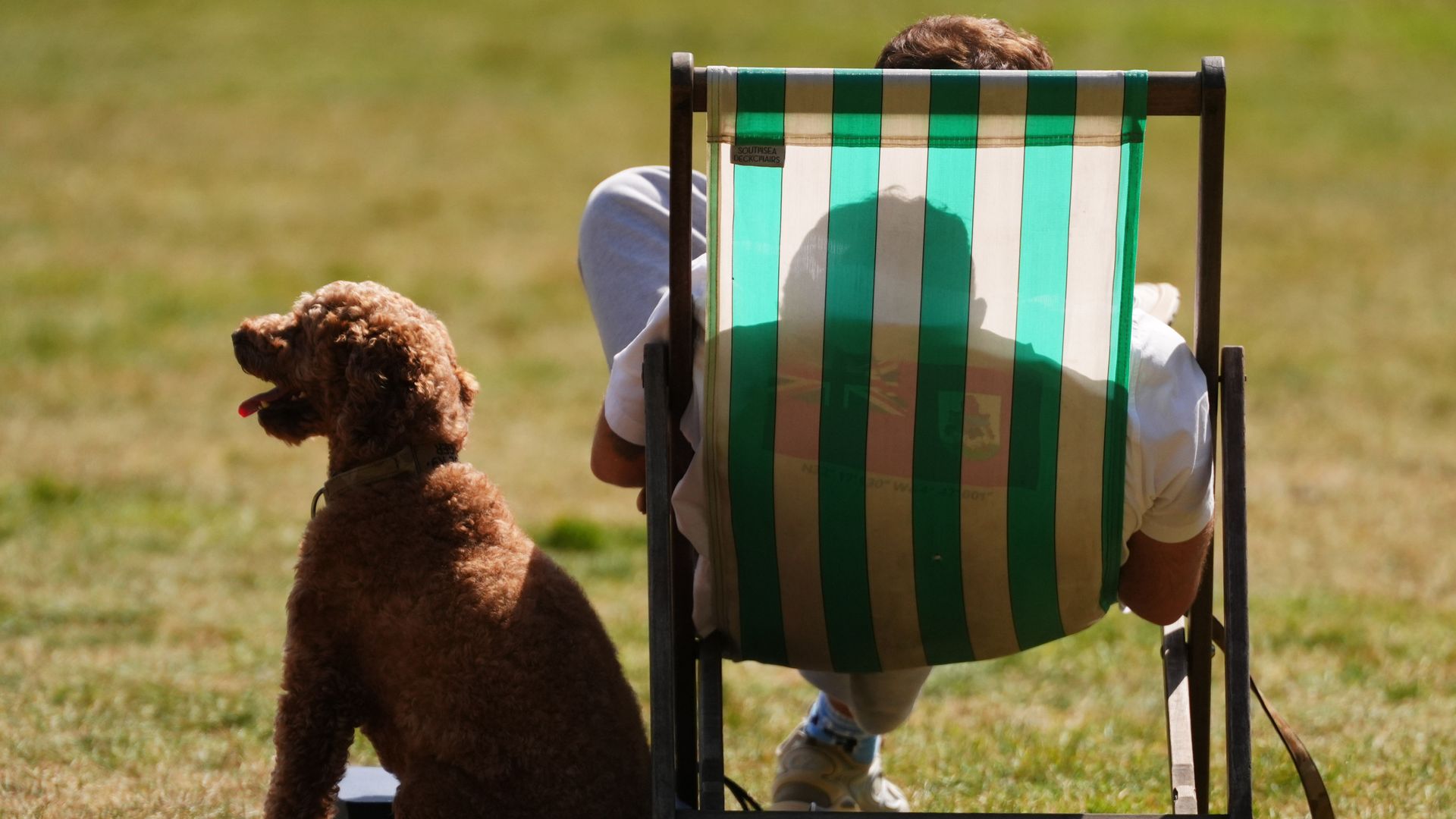
The tarmac on the local bus lane has a specific, chemical smell right before it softens. It is the scent of a city stretching past its structural limits. On a normal Tuesday in June, you barely notice the streets beneath you. But when the heat arrives in waves, staying long after the sun dips below the horizon, the bricks and mortar of the British built environment begin to hold a grudge.
We are not built for a double hit.
A few weeks ago, the first major heatwave of the season broke records, buckled a handful of rail lines, and sent millions of people scrambling for the last functioning electric fan at the local hardware store. Then, the mercury dropped. The country took a collective, cool breath. We went back to complaining about the drizzle, which is our comfort zone. But the atmosphere is currently resetting its trap.
Meteorological data indicates that a massive high-pressure system is stalling over the continent, drawing up another plume of thick, Saharan air directly toward the British Isles. Temperatures are projected to climb back into the mid-thirties within days. It is a second spike in a matter of weeks. The first time is a novelty, an excuse to buy ice cream and sit in a park. The second time is an endurance test.
To understand what this actually means, look past the satellite maps and the bright red weather warnings. Consider a hypothetical resident named Arthur. He is seventy-two, lives in a brick terrace house in Nottingham, and relies on a heavy wool-blend armchair that has been in his living room since 1994. His house was built in the Edwardian era. It was designed with thick walls to trap heat during bleak midlands winters. There is no air conditioning. There is no cross-breeze because the back window has been painted shut since the late nineties.
During the first heatwave, Arthur’s house absorbed the thermal energy like a giant storage heater. It took four days of cool rain for the internal temperature of his plaster walls to finally drop back to normal. He survived on cold tea and damp flannels. Now, before his home has even fully shed the residual warmth of the last event, the next wave is hitting the glass.
This is the hidden mechanics of a back-to-back heat event. The human body, much like Arthur’s brick terrace, requires recovery time.
http://googleusercontent.com/image_content/259
Medical professionals refer to this as cumulative thermal stress. When an ecosystem or a population is subjected to a spike in temperature, the initial days trigger a surge in adrenaline and behavioral adaptations. People drink more water; they close the blinds. But by week three, if a second wave hits, fatigue sets in. The cardiovascular system, which has been working overtime to pump blood closer to the skin to dissipate heat, grows exhausted.
The statistics from previous dual-heatwave summers paint a sober picture. Hospital admissions do not spike dramatically during the first forty-eight hours of a hot spell. The real pressure on the National Health Service builds during the second wave, when the vulnerable have spent consecutive weeks sleeping poorly, experiencing mild dehydration, and breathing trapped, stagnant air. It is a slow-motion crisis that happens behind closed curtains, away from the crowded beaches of Brighton or Bournemouth.
We treat British heatwaves as temporary disruptions, like a parade or a heavy snowfall. We assume the system will reset. Yet the data from the Met Office suggests that these compressed cycles—where one extreme event treads on the heels of another—are transitioning from anomalies into the baseline template of our summers.
The infrastructure we touch every day tells the same story. The rail network operates on steel tracks that are pre-stressed to withstand a specific median temperature. When the ambient air crosses thirty degrees Celsius, the metal expands beyond its design tolerances. Network Rail engineers are forced to paint the tracks white to reflect the sun, or implement blanket speed restrictions that turn a forty-minute commute into a three-hour ordeal.
It is easy to find the situation confusing or frustrating. We live in a nation famous for its damp, green landscapes. The idea that water scarcity and heat exhaustion could become defining civic challenges feels alien, almost absurd. You look at the garden, still lush from the spring rains, and find it difficult to reconcile the vibrant green with the warning sirens on the news.
But the reality of a changing climate is not a linear slide into a desert. It is a shattering of predictability. It is the logistical nightmare of trying to run a transport system, a healthcare network, and a workforce on a fluctuating thermometer that refuses to settle.
On Friday, the thermometer will tick upward again. The sun will feel heavy on the back of your neck. In the supermarket aisles, the ice cream tubs will vanish, and the small talk at the tills will turn back to the unbearable stickiness of the night before.
Arthur will sit in his kitchen, the coolest room in his house, watching the digital clock on his microwave blink. He will wonder if he should open the front door to catch a stray draft from the street, balancing the need for a breeze against the dust and noise of the idling traffic outside.
The UK is entering an era where the weather is no longer just a backdrop for conversation. It is an active participant in our daily survival, testing the limits of our homes, our patience, and our hearts, one hot afternoon after another.



:max_bytes(150000):strip_icc():focal(665x0:667x2)/gettyimages-50733149-2000-8b129a2475974982a915418ce92a73d8.jpg)