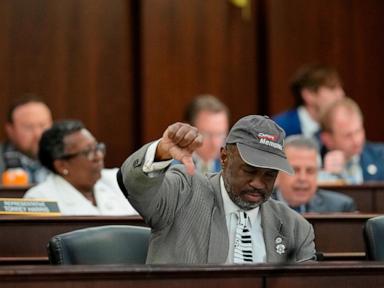
The map of Tennessee is being redrawn with a surgical precision that leaves no room for political dissent. On Wednesday morning, Republican leadership in the General Assembly unveiled a congressional redistricting plan that effectively dismantles the 9th District, the state’s only majority-Black district and its last remaining Democratic bastion. This move, fast-tracked during a special session called by Governor Bill Lee, represents more than just a shift in local boundaries. It is the final act in a multi-year campaign to secure a 9-0 Republican sweep of the state's congressional delegation, a goal now within reach thanks to a shifting legal landscape and direct pressure from the Trump administration.
By carving Memphis into three separate pieces, the proposed map forces the city's concentrated urban vote to compete with deep-red rural interests. The 9th District, which has been synonymous with Memphis for decades, would be transformed into a 300-mile-long jagged corridor stretching from the Mississippi River to the outskirts of Nashville. The intent is clear. When you dilute a voting bloc by spreading it across hundreds of miles of Appalachian foothills and agricultural heartlands, you don’t just change the district’s shape; you erase its voice. You might also find this connected coverage insightful: Geneva is Not Dying It is Finally Getting Rid of the Bloat.
The Louisiana Precedent
The timing of this legislative blitz is not accidental. It follows a landmark April 29, 2026, ruling by the U.S. Supreme Court in Louisiana v. Callais. In that case, the Court found that Louisiana’s congressional map was an unconstitutional racial gerrymander, a decision that effectively signaled a retreat from the protections long afforded by Section 2 of the Voting Rights Act.
Republicans in Nashville saw their opening immediately. Within 48 hours of the ruling, Governor Lee issued the proclamation for a special session, citing the need to "modernize" the maps to reflect the will of Tennessee voters. But "modernize" is a polite term for a process that removes racial data from the equation entirely, a strategy that Republican sponsors like State Senator John Stevens argue is necessary to ensure the delegation reflects the state's conservative leanings. As reported in latest articles by Al Jazeera, the results are significant.
The strategy hinges on a deliberate paradox. By claiming to be "colorblind" in the drawing of these lines, the GOP supermajority is using a recent judicial skepticism toward race-conscious districting to eliminate the very districts designed to ensure minority representation. They are using the Constitution to dismantle the results of the civil rights movement.
Fragmentation as a Political Weapon
The mechanics of the new map are brutal. Under the current proposal, Memphis is split between the 5th, 8th, and 9th districts.
- The 5th District: Once a Nashville-centric seat, it was fractured in 2022. Now, it will reach down to grab a slice of Memphis, ensuring that urban voters in both cities are submerged in a sea of rural Republican ballots.
- The 8th District: This district will absorb another portion of the city, tethering urban neighborhoods to the reliably conservative northwestern corner of the state.
- The 9th District: The remnant of the old district becomes a geographic absurdity, a narrow strip of land that makes traditional campaigning nearly impossible.
State Senator Raumesh Akbari of Memphis didn't mince words when the lines were revealed. She pointed out that there is no way to "sugarcoat" the elimination of a district that is 61% Black. The math simply does not favor the city’s residents. When a community’s concerns—ranging from urban infrastructure to specific social programs—are divided among three representatives who primarily answer to rural constituents, those concerns inevitably fall to the bottom of the priority list.
The Trump Factor
This isn't just a local power grab. It is part of a national directive. Since mid-2025, Donald Trump has been vocal about his desire to see Republican legislatures "correct" maps that were previously protected by the Voting Rights Act. He has used his influence to primary Republicans who showed hesitation, most recently in Indiana, where incumbents who resisted aggressive redistricting were ousted by Trump-backed challengers.
In Tennessee, that pressure is palpable. House Speaker Cameron Sexton and other leaders are operating under the reality that a 9-0 Republican map is the "benchmark" in the current political climate. To provide anything less is to risk a challenge from the right. The $3.15 million set aside in the legislation to "inform" voters of these changes is a drop in the bucket compared to the long-term political capital gained by securing every single seat in the state for the GOP.
A Legal Hail Mary
Democrats and civil rights groups are left with few options. Congressman Steve Cohen, who has represented the 9th District since 2007, has spent the week in Nashville lobbying against the plan. His argument is rooted in the idea of "compactness" and "community of interest," traditional redistricting principles that the new map ignores in favor of partisan gain.
Protests have filled the halls of the Cordell Hull State Office Building, but the Republican supermajority is insulated from public outcry. They have the votes. They have the Governor’s support. And, most importantly, they believe they have the Supreme Court’s blessing.
The legal challenges will come, but they face an uphill battle. If the courts continue to move toward a standard where "partisan gerrymandering" is non-justiciable and "racial gerrymandering" is only found when race is the explicit factor, Tennessee’s new map will likely stand. By arguing that the map is drawn for "partisan" reasons—simply to elect more Republicans—the GOP can bypass the stricter scrutiny applied to racial cases.
The End of Local Representation
What happens to a city when it no longer has a representative who truly belongs to it? Memphis is a city with a unique history and a specific set of challenges. It is a city that, for better or worse, has always felt distinct from the rest of Tennessee. By slicing it up, the General Assembly isn't just winning a few more seats in Washington. They are fundamentally changing the relationship between the city and the state.
The special session is moving with a speed that suggests the outcome is already decided. The final vote is expected within days. When the dust settles, the 9th District as it was known for half a century will be gone, replaced by a geographic ghost designed to ensure that no matter how many people in Memphis vote, the result will always be the same.
The era of the "safe" Democratic seat in the South is over. In its place is a new reality where boundaries are fluid, and the only constant is the pursuit of total control.
Redrawing the South
This video provides on-the-ground coverage of the special session and the impasse among lawmakers as they attempt to finalize the map that would give Republicans control of all nine seats.