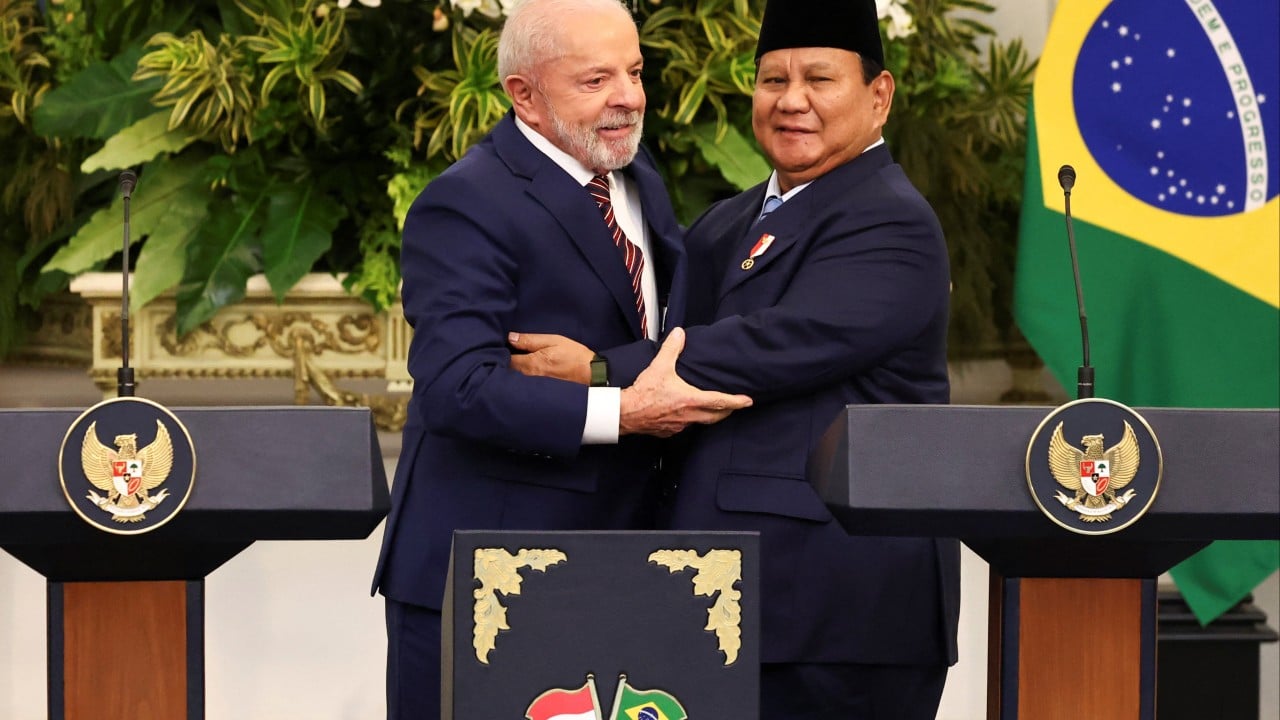
The global trade commentary machine has defaulted to its favorite lazy narrative again: Luiz Inácio Lula da Silva’s return to the Brazilian presidency is supposed to automatically herald a golden era of intercontinental trade with Southeast Asia.
It is a comfortable, desk-bound fantasy.
Analysts look at diplomatic handshakes, standard press releases from Brasilia, and rhetorical commitments to "South-South cooperation," then jump straight to the delusion that Mercosur is on the verge of opening up a high-speed trade corridor to ASEAN. They claim that political alignment alone will dismantle decades of structural protectionism, resolve crippling logistics bottlenecks, and turn a notoriously fractured trade bloc into an agile partner for Singapore, Vietnam, or Indonesia.
They are completely wrong.
Political goodwill does not rewrite tariffs. It does not fix deep-seated protectionist lobbies in Buenos Aires, nor does it magically build deep-water ports across South America's Atlantic coast. If you are making strategic capital decisions or supply chain bets based on the assumption that Lula’s Mercosur is about to hand Southeast Asia open access to Latin American markets, you are setting money on fire.
Here is the unvarnished reality of why this trade fantasy is dead on arrival—and where the actual, hard-nosed economic opportunities actually hide.
Mercosur Was Never Built for Open Trade
To understand why a Mercosur-ASEAN breakthrough is pure theater, you have to look at what Mercosur actually is, rather than what trade diplomats pretend it is.
Mercosur is not the European Union. It is not even ASEAN. It is an inward-looking, protectionist customs union designed primarily around the industrial interests of São Paulo and the agricultural machinery of Argentina.
For thirty years, Mercosur’s internal mechanisms have functioned less as a launching pad for global trade and more as a defensive fortress. The Common External Tariff (CET) isn't just a technical mechanism; it is a political shield used by domestic manufacturing cartels to keep lower-cost foreign competition out.
I have spent years evaluating Latin American supply chains and trade mechanics. When you talk to importers on the ground in Santos or Buenos Aires, nobody asks when the next bilateral deal with ASEAN is landing. They are trying to figure out how to navigate the bureaucratic nightmare of importing basic components without getting hit by 20% to 35% import taxes, absurd port fees, and unpredictable currency controls.
The Consensus Delusion vs. The Hard Mechanics
- The Lazy Consensus: Lula’s diplomatic charm offensive and commitment to multilateralism will clear the path for rapid Mercosur-ASEAN trade agreements.
- The Structural Reality: Mercosur requires strict consensus among its full members. Lula does not run Mercosur alone. Any meaningful trade concession to Southeast Asian exporters triggers immediate resistance from domestic industrial lobbies in Argentina and Brazil.
Take the automotive and manufactured goods sectors. Brazil and Argentina have spent decades maintaining a delicate, heavily protected bilateral automobile framework. The moment an ASEAN country like Vietnam or Thailand—offering significantly lower manufacturing costs—proposes lowering tariffs on industrial inputs or finished goods, domestic trade associations in South America lobby hard to kill the negotiations.
Lula can smile for photo opportunities in Jakarta or Hanoi, but back home, his political coalition relies on the very labor unions and industrial federations that dread Southeast Asian competition.
The Argentina Trap and the Consensus Problem
Mercosur operates on unanimity. That single rule is a perpetual handbrake on meaningful international trade deals.
Even if Brazil under Lula pushed hard for an aggressive opening toward Southeast Asia, it cannot move forward without Argentina, Uruguay, and Paraguay signing off on every line of the tariff schedule.
Argentina’s economic policy has spent the last decade swinging wildly between hyper-protectionism and drastic fiscal shock therapy. When an economy is constantly battling triple-digit inflation, severe foreign exchange shortages, and central bank reserve depletion, its government cannot afford a sudden influx of cheap manufactured imports from Southeast Asia. Argentine policy routinely defaults to import restrictions, delay tactics on foreign exchange approvals, and non-tariff barriers to preserve dollars.
Uruguay recognized this structural paralysis years ago. Frustrated by Mercosur’s inability to negotiate agile deals, Montevideo tried to break ranks and negotiate a direct bilateral agreement with China. What happened? Brazil and Argentina immediately stepped in, threatening to paralyze the bloc or downgrade Uruguay’s trading status.
If Mercosur won't let its own members negotiate freely to secure their own economic interests, why would anyone believe the bloc will seamlessly unite to grant preferential market access to ASEAN?
Imagine a scenario where a high-tech manufacturer in Malaysia wants to export specialized electronic components directly to Southern Cone markets under a preferential tariff framework. Under current rules, that deal has to survive the scrutiny of every single ministry of industry in the bloc, overcome regional content requirement rules, and endure years of diplomatic squabbling over rule-of-origin definitions. By the time the paper is signed, the technology is obsolete.
Logistics: The Elephant in the Bilateral Room
Let’s suspend disbelief for a moment. Suppose Mercosur miraculously manages to sign a comprehensive trade agreement with a major ASEAN nation. The legal tariffs drop. The paperwork clears.
How do you actually move the cargo?
This is where academic trade theories collapse against physical reality. Direct, efficient freight infrastructure between the Atlantic coast of South America and Southeast Asia simply does not exist at scale.
Shipping goods from Santos or Paranaguá to Singapore or Ho Chi Minh City involves some of the longest, most expensive maritime routes in global trade. Ships must navigate around the southern tip of Africa or route through crowded transshipment hubs, adding weeks to transit times and exposing cargo to massive freight rate volatility.
The Pacific Coast Advantage
While Mercosur struggles with its own Atlantic isolation, the Pacific side of South America operates under an entirely different trade reality.
The Pacific Alliance—comprising Chile, Colombia, Mexico, and Peru—was built for export-driven, outward-looking trade. These nations long ago discarded the defensive tariff mindset. They sit directly on the Pacific rim, possess modern deep-water ports optimized for trans-Pacific routes, and already hold active free trade agreements with key Asian economies through frameworks like the CPTPP (Comprehensive and Progressive Agreement for Trans-Pacific Partnership).
| Trade Metric / Feature | Mercosur (Atlantic Focus) | Pacific Alliance (Pacific Focus) |
|---|---|---|
| Primary Trade Orientation | Inward-looking, defensive | Outward-looking, export-driven |
| Decision-Making Structure | Strict unanimity required | Flexible, market-driven integration |
| Average Tariff Barriers | High (Common External Tariff) | Low to zero on key industrial lines |
| Trans-Pacific Port Access | Indirect, long transit times | Direct access to Pacific sea lanes |
| CPTPP Alignment | Non-existent | High (Multiple active members) |
If you are an ASEAN exporter or an investor looking for a entry point into Latin American consumer markets, focusing on Mercosur because of Lula's public statements is a tactical error. The Pacific Alliance already offers the infrastructure, lower tariff barriers, and institutional stability that Mercosur will still be debating a decade from now.
What People Get Wrong About Raw Commodities
A common pushback to this argument goes like this: "What about agricultural commodities? ASEAN needs Brazilian soy, beef, and corn, and Brazil needs Asian fertilizer and industrial products. The trade volume is growing regardless of formal agreements."
This question completely misses how global commodity markets operate.
Unprocessed raw materials do not need complex, multi-year bilateral trade agreements to move. Global commodity markets operate on supply, demand, and spot pricing. China, Vietnam, and Indonesia already purchase massive volumes of Brazilian soybeans and iron ore under standard international commercial contracts.
A formal Mercosur-ASEAN trade deal is not required to sell a bulk carrier of soy to an Asian crushing mill. Those markets are already open because raw agricultural commodities rarely face high import tariffs in nations that lack domestic supply.
The entire premise of using Lula's presidency as a catalyst for a transformative trade deal isn't about raw commodities; it's about value-added manufactured goods, services, and industrial integration. That is precisely where Mercosur’s protectionist walls are thickest.
Selling raw commodities to Southeast Asia while importing cheap manufactured goods from ASEAN does not fulfill Lula’s promised economic strategy. His administration’s explicitly stated goal is "re-industrialization"—protecting domestic Brazilian manufacturing jobs, building local value chains, and moving away from being merely a raw material exporter.
Opening the floodgates to manufactured imports from Southeast Asian nations with lower labor costs directly undermines Lula’s own domestic policy agenda. The political incentives inside Brazil run completely counter to the rhetoric being sold to international observers.
The Pragmatic Blueprint for ASEAN Businesses
If you are an ASEAN business leader or supply chain executive, stop waiting for sweeping inter-regional trade agreements between bloc headquarters. It is a slow, bureaucratic illusion.
To capture real commercial value across South America right now, execute these three strategic moves:
- Bypass Mercosur’s Front Door: Establish your regional distribution, assembly, or logistics hubs in Pacific Alliance countries like Chile or Peru. Utilize their established, low-tariff Pacific infrastructure to serve regional markets rather than trying to clear customs directly in Brazil or Argentina.
- Focus on Bilateral Niche Deals, Not Bloc-to-Bloc Mega-Deals: Individual ASEAN nations should stop wasting political capital trying to negotiate with Mercosur as a full entity. Singapore proved this by pursuing its own specific, highly tailored agreement (the Mercosur-Singapore Free Trade Agreement). It took years of intense, isolated negotiation to finalize, focusing heavily on specific services and investment protections rather than sweeping industrial tariff drops.
- Structure Investments Around Local Content Exemptions: If you must enter the Brazilian market directly, assume high protectionist barriers will remain. Build localized partnerships that meet domestic content rules rather than relying on pure export models from Southeast Asian manufacturing plants.
Mercosur is a political organism designed to protect domestic interests, manage internal regional rivalries, and preserve industrial employment in South America's Atlantic cone. Lula’s return brings diplomatic polish, articulate speeches, and high-profile summit photos. It does not alter the underlying economic math.
Stop mistaking diplomatic charm for economic integration. The structural walls around Mercosur are not coming down, and those who plan their global supply chains around reality rather than press releases will be the only ones standing when the dust settles.