The sound of a modern car door closing is supposed to be a low, heavy thud. It is a sensory promise of security. It tells you that the outside world, with all its chaotic noise and unpredictable weather, has been sealed away.
For nearly three million drivers across China, that sound recently lost its simple reassurance.
Imagine parking your car on a crowded Beijing street, stepping out into the rush of evening commuters, and pulling the flush-mounted handle of your sleek electric vehicle. Usually, the metal blade slides smoothly outward like a drawer opening on oiled tracks. But what if it doesn't? What if the metal stays flush, locked against the door panel, leaving you outside while your keys, your phone, and your warm cabin sit helplessly behind glass?
That single mechanical hesitation is why an astonishing recall of nearly three million vehicles materialized. It is a story about the strange friction between hyper-advanced software and the stubborn, physical reality of metal, springs, and human fingers.
The Weight of Three Million
Numbers lose their shape when they grow too large. We read about millions of units affected by a manufacturing glitch, and our brains treat the statistic like weather reports from a distant state. We hear "three million cars" and picture an abstract sea of white and silver parked neatly in a lot that stretches past the horizon.
Let us shrink the scale.
Picture Li Wei. He is a software engineer living in Chengdu who bought his electric sedan because he loved the clean lines of the exterior. The doors had no traditional protruding levers to catch the wind or disrupt the aerodynamics. To open them, you pressed a paddle, and electric actuators whispered the mechanism open. It felt like stepping into the next century.
Until a rainy Tuesday morning last winter.
Li stood in the freezing drizzle, pressing his thumb against the driver-side door. Nothing happened. The car remained dead to his touch. The software inside knew he was standing there—his phone key was pinging the Bluetooth sensors happily from his pocket. But the physical latch refused to disengage. The tiny electronic signal sent from the interior control unit failed to translate into mechanical motion at the handle.
He was locked out of his own sanctuary.
(Note: While Li Wei is a hypothetical composite character, his frustrating morning mirrors the exact physical reality reported by thousands of owners during this massive service action.)
When Silicon Meets Steel
To understand why three million vehicles had to answer a recall notice, we have to look beneath the smooth paint of modern engineering.
We live in an era that worships the screen. We want our cars to behave like smartphones on wheels, capable of receiving over-the-air updates while parked in the driveway overnight. When something goes wrong with a modern vehicle, our first instinct is to look at the code. Surely a patch will fix it. Surely a line of rewritten script can cure a stuttering engine or a confused autopilot.
But cars remain heavy, violent objects hurtling down asphalt at high speeds. They are subject to sub-zero winters in Harbin and sweltering summer humidity in Guangzhou. They endure millions of microscopic vibrations every time they roll over a pothole.
The issue behind the massive Chinese recall was not a failure of artificial intelligence or a corrupt neural network. It came down to a flaw in how software communicated with the physical door-locking architecture. Under specific operational conditions, the electronic control units could misinterpret signals, causing the exterior door latches to malfunction.
Software tried to command physics. Physics pushed back.
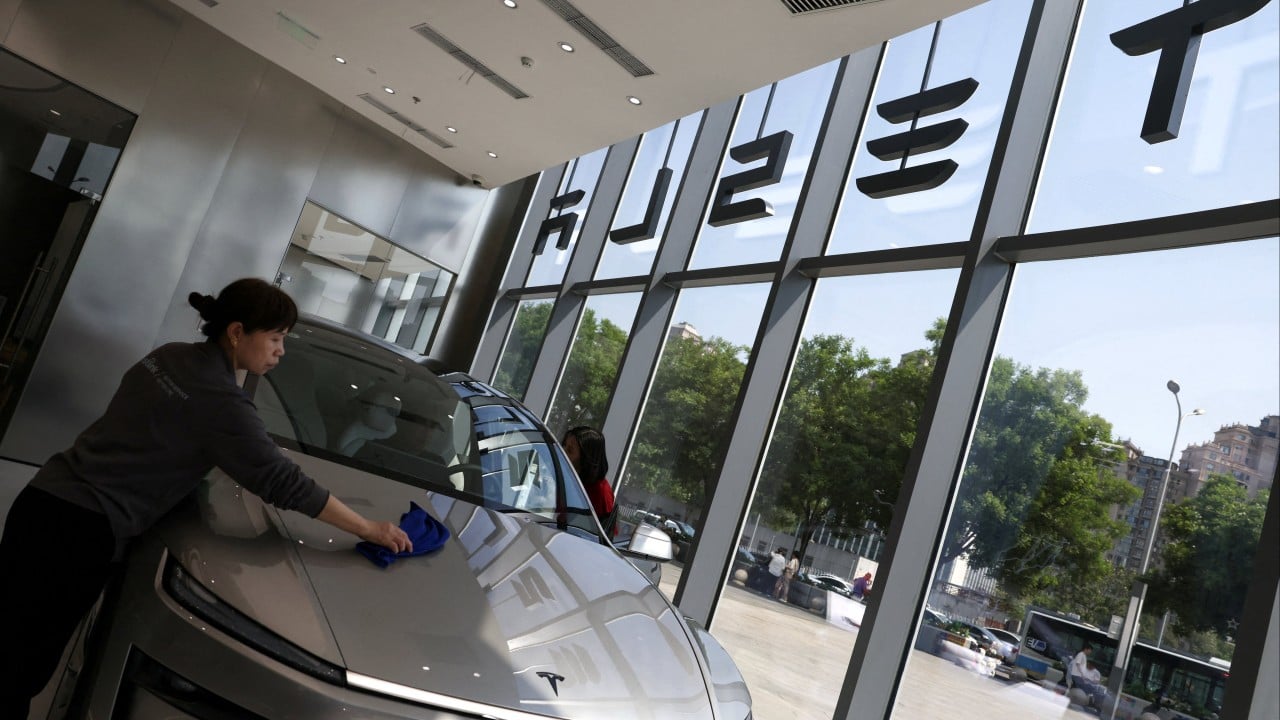
When the regulatory authorities stepped in, the scale of the problem became undeniable. Over-the-air updates are marvelous inventions, but they cannot fix a mechanical tolerance issue or reset a physical circuit board that requires hands-on attention. Tesla had to deploy a massive remedy, touching millions of vehicles to ensure that a simple handle could never again trap a driver outside, or worse, trap them inside during an emergency.
The Invisible Stakes
We rarely think about our door handles until they break. They are the most mundane interface between human and machine. We pull them thousands of times a year without a flicker of conscious thought. They are the invisible scaffolding of daily mobility.
When that scaffolding cracks, our trust fractures with it.
Electric vehicles demand a massive leap of faith from the public. We are asked to trade the familiar, century-old comfort of combustion engines for silent batteries and touchscreens. We are told that the future is safer, cleaner, and smarter. And for the most part, it is.
Yet every recall of this magnitude serves as a humbling reminder of our limitations. It tells us that no matter how futuristic our garage looks, we are still bound by the laws of mechanical reliability. A car can drive itself down a highway using complex arrays of cameras and radar, but if the latch on the door refuses to turn, the multi-thousand-dollar marvel becomes an expensive metal box.
The three million cars involved in the recall are now moving through service centers, receiving patches, hardware checks, and quiet adjustments. The headlines will fade. The stock tickers will fluctuate and recover. The internet will move on to the next shiny technological debate.
The street in Chengdu will dry after the rain. Li Wei will walk up to his sedan, press his thumb against the handle, and listen for that familiar, reassuring thud as the door swings open. But for a brief second, just before he pulls, he will remember the morning the machine locked him out. He will remember that the future is still being built, one stubborn bolt and line of code at a time.