The fluorescent lights in a union hall outside Detroit have a specific, unforgiving hum. If you have ever spent a damp Tuesday evening sitting on a folding metal chair in Oakland County, waiting for a candidate to take the podium while cold rain taps against the aluminum siding, you know the smell of burnt coffee and wet wool. You know the quiet, anxious math running behind the eyes of the autoworkers and teachers in the room. They are not thinking about cable news chyrons or national party platforms. They are thinking about whether the plant stays open through the winter, whether the lake stays clean, and whether anyone in Washington actually remembers where Michigan sits on a map.
That room—and thousands of kitchens, diners, and shop floors just like it—is the only place where Haley Stevens makes total sense. Recently making news in this space: Anatomy of an Urban Business Jet Crash and the Mechanics of Low-Altitude Risk.
To the political class in Washington, D.C., the headline looked like a typographical error. A sitting Democratic member of Congress from Michigan, a woman who built her career inside the Obama administration’s auto task force and flipped a historically Republican suburban seat in 2018, had just thrown her public support behind a Republican running for the United States Senate. Betrayal. Heresy. A glitch in the partisan matrix.
Wait. Additional details on this are detailed by The Guardian.
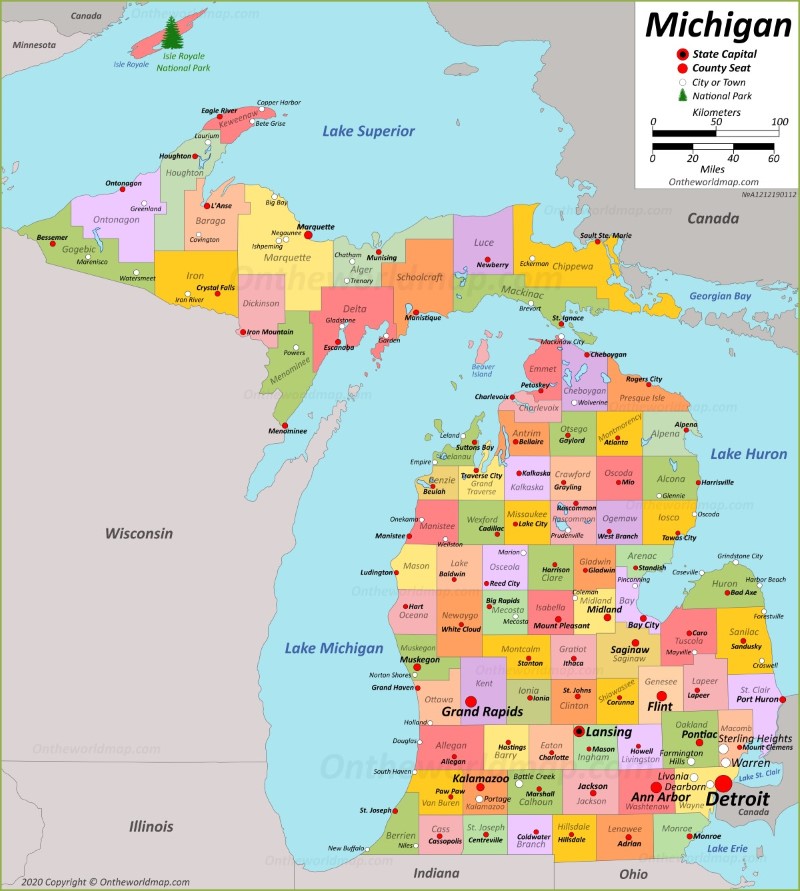
Stop and look at the map of Michigan before you reach for a pitchfork. Look at the way the wind blows off Lake Huron, sweeping across manufacturing towns that have watched two generations of promises evaporate into rust. In Washington, party loyalty is the currency of survival; you stay in your lane, you vote the party line, and you never, under any circumstances, hand a microphone to the opposition. In Michigan, where margins are measured in fractions of a percentage point and voters wear their independence like a badge of honor, rigid orthodoxy is a slow death sentence.
When Haley Stevens stepped forward to endorse a Republican Senate candidate, she was not suffering from sudden amnesia about her own values. She was executing a calculated, deeply human survival maneuver in an era when the old rules of American politics have stopped working.
The Architecture of an Unthinkable Choice
To understand why a Democrat would cross the most heavily fortified trench in modern politics, you have to strip away the jerseys and look at the mechanics of power. Think of an endorsement in a battleground state not as a marriage vow, but as a levee built during a rising flood. You do not care who poured the concrete if the water is already lapping at your porch steps.
Let us step into a hypothetical scenario to see how this pressure builds behind closed doors. Imagine a mid-level political strategist—we will call her Elena—sitting in a windowless office in downtown Detroit six months before a high-stakes election. On her desk sit two stacks of paper. The first stack contains internal polling from Macomb and Oakland counties, showing that independent voters are exhausted by partisan gridlock and deeply skeptical of both national parties. The second stack contains donor spreadsheets, revealing that national fundraising committees are pouring tens of millions of dollars into races that look clean on a spreadsheet, leaving nuanced, messy battlegrounds to fend for themselves.
Elena looks at the numbers and realizes a brutal truth: running a textbook partisan campaign in a purple district is like bringing a sailboat into a hurricane. If her candidate sounds like a national talking point, she loses the moderate union households that decide the election. If she breaks from the party to prove her independence, she risks alienating the activist base that knocks on doors in October.
This is the exact vise that has squeezed Michigan politicians for the better part of a decade. Haley Stevens represents Michigan’s 11th Congressional District, an area in Oakland County that encompasses affluent suburbs, working-class corridors, and the beating heart of the state's automotive engineering sector. It is a district that rewards pragmatism and punishes ideological rigidity. Voters there split their tickets with casual regularity, electing a Democratic governor while sending Republicans to local offices, or backing a Democratic representative while demanding fiscal restraint.
When the U.S. Senate race in Michigan began taking shape—a contest with massive implications for control of the upper chamber and the future of federal manufacturing policy—the field did not divide neatly into heroes and villains. Instead, it fractured along lines of temperament, local credibility, and legislative effectiveness.
Who Haley Stevens Actually Is
Before anyone can judge her endorsement, they need to understand the soil she grew up in. Stevens is not a product of ideological purity tests or campus activism. Born and raised in Rochester Hills, Michigan, she earned her degrees at American University before landing in the trenches of the 2008 financial crisis. While pundits debated economic theory on television, Stevens was working on the Presidential Task Force on the Auto Industry, helping oversee the federal restructuring of General Motors and Chrysler.
That experience leaves a permanent mark on a person. When you spend your twenties watching spreadsheets determine whether two hundred thousand families keep their health insurance and their mortgages, you stop caring about elegant political theories. You care about what works. You care about who shows up when the factory gates are about to be chained shut.
After the auto rescue, Stevens worked at a manufacturing innovation institute in Chicago before returning home to Michigan to run for Congress in 2018. She defeated Republican Lena Epstein in a race that drew national attention, flipping a seat that had been held by Republicans for decades. Since arriving on Capitol Hill, she has carved out a reputation as a relentless, almost caffeinated advocate for domestic manufacturing, supply chain security, and the CHIPS and Science Act.
She is, by every voting metric, a reliable Democrat. She supports reproductive rights, labor unions, environmental protections for the Great Lakes, and federal investment in clean energy. Which makes her decision to back a Republican for the U.S. Senate all the more jarring—unless you look at what happens when two seemingly incompatible political realities collide.
The Anatomy of the Endorsement
Why would she do it? The answer lies at the intersection of three forces: the specific dynamics of the Senate race, the personal relationships forged across committee tables, and the cold arithmetic of survival in a swing state.
First, consider the nature of the race itself. In high-stakes Senate contests, primary battles and general elections often produce candidates who either reflect the ideological extremes of their parties or arrive with deep ties to out-of-state financiers rather than local communities. When a Democratic primary becomes fractured, or when the emerging options on the Democratic side fail to inspire confidence among moderate suburban voters, a pragmatic lawmaker faces a dilemma. Do you stay silent and watch an unviable candidate lose the seat anyway, or do you intervene to shape the outcome toward the least destructive, most workable alternative?
In this case, Stevens looked at the Republican contender—a figure with a track record of working across the aisle on Michigan-specific priorities like Great Lakes restoration, defense appropriations, and automotive competitiveness—and saw a potential partner rather than an enemy. In the Senate, where a single senator can hold up nominations or steer billions of dollars in federal grants toward their home state, having a working relationship with the person holding that seat is not a luxury. It is an operational necessity for a House member trying to bring money back to her district.
Second, there is the human factor that political algorithms always miss: proximity. Capitol Hill is a small town disguised as an empire. Members of Congress sit next to each other on delayed flights out of Detroit Metro Airport. They share cramped elevator rides in the Rayburn House Office Building. They co-sponsor bills on mundane, unglamorous topics like semiconductor packaging and Great Lakes invasive species—legislation that never makes the evening news but keeps local economies breathing.
Over years of shared legislative trench warfare, tribal boundaries blur. You begin to distinguish between the colleagues who are there to perform for cable cameras and the colleagues who actually read the bill text at midnight. When a colleague from the other party proves they will stand beside you to protect Michigan’s manufacturing base against foreign subsidies or unfair trade practices, a bond forms that transcends party labels.
Third, and perhaps most decisively, there is the message it sends back home. Every time a voter in Royal Oak or Birmingham reads that Haley Stevens endorsed a Republican, a subtle psychological shift occurs. That voter stops viewing Stevens as a cog in the national Democratic machine and starts seeing her as an independent actor who puts Michigan ahead of party bosses. In an era when trust in political institutions has cratered to historic lows, demonstrating that you are willing to defy your own tribe is the single most valuable currency a politician can possess.
The Backlash and the Blind Spot
Predictably, the reaction from partisan loyalists was swift and ferocious. Progressive activists flooded social media with accusations of treason. Party strategists whispered that she had damaged her standing within the Democratic caucus, potentially jeopardizing future committee assignments or leadership ambitions. To them, politics is a zero-sum war for institutional control; every Senate seat won by a Republican is another conservative judge confirmed, another progressive bill blocked, another brick in a wall they are trying to tear down.
Their anger is understandable. It comes from a place of genuine fear about the direction of the country and the stakes of Senate control. When reproductive freedom, voting rights, and climate policy hang by a single vote in the upper chamber, watching a Democrat boost a Republican feels like watching a teammate pass the ball to the opposing striker with ten seconds left on the clock.
I will admit, looking at the sheer polarization of this moment, it is hard not to feel that tension. Part of me understands the cold terror of giving an inch to the other side when the stakes feel existential. We have been conditioned over the last twenty years to view compromise as weakness and cross-party alliances as naive delusions from a bygone era.
Yet that anger exposes a massive blind spot in modern political thinking. It assumes that voters are captive audiences who can be scolded into compliance, rather than free agents who have grown deeply cynical about both parties. It ignores the reality that in states like Michigan, Pennsylvania, and Wisconsin, elections are not won by energizing the base alone. They are won in the messy, contradictory middle—among people who hate both national parties, who worry about grocery prices and healthcare costs in the same breath, and who are desperate for someone to act like an adult.
Consider what happens next when a politician refuses to acknowledge that middle ground. Look at the graveyard of promising congressional careers over the last decade—lawmakers who clung to national talking points while their districts drifted away from them, only to wake up the morning after Election Day wondering why their loyal base wasn't enough to carry them across the finish line.
History Does Not Repeat, But It Rhymes
Stevens is hardly the first politician to shock her party by crossing the aisle, nor will she be the last. American political history is littered with moments when local imperatives shattered national party discipline.
In 2004, Democratic Senator Zell Miller of Georgia famously delivered a blistering keynote address at the Republican National Convention, endorsing George W. Bush over his own party's nominee, John Kerry. Miller argued that the national Democratic Party had abandoned the values of working-class Southerners. Decades earlier, in 1972, Texas Democrat John Connally launched "Democrats for Nixon," rallying conservative Southern Democrats behind a Republican president because he believed the national party had lost touch with economic reality.
Even closer to home, Michigan itself has a rich tradition of ticket-splitting mavericks. For decades, the state was defined by figures like Republican Governor William Milliken, who governed from the center, championed environmental protection, and routinely drew endorsements from labor unions and Democratic leaders who trusted his temperament more than their own party's nominees. Voters in the Great Lakes region have always reserved the right to judge candidates by the calluses on their hands rather than the letter next to their name.
What makes Stevens's move distinct from historical defections like Zell Miller's is that she is not abandoning her party or shifting her ideology. She is not becoming a Republican. She is asserting that within a functioning democracy, a representative’s primary loyalty belongs to the specific geography and people who elected her, not to a national committee headquartered five hundred miles away.
The Invisible Stakes of the Senate Race
To grasp the full weight of this endorsement, you have to look beyond the horse-race coverage and examine what a U.S. Senator from Michigan actually does when the cameras turn off.
Michigan is standing at the edge of the largest industrial transformation since Henry Ford introduced the moving assembly line. The transition from internal combustion engines to electric vehicles, autonomous mobility, and advanced battery manufacturing is not an abstract policy debate in Oakland County. It is an existential reckoning. Thousands of small tool-and-die shops, tier-two suppliers, and engineering firms are trying to navigate a landscape shaped by federal tax credits, trade tariffs, and foreign competition.
If Washington gets the policy wrong—if federal regulations move faster than the supply chain can adapt, or if subsidies flow to foreign competitors instead of domestic plants—entire towns across Michigan will hollow out within a decade. Protecting those jobs requires senators who understand the intricate mechanics of industrial policy and who are willing to fight administration officials of either party when regulations threaten local livelihoods.
By endorsing a Republican candidate whom she believes can work constructively on those specific economic priorities, Stevens is placing a bet on institutional survival over partisan purity. She is wagering that having a pragmatic voice in the Senate—even one with an "R" next to their name—is better for Michigan’s industrial base than rolling the dice on an uncertain alternative.
It is a high-wire act with no safety net. If the Republican senator she endorsed turns around and votes in lockstep with hardline party leadership on issues that hurt Michigan workers or undermine Stevens's own legislative priorities, the political cost to her will be immense. Voters have long memories, and primary challengers will inevitably use her own words against her in future elections.
The Courage of Imperfection
There is a quiet, uncomfortable truth at the heart of democratic politics that we rarely admit out loud: purity is easy, and governance is dirty. Anyone can stand at a podium, read a script written by national consultants, and collect applause from people who already agree with them. It takes zero courage to tell your own side what it wants to hear.
Real risk begins the moment you step outside the fortress and say something that makes your allies uncomfortable.
When Haley Stevens endorsed a Republican for the U.S. Senate, she stripped away the protective armor of party loyalty and exposed herself to attack from every direction. The left calls her a sellout. The right views her with suspicion. Pundits scramble to fit her into a neat ideological box that simply does not exist.
Yet if you walk back into that damp union hall outside Detroit, past the humming fluorescent lights and the table of lukewarm coffee, the reaction looks very different. Nobody there cares about the cable news outrage cycle. They care about whether the person they sent to Washington has the nerve to think for herself, the grit to work with whoever holds the keys to the vault, and the honesty to admit that no single party holds a monopoly on good ideas.
Late at night, long after the press releases have been dissected and the fundraising emails have been deleted, politics comes down to a simple, brutal question of trust. You look at the person asking for your vote, and you ask yourself whether they belong to the machine or whether they belong to you. In crossing the aisle, Haley Stevens gave Michigan voters an answer written in permanent ink—leaving the rest of Washington to wonder who might dare to follow her across the line.