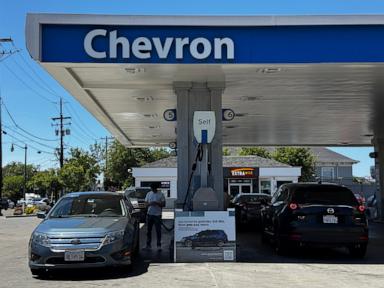
The utilization of executive communication platforms to influence consumer purchasing behavior during high-demand retail cycles reveals a deeper structural friction within regional energy markets. When an executive office issues an explicit directive advising consumers to avoid a specific retail brand due to pricing anomalies, it shifts the focus from structural supply-side constraints to downstream retail behavior. This intervention serves as an empirical case study in asymmetric price transmission, market segmentation, and the regulatory cost structures that differentiate regional fuel economies.
To evaluate why specific retail networks command a consistent pricing premium, analysts must move beyond political rhetoric and evaluate the underlying economic mechanisms. The retail gasoline marketplace is governed by highly rigid supply chains, specialized product formulations, and localized real estate values.
The Structural Drivers of the California Fuel Premium
The variance between regional and national retail fuel costs is not a single-variable phenomenon. Instead, it is the mathematical aggregation of regulatory compliance costs, structural logistics bottlenecks, and fiscal policy.
Total Retail Cost = Wholesale Spot Price + Environmental Premium + Carbon Taxes + Localized Real Estate Cost + Retail Margin
This pricing model relies on three structural pillars that isolate the regional market from the broader domestic supply network.
1. Isolated Refining Topology and Logistics Bottlenecks
The geographic distribution of refining capacity isolates the regional market from the primary domestic pipeline networks, such as the Colonial or Plantation pipelines. The market operates effectively as an "energy island." Supply disruptions cannot be mitigated via rapid interstate pipeline transfers; instead, shortfalls must be addressed through marine imports, which introduce a minimum logistical lead time of three to four weeks.
2. Specialized Product Formulations
Regulatory mandates require the utilization of a unique, clean-burning fuel formulation known as California Reformulated Gasoline (CaRFG). This specification limits the number of domestic manufacturing facilities capable of producing compliant supply. During high-demand holiday travel periods, refiners operate near maximum utilization. Any unscheduled maintenance or operational variance immediately reduces supply elasticity, triggering non-linear price spikes at the wholesale level.
3. Carbon Pricing and Fiscal Impositions
The cost function incorporates direct regulatory compliance inputs that do not exist in standard domestic markets:
- The Cap-and-Trade Program: Imposes a direct carbon liability on fuel distributors per metric ton of carbon dioxide equivalent.
- The Low Carbon Fuel Standard (LCFS): Requires carbon intensity reductions, adding variable credit compliance costs to every gallon of petroleum-based fuel sold.
- Direct Excise Taxes: The structural baseline includes state excise taxes that are structurally higher than the domestic average.
The Microeconomics of Brand Premia and Edgeworth Price Cycles
The specific pricing variance that prompted executive scrutiny involves the delta between branded retail networks and unbranded independent stations. The contention that a specific corporation is artificially inflating retail prices during holiday weekends ignores the microeconomic frameworks of consumer sorting and search costs.
Asymmetric Information and Search Costs
Branded fuel retailers command a premium due to perceived quality assurances, proprietary additive packages, and location density. Consumers exhibiting low price elasticity of demand—frequently correlated with high-income demographics or acute time constraints during holiday travel—prioritize convenience over cost optimization.
Conversely, price-elastic consumers actively incur search costs to locate independent, unbranded stations. This behavioral sorting allows branded networks to maintain higher pricing floors without experiencing catastrophic volume loss.
The Mechanism of Edgeworth Price Cycles
Retail gasoline pricing frequently exhibits asymmetric price transmission, popularly termed the "rockets and feathers" phenomenon. Wholesale price increases are passed through to the consumer rapidly (like a rocket), while wholesale price declines drift downward slowly (like a feather).
During periods of anticipated demand escalation, such as a holiday weekend, branded stations adjust prices upward to guard against replacement cost risk. Because refiners face volatile wholesale spot prices, retail stations price their current inventory based on the anticipated cost of acquiring the next delivery batch. If a station anticipates wholesale price volatility over a holiday closure, it prices that risk into the current pump display.
The Strategic Limits of Consumer Boycott Directives
The executive recommendation that consumers bypass specific branded retail networks to discipline market pricing faces severe operational and structural constraints.
- Refinery-to-Retail Decoupling: The majority of retail stations operating under a major corporate brand are not owned or operated by the parent refining entity. They are independent franchises or jobber-owned locations bound by long-term wholesale supply agreements. A localized consumer boycott primarily penalizes small business franchisees rather than the balance sheet of the multinational energy corporation.
- Supply Elasticity Bottlenecks: If a significant percentage of market demand suddenly shifts from branded stations to unbranded independent stations, the independent network faces immediate volume pressure. Unbranded retailers typically operate with lower inventory buffers and less reliable supply guarantees during macro shortages. A rapid migration of demand accelerates stockouts at cheaper stations, driving localized supply-demand imbalances that inadvertently force independent prices upward.
- The Sunk Cost of Loyalty Ecosystems: Modern retail fuel distribution relies heavily on fleet cards, consumer loyalty apps, and co-branded credit card ecosystems. These financial mechanisms lock consumers into specific brand networks by lowering the effective net price per gallon through deferred rebates. Raw pump price comparisons do not capture the net transaction cost optimized by corporate fleets or institutional consumers.
Market Equilibrium and System Interdependencies
The tension between executive oversight and corporate pricing strategies underscores an unresolved structural contradiction. Regulatory frameworks in the region are explicitly designed to disincentivize long-term fossil fuel infrastructure investment, aligning with statutory decarbonization timelines. Consequently, refining capacity has consolidated, and multiple facilities have transitioned to renewable diesel production or ceased operations entirely.
This planned contraction of the refining base creates a permanent reduction in structural supply elasticity. When supply capacity decreases while seasonal demand spikes remain constant, the market clearing price must elevate.
Directing consumers to alter their purchasing habits on a specific weekend provides temporary rhetorical utility but fails to alter the underlying cost function. The structural premium is an equilibrium response to high regulatory compliance costs, isolated logistical architecture, and a contracting supply base.
Market participants optimizing operations within this framework will continue to price risk aggressively during peak demand periods. Long-term stabilization of retail fuel costs requires either an expansion of supply-side refining elasticity or a accelerated reduction in aggregate demand; tactical consumer reallocation commands negligible structural leverage over the market clearing price.